Will $3 million fine cost Richland taxpayers? Penalty looms for Scout project
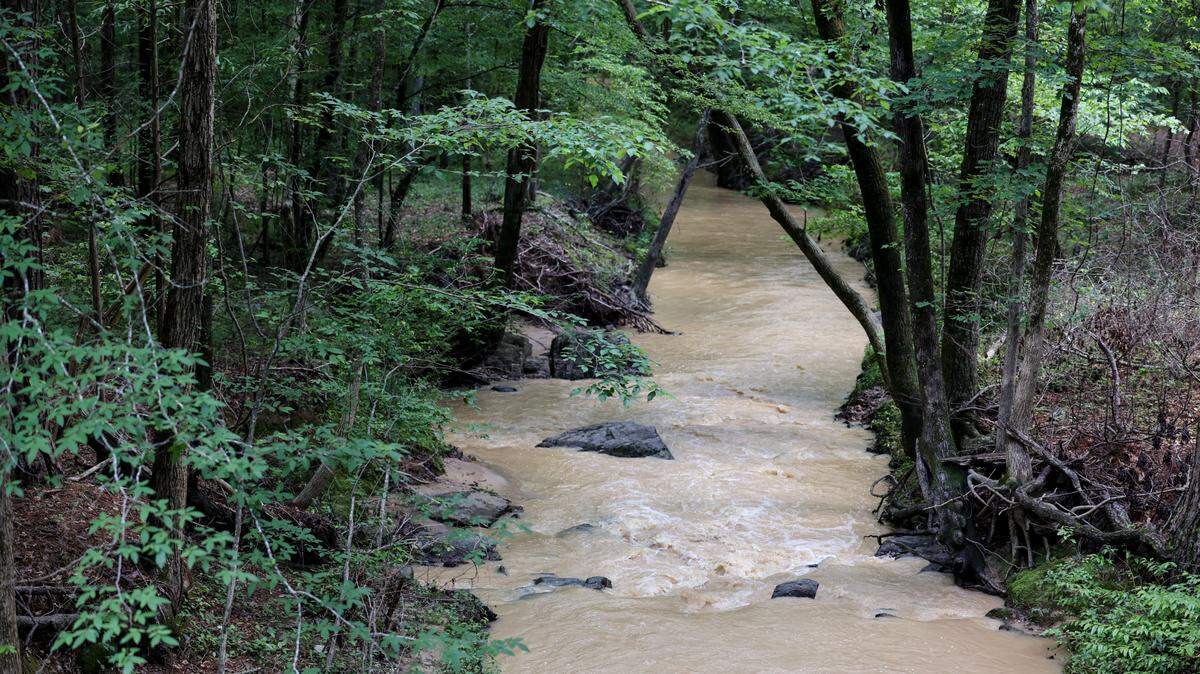
Following a fine of up to $3 million over environmental violations at the Scout Motors construction site, Richland County has become embroiled in a disagreement over who will pay the penalty for failing to control sediment polluted stormwater that repeatedly poured off the property.
County officials reached by The State indicated that contractors – instead of taxpayers – should be responsible for all or part of the fine since contractors were hired to conduct the clearing and grading work.
The S.C. Department of Environmental Services cited repeated problems controlling stormwater runoff at the massive project location as a key reason for the fine. The penalty could be reduced by as much as $2 million if certain improvements are made at the project site. The county must meet certain milestones, state officials say.
But even with a reduction, a fine of $1 million would be one of the largest environmental sanctions the agency has issued in at least the past three decades.
“I’m absolutely adamant this should not fall back on county taxpayers,’’ Richland County Councilman Don Weaver said. “There’s a heck of a lot better way to spend $1 million than on an environmental fine.’’
Some officials say Richland County’s government doesn’t have expertise in grading project sites, and the county got caught up in the problems because it owned the more than 1,600 acres where Scout is building an electric vehicle plant off Interstate 77. The county’s economic development office has said the responsibility for the fine is with the contractors, Weaver said.
“The county has nothing directly to do with the actual land disturbance and the concerns that would occur,’’ Richland County Councilman Paul Livingston said.
Livingston said he hopes county insurance would cover the cost of the fine, if necessary, but that was not clear. He declined to speculate on how the county would pay a fine if Richland ultimately must fork over the money.
Todd Money, a spokesman for Richland County, said the county “considers the issue of who will ultimately be responsible for the payments to be an ongoing legal matter.’’ He declined further comment.
According to the Department of Environmental Services enforcement order, Richland County was due to pay a portion of the fine last week. The state set up monthly payments of $85,000. The first payment has not been made but is expected from the county soon, DES spokeswoman Laura Renwick said Wednesday. But Livingston said the “county is not directly responsible.’’
Richland County officials were not clear on which contractor they were referring to or on whether others involved in the project were responsible for the problems.
The state Department of Commerce, which helped recruit Scout to Richland County about two years ago, issued a statement Tuesday saying it would not help pay the environmental fine.
An official with Landmark Construction, a company working on clearing and grading the Scout site, could not be reached to answer questions Monday or Tuesday. Landmark is a subcontractor on the job, according to the Department of Commerce.
Scout Motors declined comment, referring The State newspaper back to its statement when the fine was announced. The company separately has blamed the problems on Richland County, saying “every single deficiency’’ involves the county.
Landmark, headquartered in Charleston, has been in business for six decades, according to its website.
It has conducted site preparation work in recent years for an array of major industries in South Carolina’s Lowcountry, including a Volvo automobile plant and a Mercedes-Benz van plant. The Scout project is one of Landmark’s most ambitious efforts. The work involves the movement of 24 million cubic yards of dirt, an amount the company says is one of the largest earth moving projects in the East. The earth moving is to flatten the hilly land.
The site overall is about 1,600 acres, about 1,300 acres of which are being prepared for buildings.
Officials with the state Department of Environmental Services have said the scope of the project and the repeated problems resulted in the large fine against Richland County. Problems with muddy stormwater running off the property began in March 2024 and continued for five months, records show. A key concern is the impact on fish and other aquatic life from muddy creeks, where silt can clog the gills of fish.
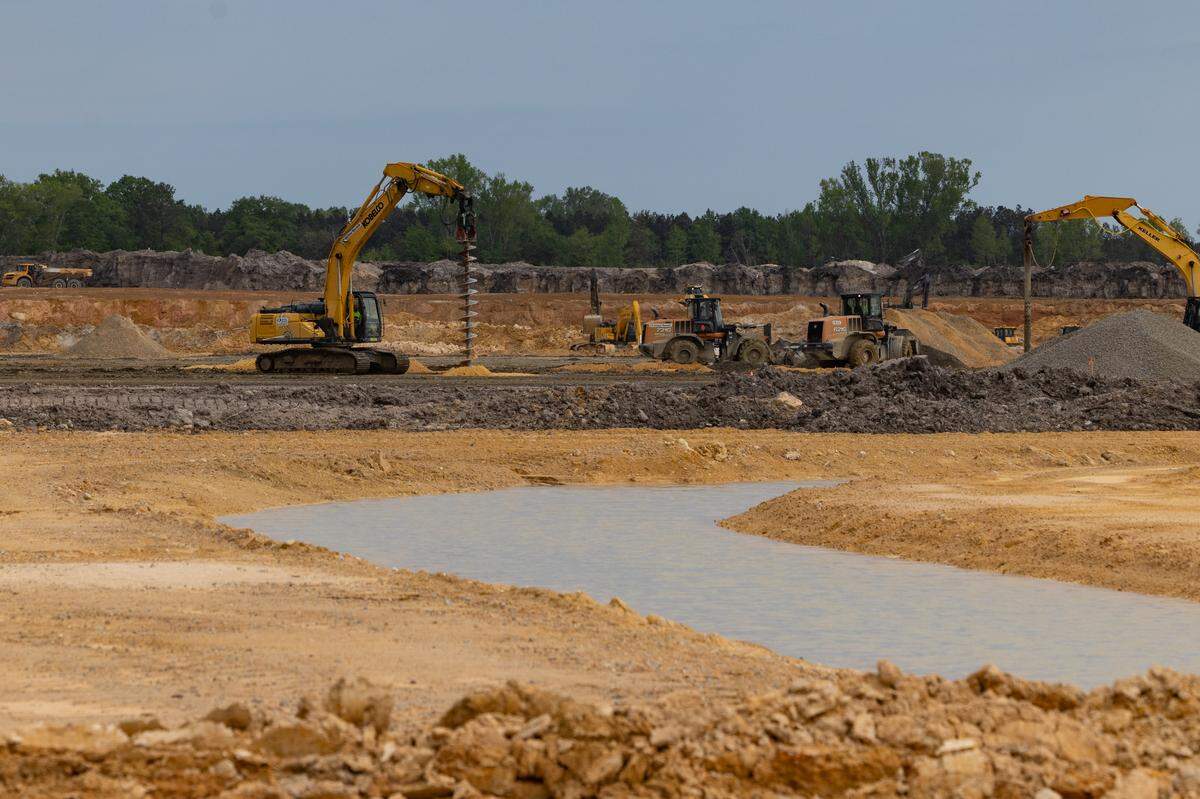
Enforcement records noted a variety of problems. Inspectors found unfinished sediment basins, which are needed to catch stormwater from leaving the property. They also found other sediment basins were either clogged or eroding, as well as failing barriers, known as silt fences that are supposed to contain mud to a development site.
And they discovered muddy runoff from the Scout site polluting nearby creeks, records show.
“The extent and duration of the violations, the deviations from the permit requirements, and the potential harm to the environment were factors in determining this civil penalty amount,’’ DES said in an email last week.
DES officials said the agency did not fine Scout or the Department of Commerce because Richland County holds the permit for work on the site.
According to a state enforcement database, the fine is one of the largest penalties assessed in the past 35 years for sediment pollution. The average fine for sediment pollution has historically been less than $20,000, records show.
Overall, only a handful of fines exceeding $3 million have been issued by the department or its predecessor, the Department of Health of Environmental Control, for environmental violations of any type, including pollution from deadly chemicals to the landscape and in drinking water.
One of the largest fines occurred 20 years ago. DHEC in 2005 levied a fine of $4.3 million against Piney Grove Utilities, a small company that ran into repeated troubles with water and sewer systems it operated in South Carolina.
Congaree Riverkeeper Bill Stangler said he’s not sure who will wind up paying the fine but a strong enforcement effort was necessary, which could help stop mud-polluted water from running off the site and into creeks.
“I’m happy to see that our state environmental agency took this issue seriously,’’ Stangler said.
The Scout project is one of the biggest economic development projects launched in South Carolina in recent years.
When completed in the next few years, the $2 billion electric vehicle manufacturing plant is expected to employ some 4,000 people, with residual growth occurring to support the plant north of Columbia. While the project has been touted both for its economic impacts and the fact that it will be producing non-polluting electric vehicles, the project has been beset with problems involving stormwater runoff and wetlands.
In 2023, the U.S. Environmental Protection Agency and the S.C. Department of Natural Resources questioned the project’s impact on the landscape and the speed at which the property was being developed. Because of those concerns, Scout shut down the project for a short period to check on its environmental impacts.
Department of Environmental Services officials say the project is among the largest the agency has ever issued stormwater permits for. The stormwater impacts from the project are potentially much larger than typical sites because the Scout project is so big, Renwick said in a May 8 email.
This story has been updated with details of how the fine could be reduced from $3 million to $1 million.
This story was originally published May 14, 2025 at 9:10 AM.