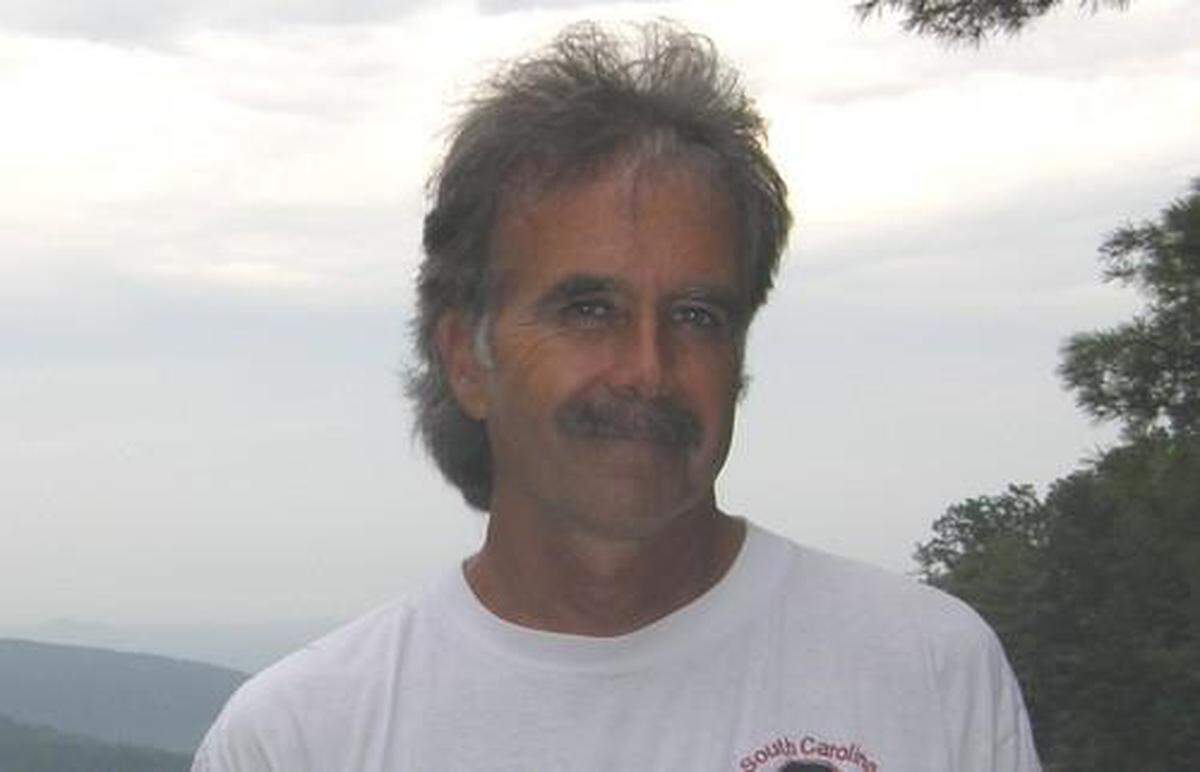
Trump administration reinstates ex-USC scientist who aided train wreck victims

The Trump administration has restored the job of a former South Carolina health scientist whose division had been targeted for elimination at the U.S. Centers for Disease Control and Prevention.
Erik Svendsen said he and most of his staff will be back at work by next week at a CDC division that helps states protect children from lead poisoning, rural residents from bad well water and asthma sufferers from unhealthy air.
All told, more than 460 CDC workers who had been laid off are being brought back, NBC News and the Associated Press reported. Among those are more than 150 workers who were laid off in the division Svendsen oversees at the CDC, he told The State newspaper. At the time of the layoff, administration officials said his division was not needed.
Svendsen, a respected scientist who gained attention for his efforts to help victims of a disastrous South Carolina train wreck 20 years ago, is director of the CDC’s Division of Environmental Health Science and Practice in Atlanta.
He said he wasn’t given a reason the administration restored his job and those of his co-workers. Either way, it’s good news, Svendsen said.
“That was a big surprise to me, but a pleasant one,’’ he said. “We really don’t know why they decided to do this now.’’
Federal health agency officials either were not available or declined to answer questions about why workers were being brought back, according to multiple media outlets, including The State,
The Trump administration was facing several lawsuits that could have restored the workers jobs. Since efforts to disband Svendsen’s division launched in April, court rulings allowed many workers to continue being paid. But they were not allowed to work.
Since April, some states have voiced dissatisfaction that the CDC division was being broken up, Svendsen said. Many states depend on funding that comes through Svendsen’s division and they rely on advice and support for providing key health services, such as childhood lead prevention.
When the job cuts came down in April, Svendsen’s division was no longer able to help with a childhood lead investigation in Wisconsin or continue helping victims of Hurricane Helene in the Carolinas. It also was not able to continue a probe of illnesses on cruise ships.
He said he hopes to resume that work and to help ensure states get the funding they need through his department.
“The field work, we are going to try to pick that up immediately,’’ Svendsen said.
An official with the state Department of Public Health, who oversees South Carolina’s childhood lead poisoning prevention program, was glad to hear that Svendsen and his cohorts would be back.
“Sharing some WONDERFUL news!!,’’ according to a Linked In post from ML Tanner, a program manager at the health department.
The state agency said Svendsen’s program has helped collect data that examines the links between environmental problems and poor health in South Carolina. Access to that data can help prevent deaths and poor health, agency spokesman Ron Aiken said. The Department of Public Health’s lead program is one major state program benefiting from the federal Environmental Health Science and Practice Division, he said.
Svendson, 54, formerly worked at the University of South Carolina, the Medical University of South Carolina, the S.C. Department of Health and Environmental Control and Tulane University.
While in South Carolina, he studied the health effects of toxic chlorine on survivors of the Jan. 6, 2005, train wreck in Graniteville, a tiny crossroads near the Georgia border. Svendsen found that many residents suffered lung damage long after the wreck, a discovery that helped justify medical treatment for many of them. The crash occurred when a swiftly moving freight train ran off the main track and crashed into a parked train, spilling chlorine and killing nine people. Hundreds of others were injured.
According to an email obtained by The State, Svendsen was notified Tuesday that he was being reinstated. The note came from Tom Nagy, chief human capital officer with the U.S. Department of Health and Human Services.
Nagy had notified Svendsen in April that he was being laid off.
“That notice is hearby revoked,’’ Nagy’s email said. “You will not be affected by the upcoming’’ reduction in force. The note did not elaborate.
This week’s decision to bring some CDC workers back is only fraction of the 2,400 laid off, the Associated Press reported. The cuts were part of a widespread effort by Trump, and at one time, Elon Musk, to dramatically reduce the federal workforce as a cost-savings measure.
“The Trump Administration is committed to protecting essential services,’’ the Associated Press quoted an administration official as saying.
This story was originally published June 12, 2025 at 2:51 PM.