Demand for water to rise sharply. What’s the governor’s plan to protect SC rivers?
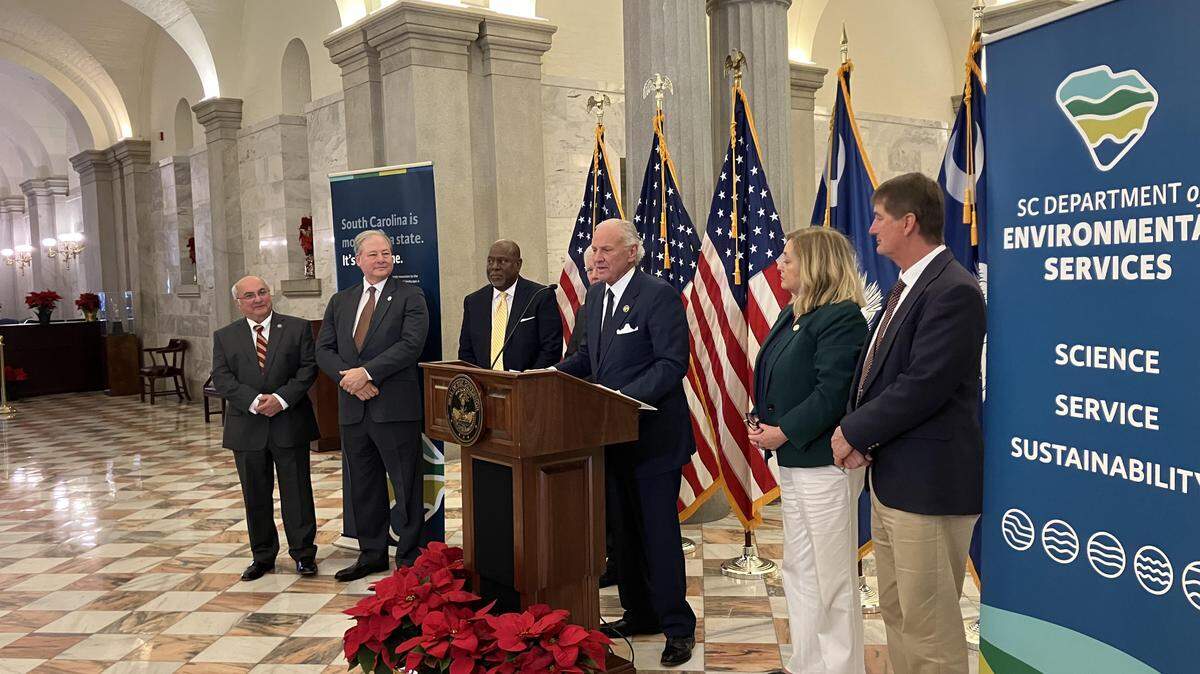
Gov. Henry McMaster said Thursday that South Carolina needs to protect rivers and groundwater from overuse, but he and the state’s top environmental official stopped short of advocating specific changes in the law.
Speaking during a news conference to discuss the state’s new water plan, McMaster said the document and a summary of the report are full of “wonderful information’’ that will help guide the state. The focus of the plan initially was to assess the state’s water use and needs before taking action, he said.
“We followed the principle that you can’t manage it if you can’t measure it — so we had to determine what’s happening with our water,’’ the governor said, noting that the information South Carolina needs is “all right here’’ in the report.
The 181-page water plan, produced by state regulators in collaboration with a special committee McMaster appointed last year, says water supplies are adequate, for now, but demand is growing and the state needs to be prepared. It also says that unlike many major rivers, the Edisto and Coosawhatchie, as well as multiple smaller streams, face depletion of water in the next four decades as the state grows. Water intakes at lakes Marion and Moultrie could be in jeopardy, as well, the report says.
According to the plan, the demand for water by industries and utilities will rise by a minimum of 50 percent in South Carolina during the next 45 years. Agricultural demands are expected to increase by at least one third during the same time period, according to the plan.
The report does not include a projection for data centers. Officials say the demand is still being assessed. But the plan says data centers, which use enormous amounts of water, could also seek water as they expand in South Carolina. Some data centers use 80 percent of the water withdrawn, returning only about 20 percent to rivers, the report said. South Carolina has about 40 data centers, the report said.
The governor, however, did not provide a plan for how the state needs to preserve rivers and groundwater as the population increases and demands for water rise. Key questions are whether the state needs to more tightly regulate data centers and whether the state’s surface water withdrawal law should be tightened.
The law has been criticized as inadequate to protect rivers and wildlife by the U.S. Environmental Protection Agency, some state officials and environmentalists. The statute has multiple loopholes that, in some cases, could allow big industries, megafarms and others to take virtually all the water existing in a river, even though it was initially couched as a way to preserve rivers.
Major business and farming groups have in the past opposed plans to change the surface water withdrawal law, fearing it could hurt industrial and agricultural operations.
McMaster deferred a question about the surface water law to Myra Reece, director of the state Department of Environmental Services. Reece did not advocate changing the existing state surface water law, but said multiple water-related laws will be looked at in the future. The water plan also notes the need to look at multiple laws. She called it a “road map’’ for the future.
“We’re going to look holistically at all of those laws,’’ Reece said. “We want to not just look at surface water in the silo or groundwater in the silo or the drought act in the silo, but see how they interface, how they connect with each other, and try to look at the big picture.’’
Environmentalists who have tracked development of the state water plan agreed with McMaster that it is full of data, but said the state doesn’t need to wait longer to improve laws that protect water.
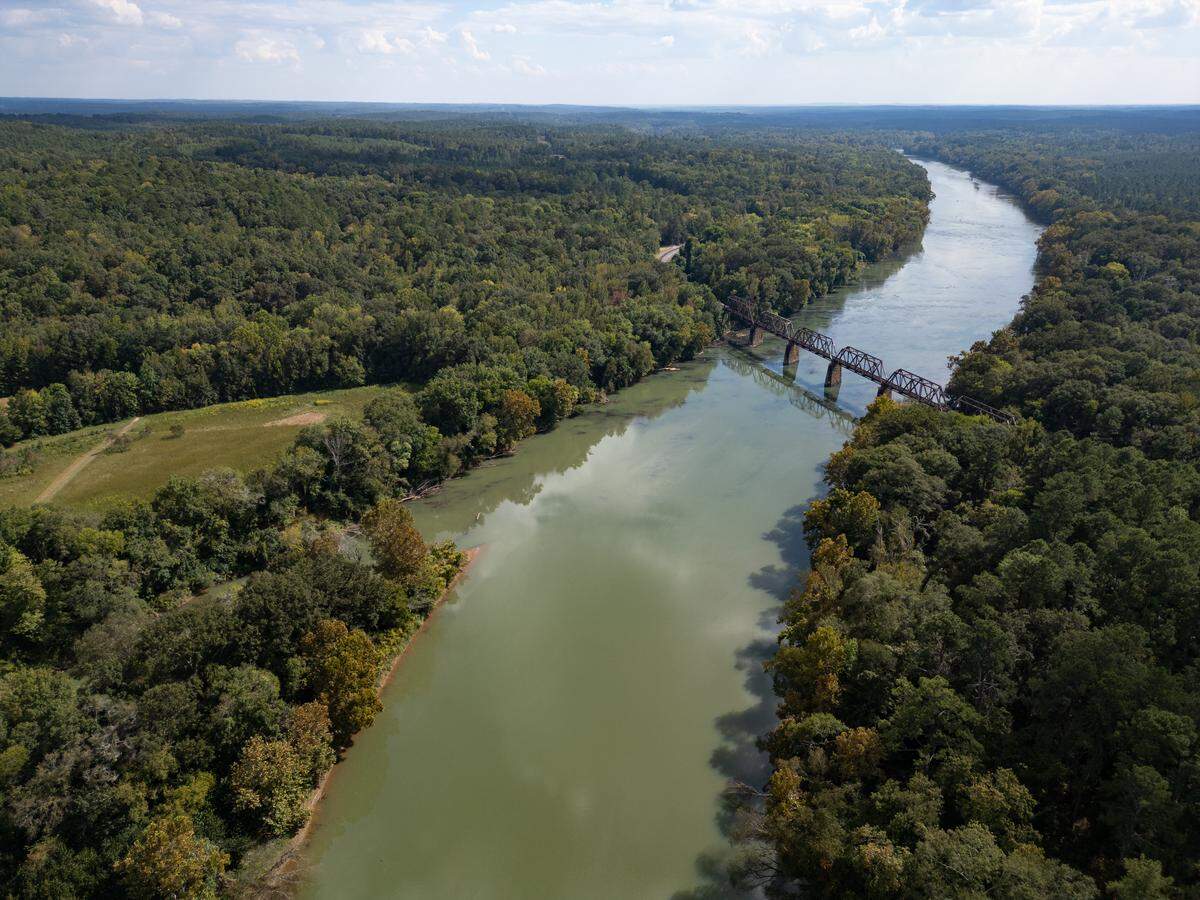
“Now is the time to tackle some of those issues and our policies, to strengthen and protect our resources,’’ said Congaree Riverkeeper Bill Stangler, who served on the committee that developed the state water plan. Stangler noted, for instance, that multiple state river basin councils in South Carolina have advocated tightening the state’s surface water withdrawal law.
The surface water law, for instance, allows huge, industrial scale farms to siphon water without permits and without notifying the public. And industries and utilities that are required to get permits, also have great latitude to withdraw water from rivers under the existing law.
While it is unclear whether the surface water law will be debated in the Legislature next year, data centers are likely to draw attention. One bill was introduced this past week to require data centers to report the amount of water they use each year.
Power companies now are by far the largest users of water, taking 80 percent of what’s withdrawn in South Carolina, although most the water is released back into rivers after its use, the report says.
That demand is expected to decrease in coming years because two coal-fired power plants are projected to close, but uncertainty about future power needs could change that, the report says. South Carolina is currently looking to build at least two large natural gas plants and restart a stalled nuclear expansion project.
“There is considerable uncertainty in projected water demands for energy production, given the growing need for electricity and the federal government’s recent phasing out of subsidies for renewable (energy) sources, such as solar and wind, which do not require water,’’ the report said.
Overall, Reece said South Carolina uses more than 5 billion gallons of water every day, or enough to fill 1,000 water towers.
This story was originally published December 11, 2025 at 6:38 PM.