SC farmer will visit Washington to tell story of toxic pollution in his community

South Carolina farmer Robbie O’Neal, whose family for years relied on sludge from a textile plant to fertilize crops, is in the nation’s capital this week to tell the story of how the waste material polluted drinking water and damaged the O’Neal’s rural agricultural community.
He’s scheduled to provide two briefings for congressional staff members Wednesday as part of a non-profit organization’s effort to help farmers deal with the impact of forever chemicals, the toxic compounds that can trigger severe health problems in those exposed over time.
Plans also are under way to visit the offices of Republican Sens. Lindsey Graham and Tim Scott of South Carolina, as well as Rep. Russell Fry, R-S.C. Graham’s staff plans to meet with O’Neal, although the senator will not be available, a spokeswoman said.
“I want them to know what happened and how we got into this, and that it’s poisoned everything around here,’’ said O’Neal, whose family has farmed in Darlington County for generations.
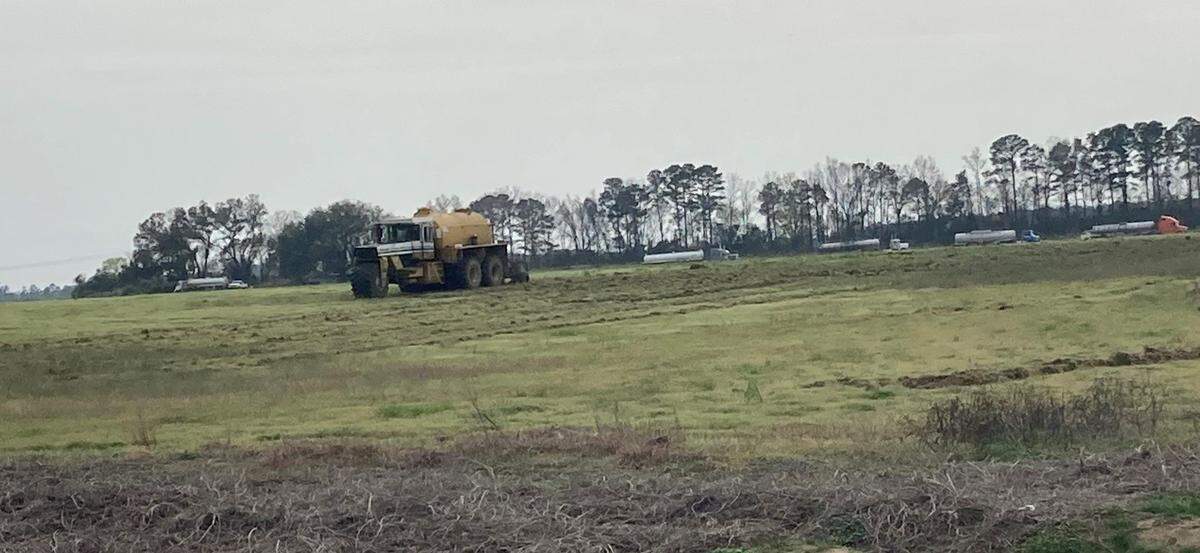
O’Neal’s family agreed in the early 1990s to use waste sludge from the Galey and Lord textile plant as fertilizer on the fields where they grew crops and raised cows. With state and federal agencies supporting sludge as a safe and effective way to reuse waste, the O’Neals allowed the factory to spread the material on their land to help plants grow.
But years later, the O’Neals learned the unsettling truth about the Galey and Lord’ textile plant’s sludge. The gunk he and other farmers relied on was riddled with forever chemicals, formally known as PFAS, or per and polyfluoralkyl substances. Drinking water on his family’s land, like many of his neighbors’, has been tainted with the toxins.
Two of his uncles who drank from PFAS-polluted wells for years have died. And O’Neal said he recently learned he has notable levels of PFAS in his blood. He’s now working with Yale University researchers to find out about the potential effects of forever chemicals on crops.
O’Neal, 59, is a plain-spoken South Carolina resident who has never been to Washington, D.C. His idea of getting dressed up for a meeting is wearing a sport coat and slacks like he wears to church. To make sure his story registers with leaders in button-down Washington, O’Neal bought a gray suit for his trip to the nation’s capital.
“It’s nice and conservative,’’ he said.
He is working with the American Farmland Trust, which is urging Congress to help farmers who have been hurt by the presence of PFAS on their land. In some cases, the PFAS contamination is believed to have come from sludge that polluted groundwater and got into people’s blood.
Emily Liss, farm viability project manager for the American Farmland Trust, said O’Neal’s story can help personalize the sometimes complicated subject of PFAS and the threats it presents to agriculture. A Maine farmer, Jim Buckle, also is scheduled to speak at the briefing for congressional staff members, as are the American Farmland Trust and other farm organizations. Staff from U.S. Rep. Chellie Pingree, D-Maine, and Sen. Susan Collins, R-Maine, are setting up the briefing.
“It’s so easy for something like PFAS to feel very far away,’’ Liss said. “If you can bring in a farmer, and they can talk about how this is a real problem – that makes it so much more real and tangible.’’
Using sludge, or biosolids, as fertilizer isn’t always a bad thing because it contains nutrients. But the practice also presents dangers from forever chemical pollution that people once never knew about, she said.
“We thought it was totally fine,’’ Liss said. “It’s only recently that we have discovered that biosolids can contain dangerous levels of PFAS.’’
Forever chemicals that are being found in waste sludge have been used for more than 70 years by industries. Some of the products that included PFAS were textiles, non-stick frying pans and carpets. The chemicals also are key ingredients in firefighting foam. Called forever chemicals because they don’t break down easily, the material, for instance, repels water from wind breakers and helps prevent stains on carpets
Manufacturers knew about the hazards by the 1970s, but the dangers have only surfaced publicly in recent years. The federal government, which has in the past advocated the use of sludge as fertilizer, has now proposed limits for PFAS in drinking water. Exposure to PFAS over time has been linked to kidney and breast cancer, as well as thyroid problems. Forever chemicals also can weaken a person’s immune system and cause developmental delays in children. Cities across the country, including Columbia, have found some PFAS in drinking water and multiple lawsuits have been filed nationally that resulted in multibillion dollar settlements with manufacturers.
The State chronicled O’Neal’s struggle in a 2023 investigative series that examined how industrial sludge used as fertilizer was applied to farmland and the relationship of sludge sites to PFAS in drinking water and rivers across South Carolina.
Working in collaboration with McClatchy newspapers, The State found nearly 50 wells in O’Neal’s Darlington County community were contaminated with forever chemicals, most at levels far above a proposed safe drinking water standard.
Many of those wells were in areas where industrial sludge from a textile plant was applied to agricultural fields, the news outlets reported. All told, sludge was approved by the state’s environmental agency for use on at least 300 eastern South Carolina farm fields, encompassing about 10,000 acres.
People who drank from the wells, including O’Neal’s uncles, experienced health problems, such as cancer that they believe were connected to PFAS exposure, The State and McClatchy found. The news organizations also discovered some 3,500 farm fields across South Carolina had been approved by state regulators for sludge disposal. Many of those were near rivers and drinking water plants that showed elevated PFAS levels, The State and McClatchy reported. All told, about 80,000 acres of land had been approved for sludge disposal, the investigation found.
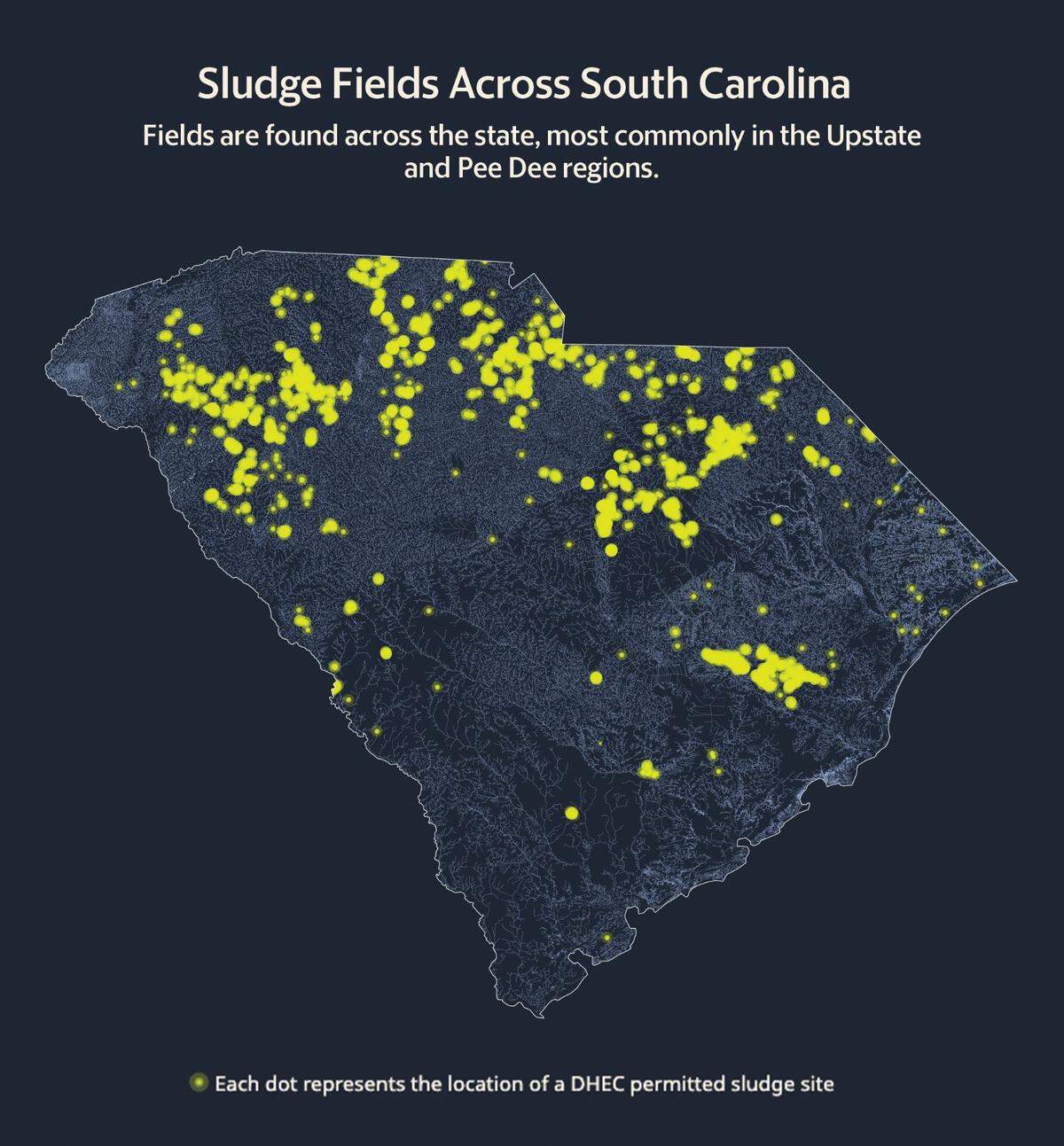
After The State’s July 2023 series, the New York Times reported on O’Neal’s plight, providing further evidence of the threats he and others face.
In an April 21, 2025, story, the Times reported that the EPA was looking at whether to declare contaminated farm fields in and around O’Neal’s home as a Superfund site, an area designated as contaminated enough to warrant federal funds for a cleanup. That would be the first known case of farmland being declared a Superfund site as a result of contamination from sludge, The Times reported. The closed Galey and Lord plant where sludge came from already is a Superfund site.
Liss’ group, which is working with a coalition of farm and environmental organizations, has put together a list of priorities they think Congress and federal agencies should focus on when dealing with forever chemicals on farms.
Among the priorities is providing financial relief to farmers whose land, water and crops have been affected by forever chemical pollution. The state of Maine has such a program, but others do not. Federal leadership is needed, she said.
Liss said the Maine farmer who is to speak has received some help through a state program there, and he’ll explain his experience to congressional staffers..
Maine has “a huge relief fund so that if you’re a farmer, and you have PFAS on your land, you’re going to get income replacement,’’ she said. “You’re going to have technical assistance, you’re going to have water filtration’’ to neutralize PFAS.
Many states like South Carolina do not have such programs.
In O’Neal’s case, Yale University researchers have visited his property in an effort to see if crops he grows are pulling in PFAS from contaminated soil or groundwater. In addition to beef cattle, O’Neal grows corn, wheat, collards, butter beans and other row crops. Yale is examining crops for PFAS contamination and expects to have results available soon.
Liss said another major recommendation is protecting farmers from liability because some lands could wind up as federal Superfund cleanup sites. Farmers with contaminated land say they didn’t know that sludge fertilizer would pollute the soil where they would grow crops. But without protection, they could face liability.
Not all sludge is contaminated, but the trust says sludge that is scheduled to be applied on land should be tested for forever chemicals to make sure. The American Farmland Trust also says there should be more coordination among federal agencies on the issue of PFAS and farms.
Pingree, a farmer and member of the House agriculture committee, has tried to persuade Congress to pass a relief bill for farmers hurt by PFAS. Her office provided a statement she has made about the issue.
“The PFAS crisis isn’t some theoretical or distant problem. It’s here, it’s growing, and it’s putting real pressure on farmers in Maine and across the country,” Pingree’s statement said. “For farmers already navigating thin margins, discovering ‘forever chemicals’ on their land can mean lost income, unusable land, and questions about the safety of their crops and livestock.’’
Few, if any, major programs are known to have been established by South Carolina’s state government to help farmers hurt by forever chemical pollution. Meanwhile, the state has been asking those wanting to spread sludge on fields to determine whether the sludge contains forever chemicals. But the state has failed to specifically limit forever chemicals in waste sludge that is to be land applied.
While efforts to help farmers have failed, Liss said her group hopes that will change.
For O’Neal, the trip to Washington provides a chance to tell the nation about the issues he and other farmers face today from the use of industrial sludge in the past. And it’s a chance to let people know that, while the Galey and Lord plant is closed and he stopped using sludge years ago, some farms rely on other types of sludge as fertilizer that he has concerns about.
“What they’re doing needs to be stopped before we continue damaging everything,’’ he said.
This story has been updated with comments from U.S. Rep. Chellie Pingree, D-Maine, and an update from the office of Sen. Lindsey Graham, R-S.C.
.
This story was originally published January 16, 2026 at 3:16 PM.