Greens cry foul as Trump administration drops protection for once-rare storks
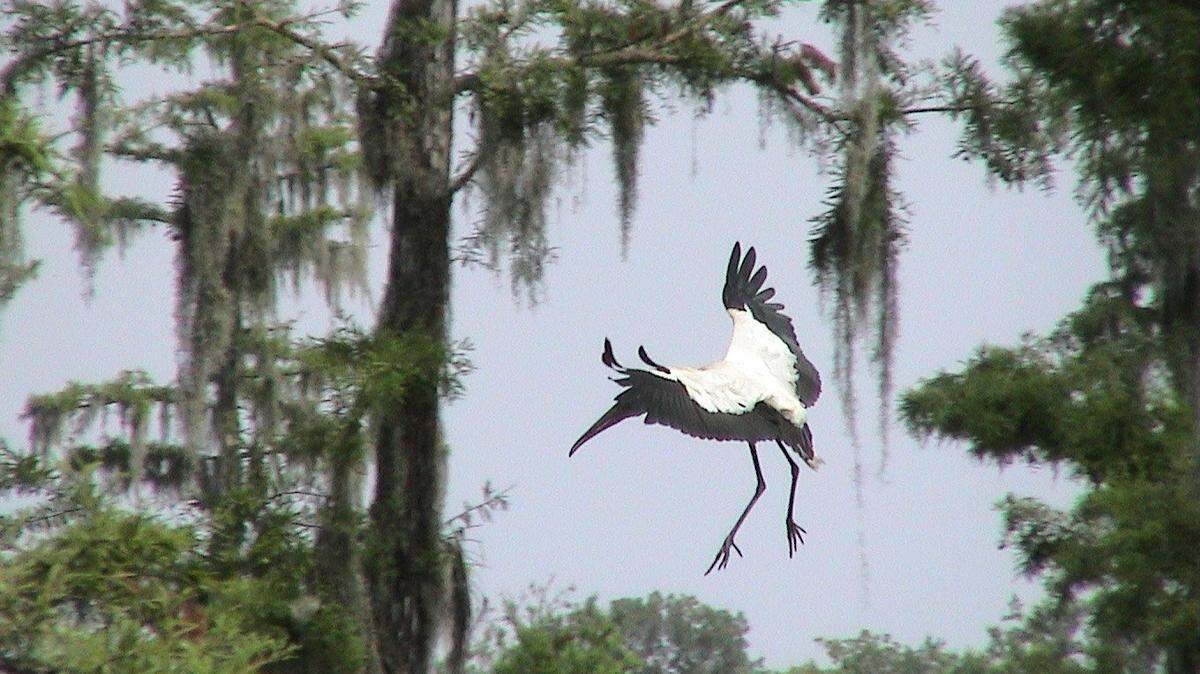
After years of discussion, the federal government says it is dropping protections for a once rare stork that lives in South Carolina’s wetlands.
The U.S. Fish and Wildlife Service says wood stork populations have steadily increased since the 1980s, justifying its decision to delist the animal from protection under the federal Endangered Species Act. The agency announced its decision Monday.
But an environmental group that tracks endangered species issues says it’s too early to delist the wood stork from protection – particularly at a time when federal policies have put the storks’ wetland habitats under threat.
President Donald Trump’s administration has engineered efforts to loosen protection of wetlands that wood storks thrive in, even as states like South Carolina face pressure to allow more development in wetlands, according to the Center for Biological Diversity. The center agrees the species has begun to recover, but says the federal government hasn’t met all the criteria to justify delisting wood storks.
Wood storks are tall birds with spindly legs that can be seen dipping their long-curved bills in wetlands and creeks to catch small fish and other prey. Wood storks have featherless heads and stand up to four feet tall.
Once found breeding mostly in Florida, the big birds moved north more than three decades ago into states like South Carolina, Georgia and North Carolina to nest. Since then, populations have grown to the point that they no longer need protected status, according to the Fish and Wildlife Service.
Under then President Barack Obama, the service in 2014 officially downgraded the storks’ protected status from endangered to threatened, a lesser category of protection under the Endangered Species Act. That had been under discussion for years. Now, the birds will no longer enjoy protections as ++threatened species.
That means developers in rapidly growing places like South Carolina will find it easier to build without having to avoid wood stork nests, the center’s Will Harlan said.
A news release from the Fish and Wildlife Service praised recovery efforts that have led to a rebound in wood stork populations. The service said that when the bird was first listed under the Endangered Species Act in 1984, it was “on the brink of extinction.’’
The species population had dropped 75 percent since the 1930s, the service said. That resulted from habitat loss in South Florida. This week’s service release said there are up to 14,000 nesting pairs today, more than twice the number of nesting pairs in 1984 when the species was listed under the act.
The act is intended to help dwindling populations of animals recover by requiring certain protections. When a species is considered to have regained sufficient numbers, protection under the act is lifted.
Wood storks inhabit coastal areas from Mississippi to North Carolina. In moving north from Florida, the suspected result of development pressures, they have adapted to what the service said are new nesting areas, including salt marshes, rice fields and forested wetlands, in other southern states, the service news release said.
.JPG "wstorjuv.JPG(2).JPG")
“The wood stork’s recovery is a real conservation success thanks to a lot of hard work from our partners,” according to the federal news release quoting U.S. Fish and Wildlife Service Director Brian Nesvik. “The Trump administration is working quickly to remove federal protections from species that no longer need them, and I’m proud that the wood stork is another example of that.”
In Trump’s two terms in office, the administration has delisted 36 species from protection under the Endangered Species Act, the agency said. The administration says it is seeking to strengthen protection for endangered species, “while reducing unnecessary federal restrictions.’’ The Fish and Wildlife Service says it has a 10-year plan to monitor wood storks to make sure they continue to recover.
The Center for Biological Diversity said delisting the wood stork is premature and another example of Trump’s disregard for wildlife. The delisting of 36 species is nothing to be proud of, center officials said. In this case, the birds have not recovered sufficiently in Florida to justify delisting, the center says.
“It is also noteworthy that, despite having resources to strip protections from wood storks, the Trump administration hasn’t protected a single species since returning to office,’’ the center said in a news release.
For wood storks, the loss of wetlands habitat may one day deplete the populations that have begun to recover, the center said.
“The wood stork’s recovery shows the Endangered Species Act works, but Trump’s recent rollbacks of wetlands protections raise new concerns for these birds,” according to the news release quoting Noah Greenwald, endangered species co-director at the Center for Biological Diversity. “Trump officials gutted safeguards for wetlands with rules created under the broadest possible reading’’ of a recent Supreme Court ruling that opened the door for development of the soggy depressions.
Wetlands across the country face increased development pressure as the Trump administration seeks to help those seeking to build with fewer restrictions, critics say. Many wetlands in danger of development are commonly known as isolated, or those that do not directly connect to big rivers, streams or other major bodies of water.
Those isolated wetlands include Carolina Bays, rare depressions found mostly in the Carolinas, that attract a multitude of wildlife species. These wetlands dry up for part of the year, then flood seasonally, which attracts wildlife. Among the animals attracted to the bays are wood storks, according to the Center for Biological Diversity.
“Some of the fastest growing areas of (the southeast) are along the coast, and wetlands ecosystems are some of the most endangered in the country due to development,’’ Harlan told The State.
.