Chemicals drain onto seashore in popular section of Myrtle Beach, researchers find
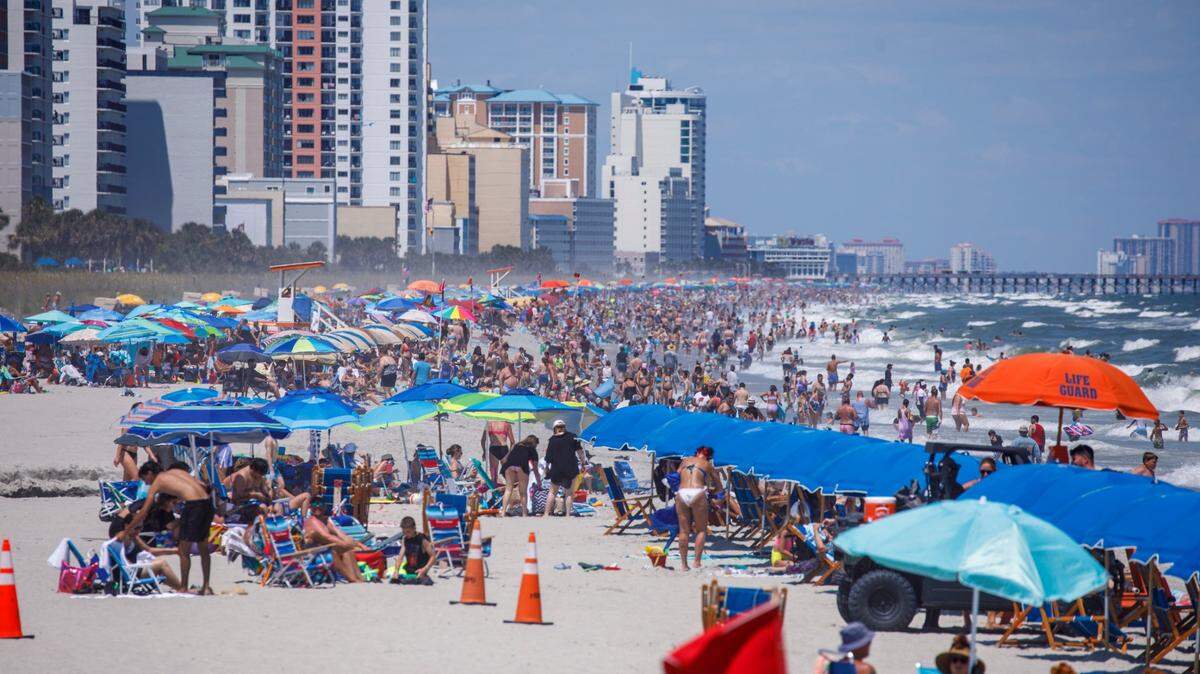
Researchers have discovered “alarmingly high” levels of toxic forever chemicals draining onto the seashore at Myrtle Beach near a closed military base that is suspected of contaminating groundwater and creeks for years.
The findings by a team of researchers identified the forever chemicals in water, foam and soil, with discharges flowing toward the ocean from a tidal creek north of Springmaid Pier, according to a news release issued Wednesday, May 13. The area is on the extreme southern end of Myrtle Beach just up the coast from Myrtle Beach State Park.
The discovery is believed to be the first documenting forever chemicals at a South Carolina ocean beach where vacationers wade, swim and fish every summer. The city and state test the ocean for bacteria each summer, but they do not check the salty water for forever chemicals.
Coastal Carolina University scientist Till Hanebuth headed the study. The research documented high levels of the chemicals in water that pools on the beach where children play.
Winyah Rivers Alliance director Debra Buffkin said the discovery is a concern as summer approaches and people head to the beach.
Exposure to forever chemicals, formally known as per- and polyfluoralkyl substances, or PFAS, has been linked to cancer and an array of health ailments. The chemicals found in Myrtle Beach are running through Midway Swash, which drains onto the shore.
“This is concerning because the tourist season is coming up and we’re afraid people are putting their babies in that swash,’’ said Buffkin, whose organization helped collect water samples for the Coastal study. “But it’s not just children. It’s anybody. It needs to be addressed.’’
Swashes, another name for tidal creeks that enter the ocean, often attract people to swim and wade in the water because the brackish streams are more calm than the surf.
Hanebuth said Coastal’s research did not test ocean water, but the water that was draining from the base onto the beach, as well as foam in the swash water. High levels of PFAS in Midway Swash strongly indicate that forever chemicals reach the ocean from the tidal creek during heavy rains, he said.
Officials with the S.C. Department of Environmental Services told The State earlier this week that people are typically exposed to forever chemicals by drinking water or eating food contaminated with the toxins. Exposure can also come through the air, the agency said.
Even so, the department said natural bodies of water, such as the ocean or tidal creeks, are not chemically treated like swimming pools, “so there is always a risk of coming into contact with potentially harmful bacteria, viruses, other organisms or contaminants.’’
In an email Wednesday, the agency said it advises people not to swim in water near stormwater pipes or swashes.
Water quality is an important issue in Myrtle Beach, a high-profile resort that draws millions of visitors to its shores each year. Myrtle Beach State Park alone attracts two million visitors annually.
Coastal’s findings aren’t the first in the United States. Officials in Michigan have discovered the material in foam in the Great Lakes region and have warned swimmers to stay out of areas where foam has been discovered.
Just last year, the state of North Carolina found elevated levels of forever chemicals in sea foam near Wilmington, just up the coast from Myrtle Beach. High levels of PFAS also have been found in sea foam in Europe, raising concerns about breathing in the material or about the material getting into the sky, falling back to earth and polluting water again.
At least five different types of PFAS were found in the area of Midway Swash and the beach near Springmaid, according to data collected by Hanebuth and fellow researchers. The news release labeled the levels as high amounts. Records show the levels were in some cases hundreds to thousands of times higher than known standards.
Coastal Carolina University and the Winyah Rivers Alliance made the finding during a broader research project that looks at the impact of the chemicals on waterways along the northern coast and in the Pee Dee region of eastern South Carolina.
The discovery also noted elevated forever chemical levels in the Little Pee Dee River, upstream from Galivants Ferry, that may have originated from a plume of contaminants near an industrial plant in eastern North Carolina. The Little Pee Dee is west of Myrtle Beach on the Horry-Marion county line.
Generally, elevated levels of forever chemicals in South Carolina rivers studied by Coastal were not unexpected because state regulators have previously documented the material in virtually every river they have tested. But less is known about the link to pollution from North Carolina chemical plants.
Hanebuth said pollution in the Little Pee Dee is consistent with PFAS released from a Chemours plant that has been a source of concern in North Carolina. The Little Pee Dee, with a canopy of hardwoods along its banks and dark-tea-colored water, is a state designated scenic river.
“The strategy to combine a strictly scientific approach … has led to a highly comprehensive data set that covers all seven rivers in our Winyah watershed,“ Hanebuth said in the news release. “The specific findings help us understand where the main sources are located and how PFAS spreads along the rivers.”
On the Grand Strand, the old Myrtle Beach Air Force Base is the suspected source of the contamination that Hanebuth and fellow researchers found. The base closed more than 30 years ago and is now occupied by the Myrtle Beach airport. Airports and military bases often use a type of foam that contains PFAS to fight fires. Forever chemicals have been used widely in society for decades because of their strong properties, not only to extinguish fires, but as coatings for non-stick frying pans and waterproof windbreakers.
Groundwater on the base property has been polluted with an array of toxins, including some types of forever chemicals, after decades of use of the land by the Air Force. Creeks and rivers often receive seepage from groundwater.
A 2020 U.S. Air Force report found high levels of several types of forever chemicals in groundwater, soil and surface water, in many cases at amounts higher than a pending drinking water standard for two of the chemicals. Groundwater flows from the base toward the Atlantic Ocean, as well as to the Intracoastal Waterway, the 2020 report said.
The Myrtle Beach Air Force Base closed in 1993. A major mixed-use project, Market Common, has been developed on the site. The new development is served by public water, not from wells on the old base land, making drinking water a less likely source of exposure.
Pollution from military bases is a key source of PFAS in soil and water across the country. Not only has PFAS polluted the Myrtle Beach Air Force Base, but it has been found at Shaw Air Force Base near Sumter.
Residents living in mobile home parks near Shaw have had to install filters on their wells after PFAS tied to base discharges contaminated the aquifer they draw water from.
Concerns about PFAS on the shore at Myrtle Beach aren’t the first involving pollution that is draining toward the ocean. Myrtle Beach and surrounding coastal cities have for years sent street drainage onto beaches and into the ocean.
Much of that drainage through the years has been found to contain bacteria that could make people sick. City and state swimming advisories let people know about this threat, particularly after heavy rains. Efforts have been underway for years to remove the drain pipes and pump the stormwater offshore, but the work has been expensive and is not complete.
This story was originally published May 13, 2026 at 9:32 PM.