Landowners seek to overturn approval for huge power plant in South Carolina
When the state Public Service Commission approved a large natural gas plant that utilities say is badly needed in South Carolina, the oversight agency paid little attention to how the plant would affect the state’s environment, if it is built.
That’s the argument two property owners are making in asking the PSC to reconsider its approval for the plant between Charleston and Columbia. They say the PSC did not look at the environmental impacts carefully enough, accepting broad conclusions that the plant would not have a major effect on air, water and wetlands.
Dominion Energy and Santee Cooper, which want to build the $5 billion plant, commissioned an environmental report, but attorney Will Cook said the document lacked information the PSC could have used in making its decision. He represents landowners John Burbage and Lauren V. Moody Standfill.
“There’s no analysis,’’ Cook said. “It’s just a report that says ‘Here is the status quo, this is the water quality right now or here are the species in the area.’ It gives conclusory statements … saying there will not be any significant environmental impacts.’’
The report defers to other government agencies to drill into the details, but Cook said it’s the PSC’s duty to look at the overall cumulative impacts of the project – and that wasn’t done.
PSC spokesman Rob Bockman said the request for reconsideration is up for discussion at the commission’s July 16 meeting. The commission, however, can’t comment ahead of time on a pending judicial matter, he said.
The Public Service Commission said the gas power plant isn’t expected to hurt land use, wetlands, soil, wildlife or protected species. In June, the PSC signed off on a certificate the power companies need for the plant.
If the commission doesn’t change its decision to approve the plant, environmentalists could sue to overturn the decision. At 2,200 megawatts, the proposed natural gas plant rivals any in South Carolina today.
The power companies’ more than 200 page environmental report, finalized in December 2025, says other agencies, notably the Department of Environmental Services, will further review effects on things like air quality. The environmental services agency still must decide on permits, such as one for air pollution that would come from the plant.
“Construction and operation of the proposed facility are not anticipated to have significant adverse effects on environmental or community resources on, or off, the site,’’ according to the report’s executive summary.
Spokespeople for Dominion and Santee Cooper said the natural gas plant is being built with the environment in mind. In an email, Santee Cooper spokeswoman Mollie Gore said evidence given to the PSC was “robust’’ and appropriate.
“As partners on the proposed Canadys station, Dominion Energy and Santee Cooper are committed to being good environmental stewards and complying with all environmental permits,’’ Dominion spokesman Matt Long said in an email.
Natural gas is generally considered less environmentally damaging than coal-fired power plants, like the old facility the Canadys plant would replace. The former coal plant shut down about 13 years ago, with the property now targeted for reuse for the new gas plant.
Still, natural gas plants have their own issues.
A Harvard University study, issued two months before the power company study, said the natural gas facility would pump harmful air pollution into the skies of Colleton County. The October 2025 Harvard study said 164 tons of fine particulate matter would be released annually.
Fine particulate matter, known as PM 2.5, is often referred to as soot. Exposure to this material at low levels can increase people’s risk of heart attacks, pneumonia and strokes. Tiny particles can lodge in people’s lungs, making exposure particularly hard on those who already have asthma or other breathing disorders.
About 66 percent of the particulate matter would affect South Carolina, with 23 percent impacting Georgia and 11 percent in Florida, the Harvard study said.
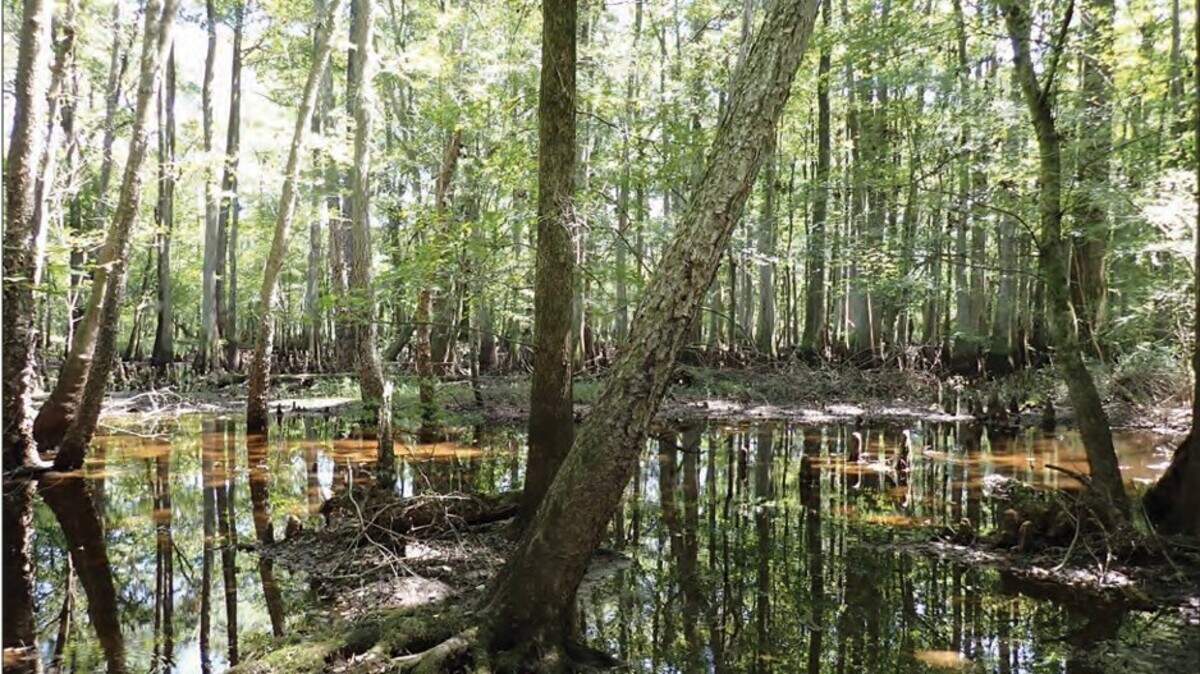
In addition to concerns about air quality, the request for reconsideration said the power companies’ environmental report doesn’t adequately address how the project might affect the ACE Basin, a vast and nationally known nature preserve nearby.
Plans by Santee Cooper and Dominion Energy call for construction of the 2,200 megawatt facility. The project is considered important to supply energy needs in fast-growing South Carolina, which is getting an influx of people moving from other states.
It’s also potentially significant because of the growth of data centers. They use large amounts of energy and increasing capacity would help serve data centers that are located in South Carolina.
While there are concerns about the potential direct impacts of the plant on the environment, it also would rely on construction of a pipeline that critics say has its own set of issues. The 71-mile-long pipeline from Georgia would bring the natural gas needed to make power.
But it is expected to run through rural land that includes the area containing the ACE Basin and other nature preserves. Some property owners are fighting plans to survey their land for the pipeline, arguing that the line would disrupt their rural way of life if it runs through their land.
Santee Cooper and Dominion’s effort to produce more natural gas comes at the same time Santee Cooper and a private company are working to restart the failed V.C. Summer nuclear reactor project northwest of Columbia in Fairfield County.
Completing two partially built reactors at V.C. Summer also is expected to generate about 2,200 megawatts.
This story was originally published July 10, 2026 at 9:31 AM.