
Invasive species have been spreading throughout SC. What to know
South Carolina’s wildly diverse ecosystem is one of the state’s greatest assets, but it also contributes to one of its biggest challenges.
“We’re one of the few states that have beaches and coastal areas and swamps, we also have mountains, and we have everything in-between,” Steven H. Long said. “When a pest pops up in the swamp somewhere on the coast or high up in the mountains, it’s often unseen and undetected for many years, and by the time its detected, sometimes the problem is too far gone to control.”
Long serves as Assistant Director of Clemson University’s Department of Plant Industry, working directly with the state government and leading various efforts to regulate and eradicate damaging invasive species. He’s also a member of the Board of Directors at the National Plant Board, a non-profit with a presence in all 50 states, Washington D.C., Puerto Rico and Guam.
Long’s department focuses on invasive species that either aren’t yet established in the state or can still be successfully eradicated. Their high-priority targets include the following:
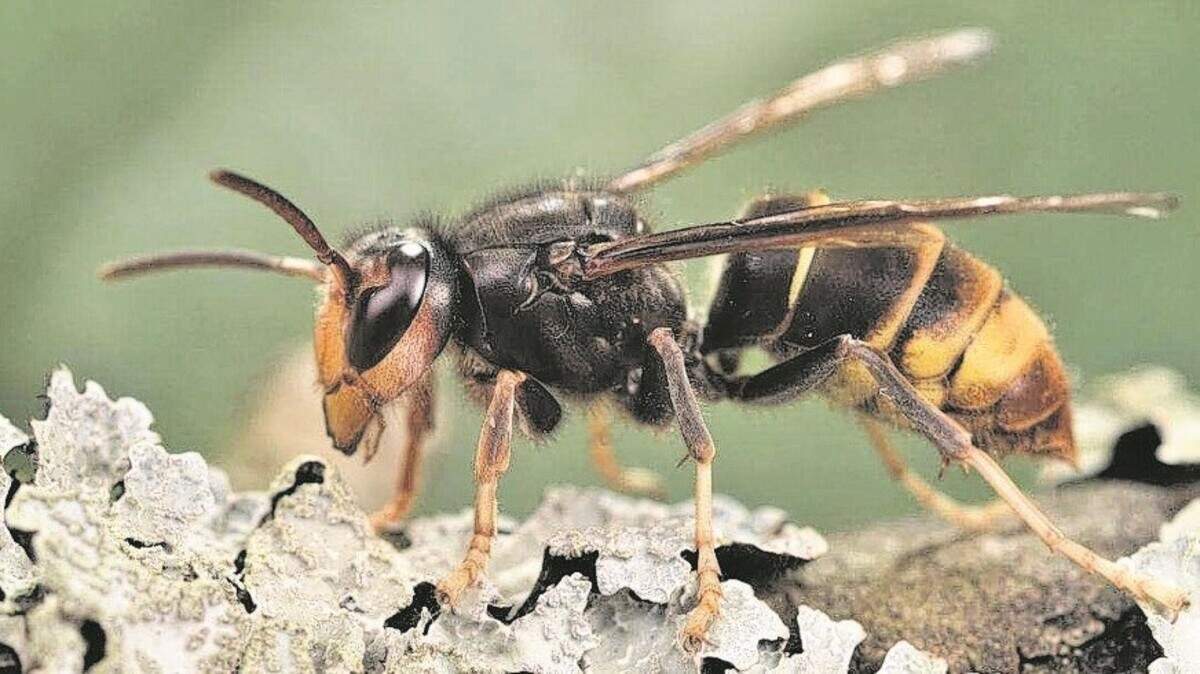
- The Yellow-legged Hornet, an exotic, predatory insect that attacks pollinators like honeybees. They are native to Asia but have infested the low country and seriously threaten local agriculture.
- Cogongrass, an invasive Asian weed that attacks and kills critical native plants.
- The Asian Longhorned Beetle, which attacks forests, mainly preying on maple, willow, elm and birch trees.
- The Spotted Lanternfly, an invasive pest which first arrived from Asia in Pennsylvania in 2014 and has spread across the country. Long said the species had likely spread too widely to be fully eradicated, but could still be managed, which will be important in protecting South Carolina’s native grapes and peaches.
· The Yellow-legged Hornet, an exotic, predatory insect that attacks pollinators like honeybees. They are native to Asia but have infested the low country and seriously threaten local agriculture.
· Cogongrass, an invasive Asian weed that attacks and kills critical native plants.
· The Asian Longhorned Beetle, which attacks forests, mainly preying on maple, willow, elm and birch trees.
· The Spotted Lanternfly, an invasive pest which first arrived from Asia in Pennsylvania in 2014 and has spread across the country. Long said the species had likely spread too widely to be fully eradicated, but could still be managed, which will be important in protecting South Carolina’s native grapes and peaches.
David Coyle, a professor at Clemson, member of various organizations who served as president of the North American Invasive Species Management Association and founder of the Southern Forest Health and Invasive Species program, said invasive species are often introduced by human action.
“People buy exotic animals and then sometimes they’ll get sick of them and just let them go outside. That’s how probably things like the Tegu Lizard got established here,” Coyle said. “Plants are also typically brought here on purpose, then both inadvertently and on purpose, they are also let go of the confines in which they where originally put in. Bamboo is a great example, people plant a patch of it and if it’s not properly controlled, it just keeps going.”
Coyle said insects and other arthropods often stow away unseen in cargo, but that regardless of transmission method, any invasive species should be taken seriously.
“When something non-native gets to this part of the world in general, it doesn’t have its natural biological control agents,” Coyle said. “That’s typically when we start seeing populations go higher.”
Coyle said once populations start rising, it becomes harder and harder to stop them, which makes early sightings extremely important.
“If you don’t eliminate it all, it’s just going to keep bubbling up and keep going,” Coyle said. “We don’t have as good a guidance in terms of how we effectively manage Asian longhorned beetles or spotted lantern flies because they’re so hard to find.
Long said that while the department is very active, they can’t be everywhere, and that people reporting sightings of invasive species is essential to their work.
“Public reporting is critical,” Long said. “If you see something, say something. If it looks strange, if it’s an insect or a weed or a plant or even a plant disease, anything that looks remotely funny or weird, report that to someone.
Invasive species sighting reports, which are highly encouraged to include photos, can be submitted to the Clemson Department of Plant Industry and the South Carolina Department of Natural Resources, or SCDNR.