
Alien-looking hairy red pods sprouting from ‘stressed’ trees in Hawaii, experts say
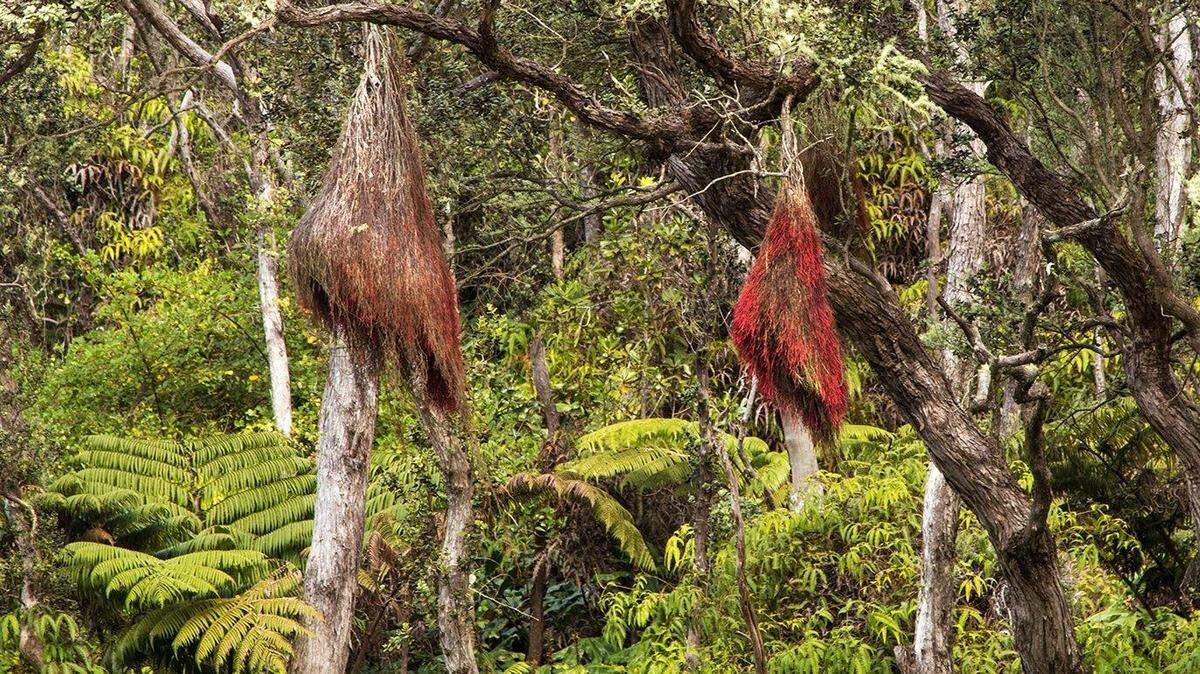
In yet another example of 2020’s endless supply of bad omens, hairy looking red pods are now growing from trees in a volcanic park on the Island of Hawaii.
A photo showing two of the growths dangling from Ohia tree limbs was posted Oct. 10 on Facebook by Hawaii Volcanoes National Park, a turbulent area that “includes two of the world’s most active volcanoes.”
Classic science fiction warns such pods are foreboding evidence of an alien invasion, like the pods that assume the shape of people in “Invasion of the Body Snatchers.”
But the National Park Service says the “red nests” are indicative of a different kind of trouble — one that has nature acting in reverse.
The Ohia trees are so stressed, officials said, roots are popping out above ground on their limbs.
“Stress may come from the cracking of the tree’s bark (either from natural growth or injury), fire heat or smoke, insects, or disease,” the post said. “In the park, the phenomenon has been especially documented in trees that were defoliated during the eruptions of Kīlauea Iki in 1959 and Mauna Ulu in the early 1970’s.”
Experts did not offer an explanation of why the aerial roots — known as aʻa lewalewa in Hawaii — are appearing in the trees, which are typically the first species of tree to sprout after a volcanic eruption.
The volcanic park made national news in August when the U.S. Geological Survey revealed “one of the world’s hottest bodies of water” was found growing in Kilauea volcano, McClatchy News reported. The water temperature ranges from 176 to 185 degrees, according to the USGS Hawaiian Volcano Observatory.
The lake began forming after a May 2018 eruption that caused the floor of Kilauea’s caldera to collapse, leaving “a hole nearly as deep as One World Trade Center,” according to a report by NASA’s Earth Observatory.
This story was originally published October 20, 2020 at 11:14 AM with the headline "Alien-looking hairy red pods sprouting from ‘stressed’ trees in Hawaii, experts say."