
Cluster of volcanic islands may be ‘interconnected’ parts of giant volcano off Alaska
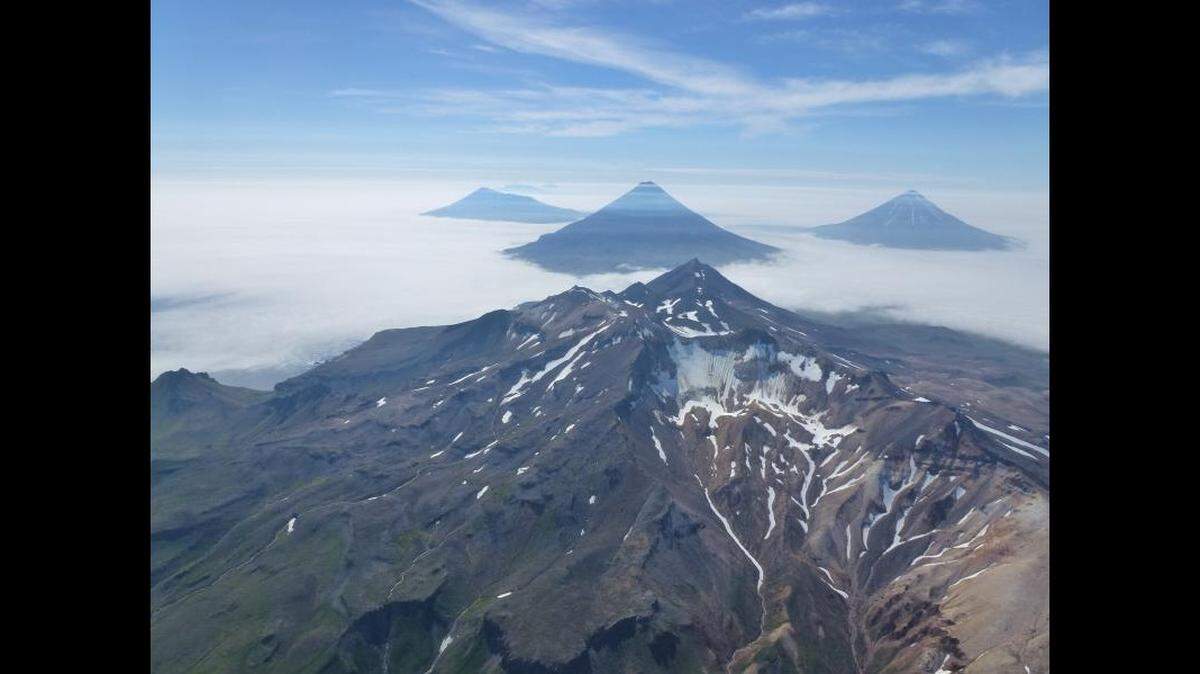
A giant and very much alive volcano may be hidden beneath the waters surrounding Alaska’s central Aleutian Islands chain, according to the American Geophysical Union.
Researchers from various fields and organizations gathered evidence that suggests a cluster of volcanic islands in the chain actually might be “interconnected” parts of one massive volcano caldera.
The caldera’s exact size and age have not yet been determined, but scientists suspect it is prehistoric.
“If the researchers’ suspicions are correct, the newfound volcanic caldera would belong to the same category of volcanoes as the Yellowstone Caldera and other volcanoes that have had super-eruptions with severe global consequences,” according to the news release from the A.G.U.
Data supporting the giant caldera theory will be presented at the AGU’s Fall Meeting on Monday, officials said in the release. The researchers include John Power of the Alaska Volcano Observatory and Diana Roman of the Carnegie Institution for Science.
The suspected caldera off Alaska is somewhere beneath the Islands of the Four Mountains section of the central Aleutians, officials say. The area is home to six volcanoes “and a number of subsidiary cinder cones and fissures,” according to the research.
Among the volcanoes is the 5,675-foot-tall Mount Cleveland, “arguably the most active volcano in North America for at least the last 20 years,” officials said in the release. Researchers think the caldera theory may help explain why Cleveland is so active.
Calderas are “a large basin-shaped volcanic depression” that forms when magma erupts from “a shallow underground magma reservoir” and the ground collapses, according to the U.S. Geological Survey.
The evidence for the “previously unrecognized caldera” includes: A mysterious “ring-shaped...gravity anomaly” connecting the volcanoes; “swarms of micro-earthquakes” that hint “of magmatic fluid migration”; and high sulfur emissions at Mount Cleveland that could only result from it being connected “to a larger magma source,” the report says.
The researchers did not give an estimated time for when the caldera formed. However, the eruption that created it could “have had global effects,” according to the release.
“Caldera-forming eruptions are the most explosive volcanic eruptions on Earth,” the release said. “The ash and gas they put into the atmosphere can affect Earth’s climate and trigger social upheaval.”
This story was originally published December 3, 2020 at 1:26 PM with the headline "Cluster of volcanic islands may be ‘interconnected’ parts of giant volcano off Alaska."