
Pile of large teeth and bones on sea floor off Chile puzzles scientists. What died?
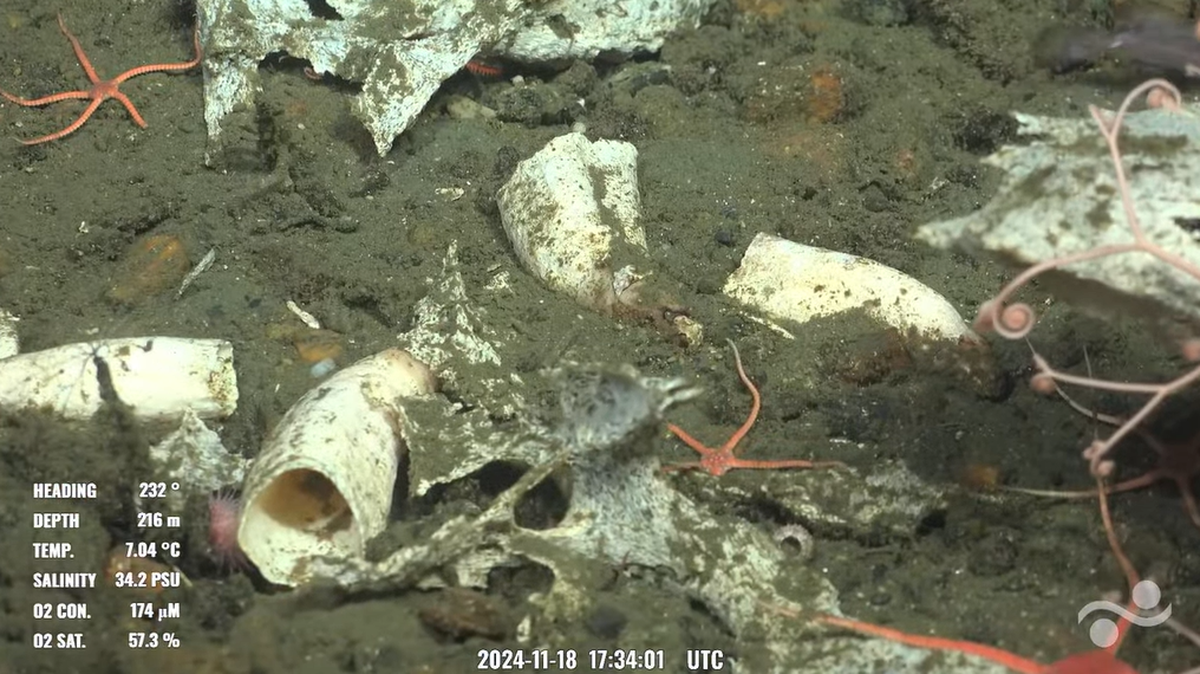
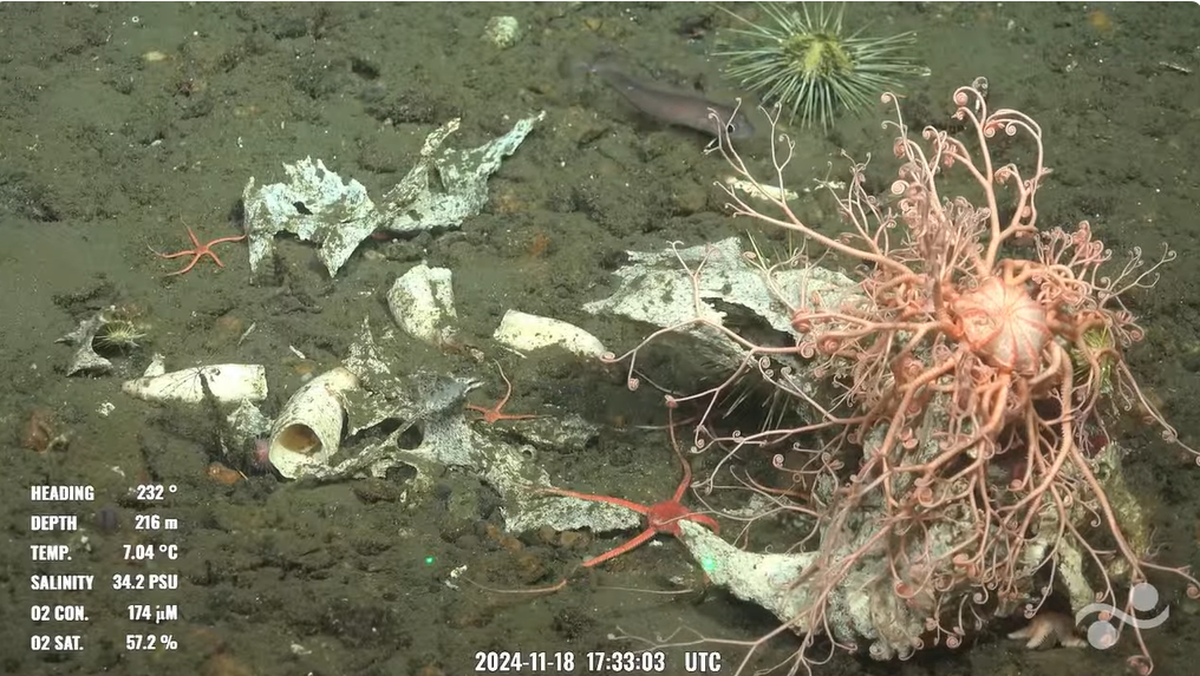
A live feed broadcast from the seafloor off Chile ignited a frenzy online when it showed a pile of large conical-shaped teeth 700 feet deep.
Included was a jawbone, with one fang still in it.
The discovery was made Monday, Nov. 18, by a team working with the Schmidt Ocean Institute, and the researchers admitted they weren’t sure what they found.
It wasn’t a shark, or a whale, or a leopard seal, the team concluded.
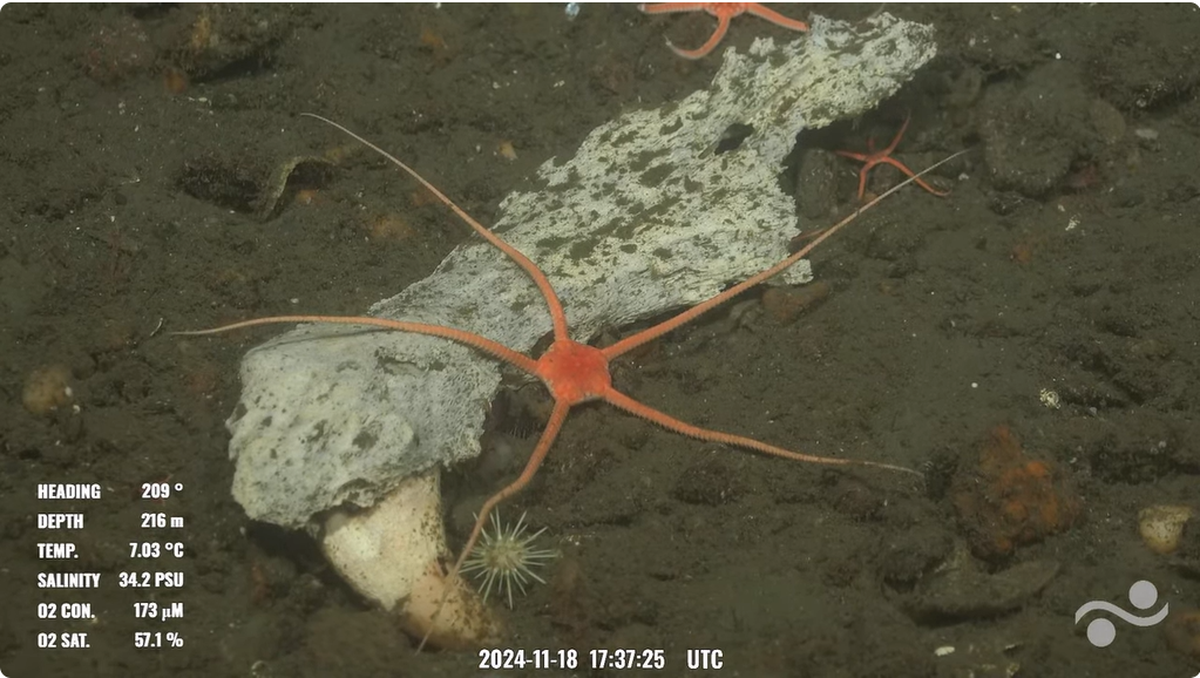
The video was being broadcast internationally and it didn’t take long for viewers to start pitching ideas, some sensible (alligator or crocodile) and some attempts at jokes (saber-tooth mermaid, killer cow).
It was clear that whatever died had fallen to the ocean floor and been picked apart by sea life, leaving only the heaviest and thickest of the bones and teeth.
The expedition was exploring a group of shallow seeps — spots where gasses bubble up from the ocean floor — in a canyon off the coast of Chile’s Taitao peninsula.
Samples of fauna and sea life were collected near the seeps with a remotely controlled vehicle. The team also collected samples of the bones and teeth, in hopes DNA could be extracted to “find out what it was.”
Evidence of osedax — tiny “Zombie worms” — was also seen in the scattered bones.
After a lengthy live discussion, the team’s best guess was that the bones and teeth may have been from a South American sea lion.
The species can grow to 9 feet and nearly 800 pounds with “strong jaws equipped with sharp, conical teeth adapted for grasping and tearing prey,” experts say. The sea lions are native to Chile, where “they live along shorelines and beaches, which usually consist of sand, rocks, gravel and/or pebbles,” Animalia says.
This story was originally published November 21, 2024 at 7:55 AM with the headline "Pile of large teeth and bones on sea floor off Chile puzzles scientists. What died?."