Elusive predator — covered in ‘clouds’ — seen on trail camera in India. See the animal
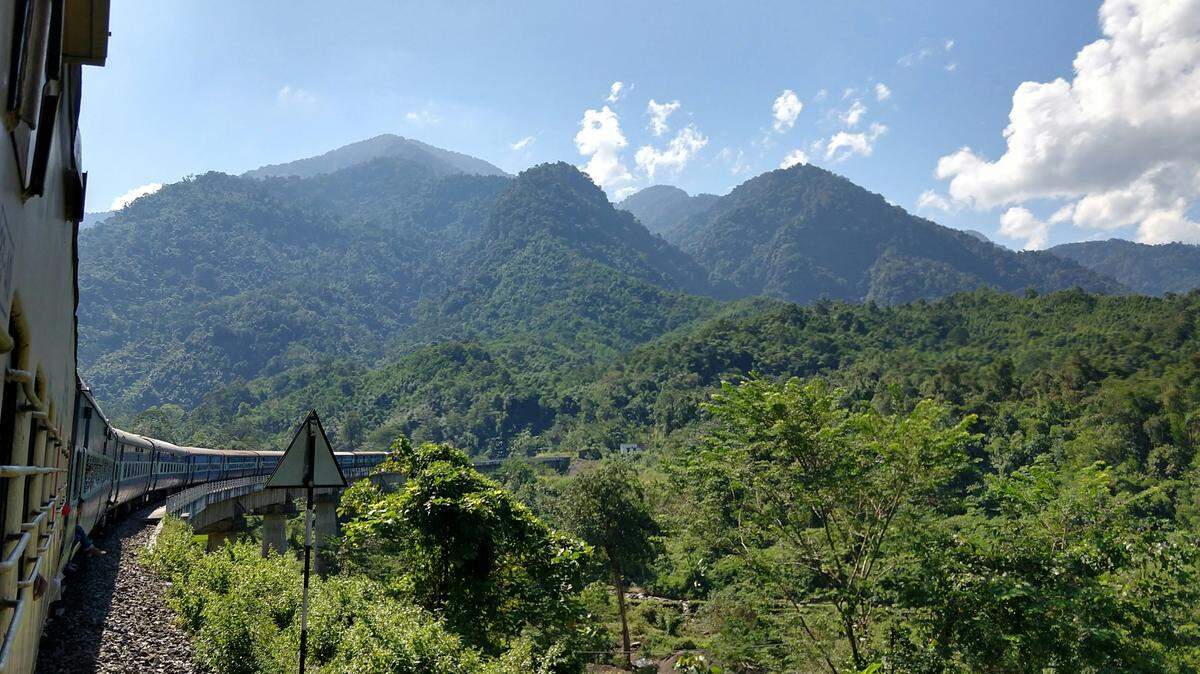
In the eastern Himalayas, snowcapped mountains stick out from rugged forests, and the towering peaks touch the clouds.
But for one species of rarely-seen predator in the region, “clouds” come down to them and adorn their fluffy coat.
A clouded leopard was recently spotted on trail cameras set up by the Ministry of Environment and Forests in Assam, India, according to a March 6 Facebook post from the agency’s minister, Chandra Mohan Patowary.
“Thrilling conservation update! Our camera trap inside Dehing Patkai National Park has just captured a rare and remarkable sighting of a clouded leopard,” Patowary wrote in the post. “Listed as vulnerable on the IUCN Red List, the clouded leopard (Neofelis nebulosa) is a shy and elusive big cat found across the forests of the eastern Himalayas, northeast India and southeast Asia.”
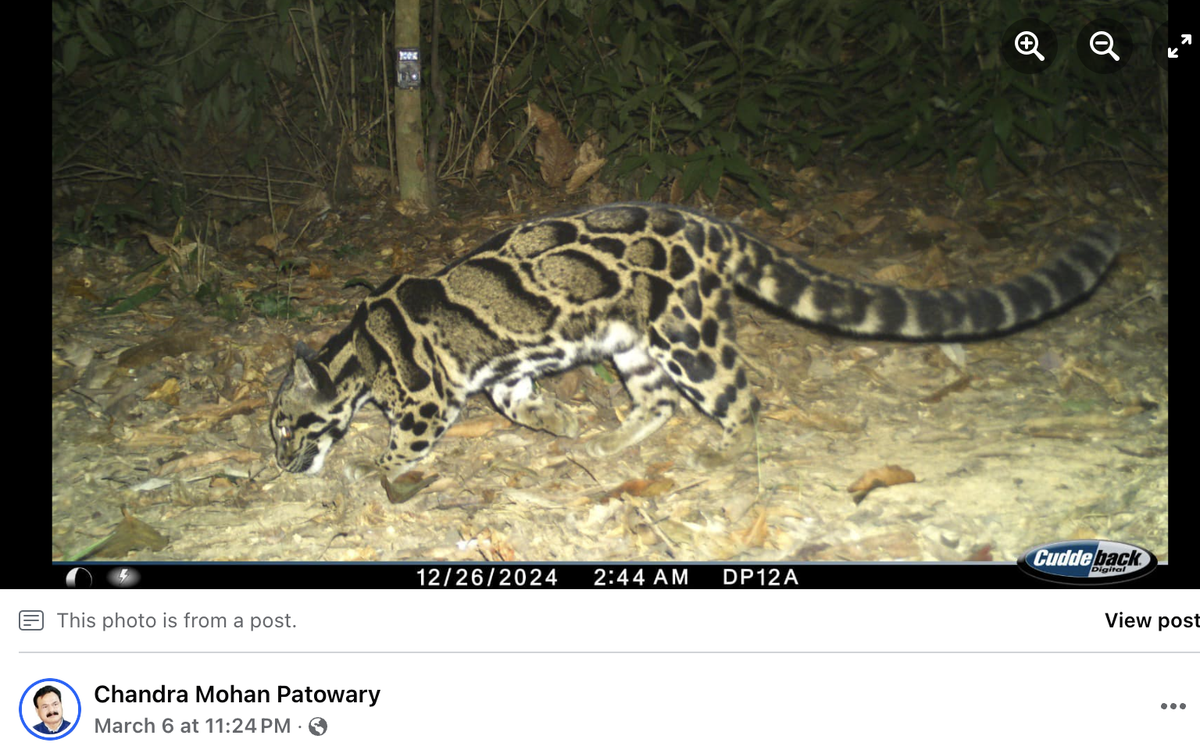
There are estimated to be fewer than 5,580 adult clouded leopards left in the wild, according to the IUCN Red List, and their numbers are decreasing across their geographic range.
Clouded leopards are “one of the most ancient cat species” and earn their name from the “distinctive ‘clouds’” pattern on their pelt, according to Nature.
They are larger than house cats, but small compared to big cat species like panthers and tigers, Nature says. Females can weigh as little as 22 pounds while males can reach weights upward of 50 pounds.
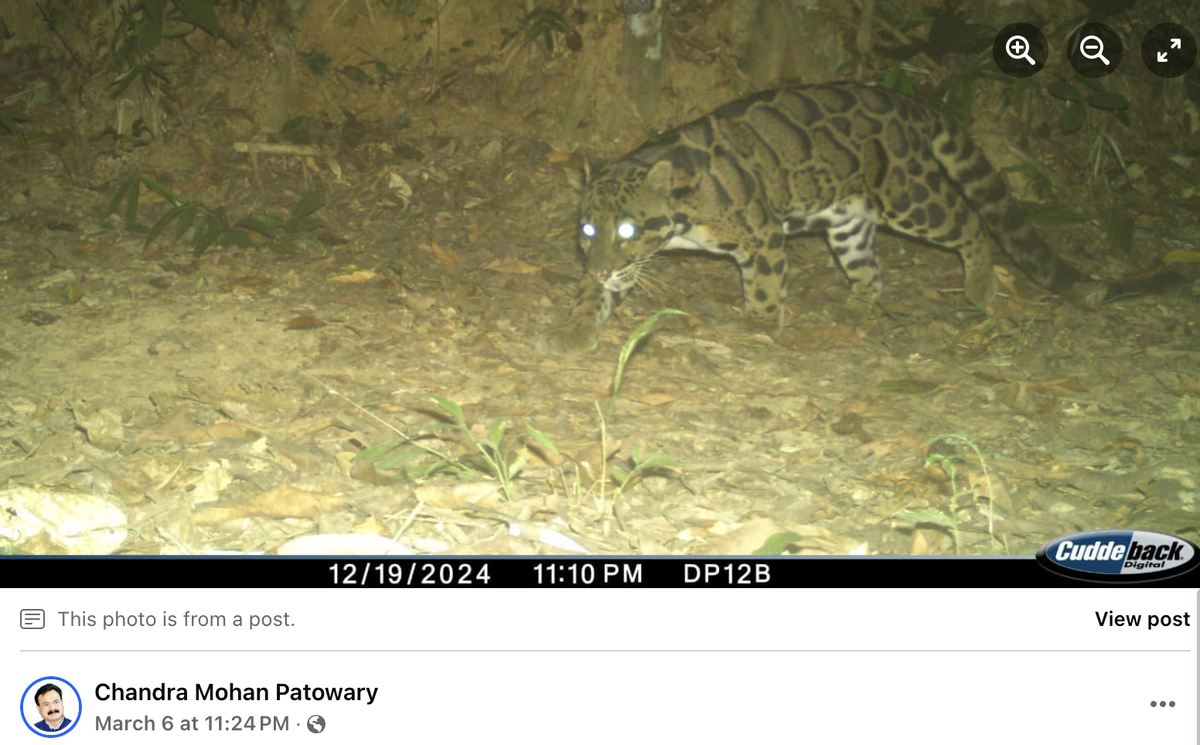
Clouded leopards are perfectly adapted for a life in the forest and have specialized anklebones and footpads that allow them to be one of the few cat species that can go down trees headfirst, according to the Smithsonian’s National Zoo and Conservation Biology Institute.
Despite their name, clouded leopards are not a leopard at all, and belong to their own species, the Smithsonian said. They also have a different bone structure in their neck that prevents them from roaring or purring like other cats, and they are restricted to growling, hissing and chuffing to communicate.
Clouded leopards are threatened by deforestation and poaching, as land is cleared for palm oil agriculture and they are hunted for their teeth, pelt and bones used in some traditional medicine, according to the Smithsonian.
Dehing Patkai National Park is in Assam, one of the northeastern-most districts of India.
This story was originally published March 10, 2025 at 2:13 PM with the headline "Elusive predator — covered in ‘clouds’ — seen on trail camera in India. See the animal."