Elusive ‘praying’ females seen for first time 150 years after species’ discovery

High up in the tree canopy in a forest in French Guiana, citizen scientists found what had eluded researchers for 150 years.
Females, on guard.
Until that moment, all that was known about one praying mantis species — Microphotina viridescens — was learned by observing males, according to an April 15 study published in the peer-reviewed journal Zootaxa.
A single “poorly preserved” specimen was all researchers had to study for insights into the female sex, despite a century and a half of searching for them, the study said.
Now, thanks to the work of citizen scientists with the Association for the Study of Mantises of French Guiana and their collaboration with scientists from around the world, large knowledge gaps about the species are being filled in.
Observations in the wild
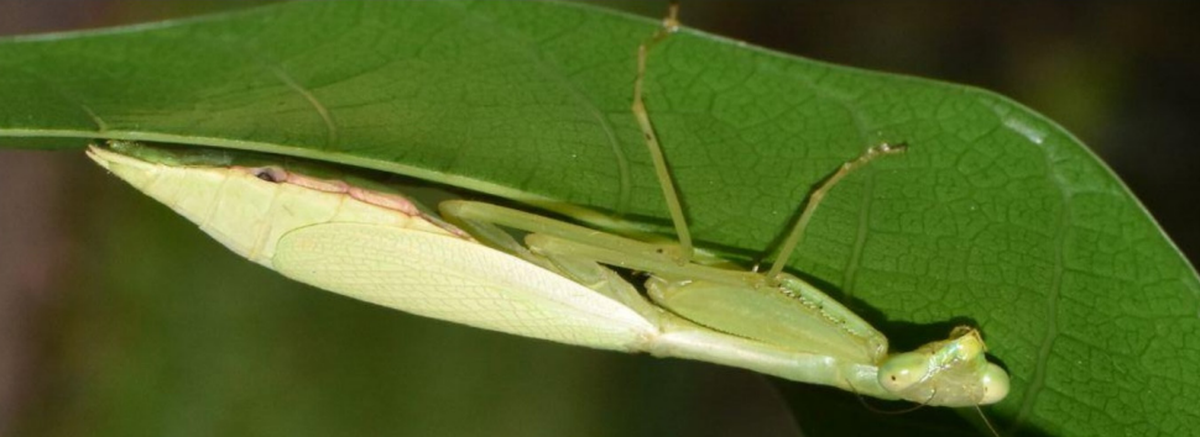
Four females were observed in the tree canopy in Trésor Regional Nature Reserve, two of which were guarding an egg case called an ootheca.
When their perches were disturbed by the researchers, the females pressed their bodies firmly against the leaves to avoid detection in a defensive behavior called crypsis, according to the study.
Researchers said the aggregation of multiple females is “particularly noteworthy” in a species known to cannibalize other mantises. They hypothesize females may gather due to “a strong preference for certain tree species,” either to lay their eggs or because they never actually travel far from where they’re born.
Additionally, the females may have adapted to have a “higher tolerance” for each other, lowering the risk of cannibalism, according to the study.
Another female was caught about 50 miles northwest in a “modest suburban development” in Kourou, according to the study.
All females were captured at least 13 feet above ground, researchers said.
Parental care observed for the first time
Several specimens were collected and reared in captivity for closer study.
According to the study, females in captivity wandered their enclosure at night, and “returned to guard their egg cases, motionless, during the day.”
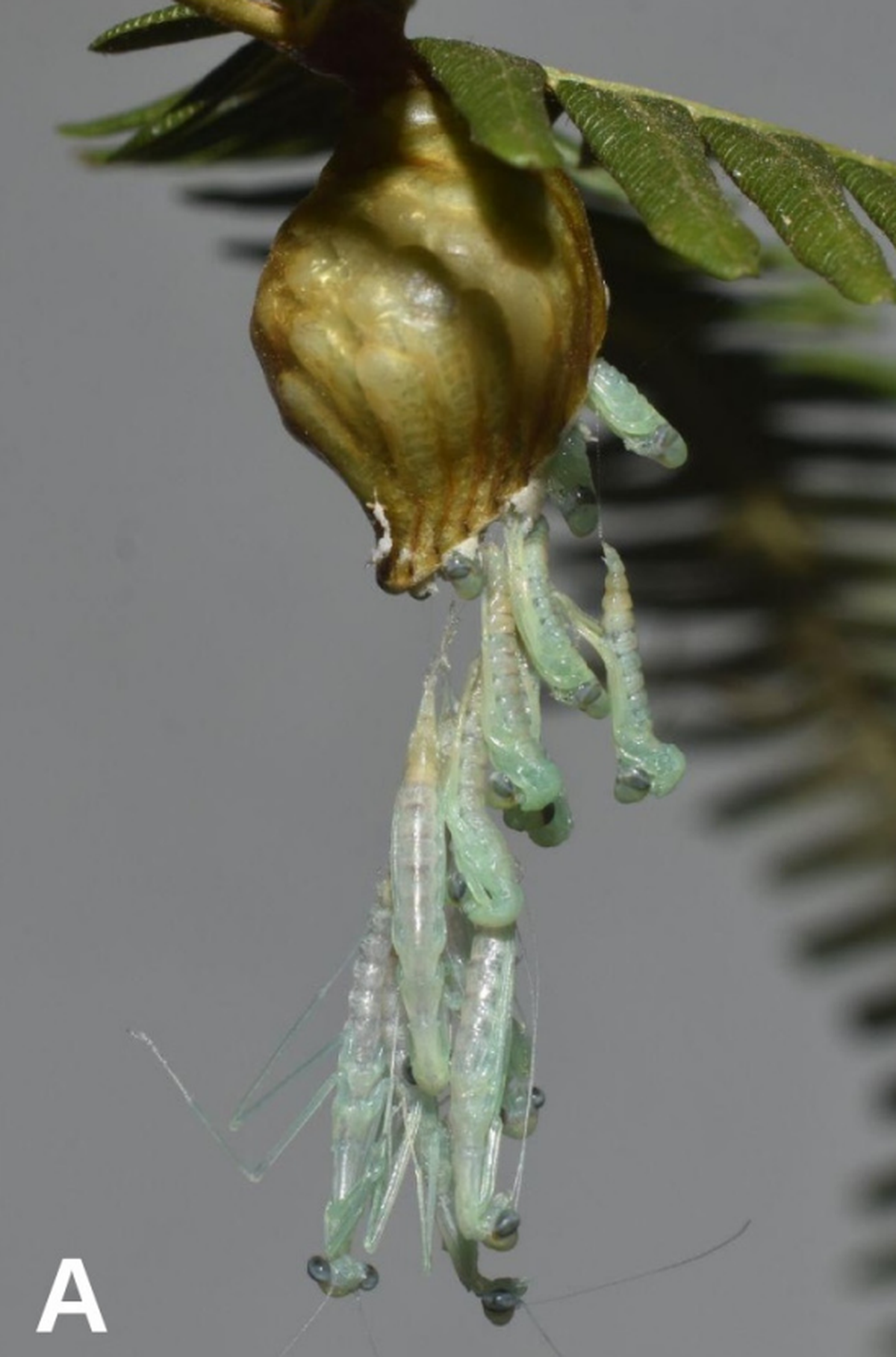
Researchers said this behavior suggests “a possible evolutionary trade-off between parental care and self-maintenance.”
The research team included Julio Rivera, Nicolas Hausherr and Leonardo Moutinho Lanna.
This story was originally published April 24, 2025 at 9:08 AM with the headline "Elusive ‘praying’ females seen for first time 150 years after species’ discovery."