
How to rebuild SC’s failing state government
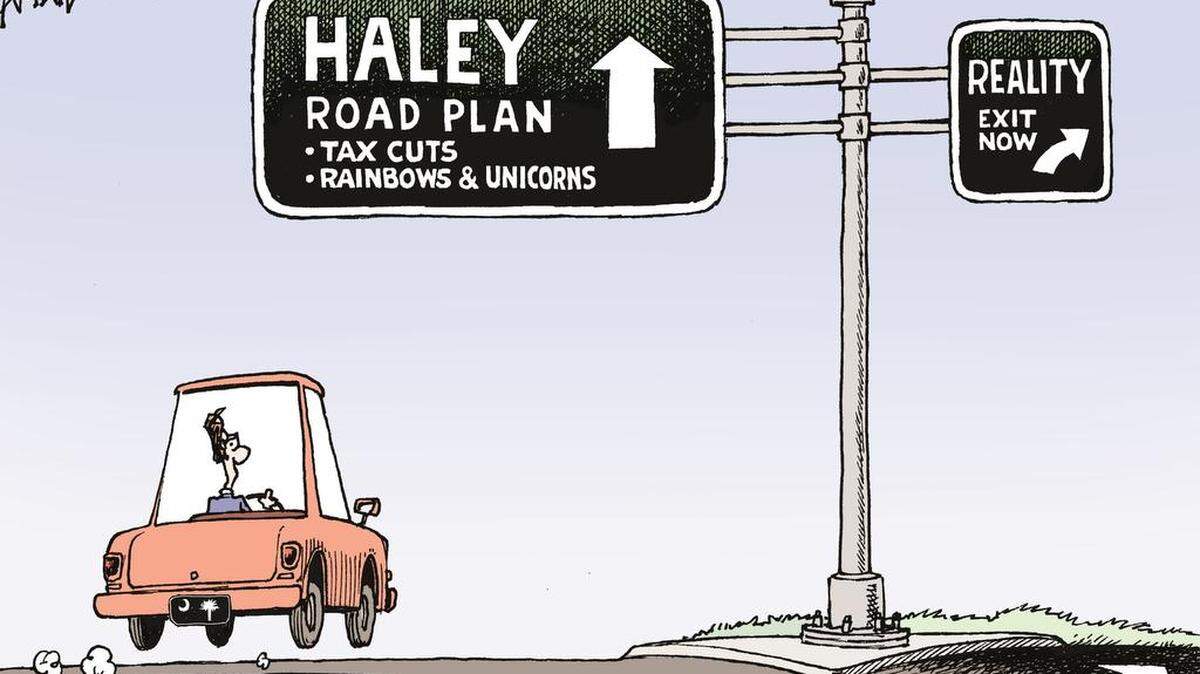
There is not enough money, South Carolina, under the sofa cushions of the state’s budget to fix the Palmetto State’s crumbling roads and bridges.
But there is a solution.
All it requires is public and political will.
Since May, The State newspaper has been spotlighting some of South Carolina’s most pressing issues – from the need for better leadership, to better regulation of dams, to rebuilding crumbling state agencies and roads, to improving poor, rural schools.
Some of the solutions are simple.
Bursting dams, for example, have cost South Carolina hundreds of millions of dollars in damage during the last year. A fix could be as cheap at $769,000, a small sum in the state’s almost $8 billion general fund budget.
But money alone won’t be enough.
A fix also will require leadership.
After last October’s dam-busting floods devastated the Midlands, legislators knew they had to toughen the state’s regulation of dams. They failed.
Why?
Amazingly, part of the problem was legislators could not agree how to differentiate a rural dam – used by a farm – from a dam in an urban or suburban area.
Lawmakers will try again in January, when South Carolina’s overwhelmingly Republican Legislature returns to Columbia.
And, hopefully, this time a class of third-graders will be there to help them.
Look below the dam, they might suggest. If you see a cow, it is a rural dam. Move on. If you see homes that could be flooded if the dam breaks, require that the dam be safer.
Other fixes will be more complex and costly, a challenge in a poor state where leaders often kick the can down the road, when presented with a problem, rather than produce a solution.
But solutions have been offered by some leaders.
Fixing the state’s roads, for example, will cost almost $1 billion a year in added spending. But raising the state’s gas tax – really a fee charged those who use those roads, tax-averse Republicans nervously suggest – could raise more than $700 million a year.
Raising the gas tax will be opposed bitterly by some, including the Koch brothers-backed Americans For Prosperity, a “dark money” political group. Tea party Republicans also will do all they can to kill a gas tax hike, insisting enough money already is spent on roads if it is managed better. Restructure the state Transportation Department – making it directly accountable to the state’s Republican governor, who, in theory, is accountable to voters in an effectively one-party state – and see if we don’t get better results, they will argue again.
But Transportation officials warn there is not more time.
Because of years of neglect, some state roads already are so deteriorated they will have to be entirely rebuilt. As with the leak in your home’s roof that worsens until the house is beyond repair, allowing other roads to crumble into that condition only will increase the eventual cost even more.
Fixing the state’s poor, rural schools also will be costly.
But some leaders are suggesting at least partial solutions.
Last year, for example, Republican Gov. Nikki Haley asked legislators to borrow $200 million to help poor schools build new facilities to replace leaking buildings that lack even the most basic technology.
A year later, legislators say they will study the idea – again – when they return in January.
Republican state Superintendent of Education Molly Spearman suggests the time has come to change, at least partially, how the state pays for its schools.
Why, she asks, should Greer schools get all the tax benefit from a BMW – or Charleston schools get all the benefit from a Boeing – when taxpayers statewide pay for the incentives that attract mega-industries to South Carolina? Why not share the wealth among all S.C. schools, since all taxpayers pay the cost?
Legislators know that kind of thinking is part of the solution. One told students from the poor Swansea school district as much last year. But wealthier, suburban constituents don’t want their tax dollars going to poor, rural schools, largely minority and in Democratic areas of the state.
But – almost 30 years after poor schools sued the state, asking for more money – there is a need to act now. The rural schools won their lawsuit. And, while the state Supreme Court has shied away, thus far, from imposing a solution, there is no assurance that it or another court will not intervene, imposing a judicial solution if the people’s representatives fail again to act.
Day-to-day issues also must be fixed.
Understaffing at state agencies is taking its toll on the services that South Carolinians use and need.
Too few staffers at Social Services, for instance, made that state agency the poster child for what happens when too few workers, paid too little, are asked to do too much.
Children die.
And Social Services is not alone.
A riot at an understaffed Juvenile Justice facility shut down that center. The state’s prisons system cannot hire enough guards. There are too few state troopers on South Carolina’s increasingly deadly roads. Rural schools say they cannot hire or retain quality teachers. The state’s mental health system says its health care professionals are forced to work overtime because it cannot fill job vacancies. Why? Its pay is not competitive.
Across the board, low pay – often, combined with overwork – plays a major role in the state’s inability to hire.
Problems? Yes.
But there are solutions. And there is an urgency to act now.
Other costly issues are looming – paying for Hurricane Matthew’s damages and fixing the state’s underfunded pension system for state and local public-sector workers, including teachers.
A case-by-case look at what can be done to start rebuilding South Carolina.
Dams: Toughen regulations
The S.C. Department of Health and Environmental Control, which has doubled its dam safety staff in the past year, favors toughening state regulations to complement its higher budget and staffing, increased after last year’s flooding.
Legislators have been hesitant to toughen the law, fearing rural landowners will complain that they are being unduly burdened. But a special dam safety committee is meeting this fall to discuss tightening the law. Supporters say the law needs more teeth to help avoid dam failures like those last fall and earlier this month, when 75 state regulated dams failed during storms.
David Wilson, who is overseeing the reform effort for DHEC, said the idea is to add more layers of oversight.
“The more safety layers you add, the more visual (inspections) that are done, the more looks you get and the more criteria you put in place, it is going to improve the overall standing of our dams,’’ he said.
Ways to beef up the program include:
▪ Requiring all dam owners to register with the state so regulators will know who owns a dam
▪ Requiring owners to visually inspect their dam annually, then report their findings to the state
▪ Requiring the owners of dams that are high or pose significant hazards to hire professional engineers to conduct detailed inspections every five to 10 years
▪ Reclassifying many low-hazard and nonregulated dams in urban areas to bring them under stronger state oversight
▪ Providing more money to the dam safety program to enforce tougher regulations.
The cost? Last year, DHEC estimated it needed $769,070 more in state money. A single dam blowout can cost far more.
Social Services: Hire more workers, pay them better
Under new director Susan Alford, the state’s Department of Social Services is healing after years of neglect that contributed to the deaths of children overseen by the agency, critics say.
But more needs to be done, including:
▪ Paying child-welfare workers more competitive salaries.
The agency has more than 900 child-welfare workers who manage cases of child abuse or neglect. Entry-level caseworkers earn a starting salary of $34,733 a year. That is not competitive with some nearby states. For example, two years ago, a child-welfare worker with a year of experience was paid more than $36,000 a year in Tennessee.
▪ Hiring more licensed social workers.
Attracting licensed social workers into entry-level child-welfare positions will be a tough sell when they can make much more working elsewhere. A 2014 state audit found S.C. child-welfare workers can find higher paying jobs in their own communities – working at schools or for other organizations – or in other states. For example, a child protective services social worker in Orange County, N.C., was paid a starting salary of $45,677 two years ago, the audit found.
▪ Expanding statewide Social Services’ call-in system that screens reports of abuse and neglect, and ensuring staff members are adequately trained.
Social Services has said it needs the new call-in system to ensure it knows of abuse cases. But rolling out the system for half of the state produced so many calls that the understaffed agency was overwhelmed. As a result, the rollout was halted, leaving half the state uncovered and children in danger. State lawmakers have approved 52 new positions to expand the call-in system statewide. But the agency has difficulty hiring, because of low pay, and retaining workers, because of overwork.
▪ Lowering child-safety workers’ caseloads to levels recommended by experts.
As of midyear, 482 Social Services caseworkers each were overseeing more than 24 children, the recommended level. Another 77 caseworkers carried caseloads of 50-plus children. Lawmakers approved 171 new child-welfare worker positions, including second- and third-shift workers, workers for the call-in hubs and front-line child-welfare caseworkers.
▪ Be more responsive to those who report abuse and neglect. A child welfare advocate said those who are reporting abuse sometimes are kept on hold for 45 minutes to an hour.
The cost? Single-digit millions. Social Services received $5.6 million in added state money this year to hire and retain caseworkers. The money is slated to go to give child-welfare workers raises and opportunities for education advancement, to recruit new caseworkers to run statewide intake hubs and to lower caseloads. The agency has not yet submitted its budget request for 2017-18. But Social Services leaders anticipate asking for more caseworkers to continue lowering caseloads and improving working conditions for caseworkers.
K-12 education: Fix poor, rural schools
After winning a lawsuit they filed in the early 1990s, poor, rural schools are due more state support.
Some ways to make that happen include:
▪ Changing the way the state pays for public schools, allowing poor districts to benefit from tax dollars paid by major corporations lured to the state with incentives that are paid for by taxpayers statewide. More radically, South Carolina could look to equalize school funding statewide. However, that would require that affluent districts effectively subsidize poor districts, a move that could anger suburban taxpayers who feel no connection to rural schools or the future of their students.
▪ Ensuring that all students – especially those in poor, rural districts – have access to technology and courses to help them prepare for college or careers. Some students in rural districts now take standardized tests using pencil and paper because their schools lack computers and internet access.
▪ Helping poor school districts pay for new buildings, with technology, so they do not have to depend on weak local tax bases to raise that money. Gov. Haley has proposed the state borrow $200 million a year to help poor districts pay for school facilities.
▪ Paying teachers salaries that compete with neighboring states, and helping poor, rural school districts pay salaries that are competitive with wealthier S.C. districts so they can attract and retain quality teachers. It would cost roughly $45 million to raise the state’s average teacher salary up to the Southeastern average and $297 million to raise it to Virginia’s average salary, which leads the Southeast. (Those costs do not include benefit increases that would come with rising salaries.)
▪ The state could fund fully – at a cost of $547 million in new spending next year – a pot of money distributed to districts based on the number and type of students they teach. The money goes mostly to pay teacher salaries.
▪ Provide more support to school districts where student achievement suffers year after year. Also, hold local school boards accountable for chronically poor student achievement by encouraging or forcing collaboration and consolidation between districts to improve students’ access to resources.
The cost? At least $747 million
Roads: Increase the gas tax
Gov. Haley has touted her record in attracting new jobs to South Carolina.
But the state’s crumbling road and bridge infrastructure could put a screeching halt to that success story unless problems are addressed.
Thus far, Haley has not connected the two issues in her political agenda, insisting she would approve higher taxes to repair roads only if passed with offsetting tax cuts that would defund large swaths of state government, including education.
But, as legislators prepare to return to Columbia, the political winds are shifting.
Haley is a second-term, lame-duck governor, and the legislators who return to Columbia will have won election or re-election in November, meaning they will not have to face the voters – including the GOP’s no-new-taxes, tea party wing – again for two years.
With legislators talking privately of ignoring Haley, unless she is willing to play a constructive role, the table is set to bite the tax-hike bullet. The House already has showed it will pass a higher gas tax, having done so last year.
The options include:
▪ Increasing the state’s gas tax by 20 cents a gallon. Even with the increase, South Carolina’s gas tax would remain lower than those of neighboring states. The increase could be phased in a 4-cent hike every two years for a decade.
▪ Hiking other driver fees, including the cost of a driver’s license. Doubling the driver’s license fee, increasing the cost of a 10-year license to $50 from $25, would raise an added $15 million a year. Legislators also could target out-of-state tourists by levying a specific hotel fee, a move Georgia has made. Georgia tacks a $5 fee on hotel and motel stays, a fee expected to raise at least $150 million a year, depending on hotel occupancy rates, according to the Atlanta Journal Constitution.
▪ Shedding state responsibility for about 20,000 miles of local roads, including neighborhood roads, and giving the maintenance of those roads – and more of the added gas tax money – to counties. The devolution of roads should be optional, advocates say. Poorer counties do not have the road repair resources needed.
▪ Requiring county transportation committees to spend the money they get from the state – normally about $75 million a year – on a priority basis, ensuring roads are repaired based on their importance, not local politics. Unable to pass a statewide road repair plan, lawmakers have sent almost $300 million more to county committees in the past two years. However, some lawmakers are concerned that money has not been well used.
▪ Removing the State Transportation Infrastructure Bank from the process of picking road projects and letting the Transportation Department decide which projects are financed, based on need and usefulness.
▪ Making the Transportation Department a cabinet agency, reporting directly to the governor, and requiring its director have a background in transportation, including having led an organization of similar size and budget.
The cost? An added $943 million a year is needed to repair South Carolina’s road system. When fully phased in, a 20-cent-a-gallon increase in the state’s gas tax would yield an added $740 million a year. Higher driver’s license fees could add another $15 million. An out-of-state hotel-motel fee could add millions more. Together, the three might not get the state all the way to the almost $1 billion needed. But they would be a huge step in the right direction.
Leadership: Can the GOP govern?
South Carolina, effectively, is a one-party state – Republican.
The GOP has controlled the S.C. House since 1994, the state Senate since 2001 and the Governor’s Mansion since 2003 – and for 26 of the past 30 years.
The GOP’s clarion call has been for lower taxes and smaller government. Today, South Carolina’s state government is smaller than it was a decade ago, and its income taxes and property taxes are among the nation’s lowest. (Among the 43 states with a personal income tax, South Carolina ranks 35th. Its business tax ranks 45th. Its property tax ranks 46th, all according to a 2015 study by the conservative Tax Foundation.)
Now, however, the Republican-controlled House and GOP-majority Senate are confronted by a series of problems that require fixes.
The question is: Can the GOP do more than say no? Can it govern?
Failing that, can S.C. Democrats – largely powerless bystanders – convince enough South Carolinians that they deserve a chance to lead again, promising, in the words of former Democratic U.S. Sen. Fritz Hollings, “government that works.”
“If people in this state are satisfied with driving on bad roads, with having poorly educated children, it will never change,” state Rep. Gilda Cobb-Hunter, D-Orangeburg, said earlier this year. “What the public has to understand is that they have to hold us accountable and stop falling for the okey-doke.”
This story was originally published October 22, 2016 at 8:21 PM with the headline "How to rebuild SC’s failing state government."