
James Smith wanted a 3rd-party nomination. Will it cost SC Democrat a spot on ballot?
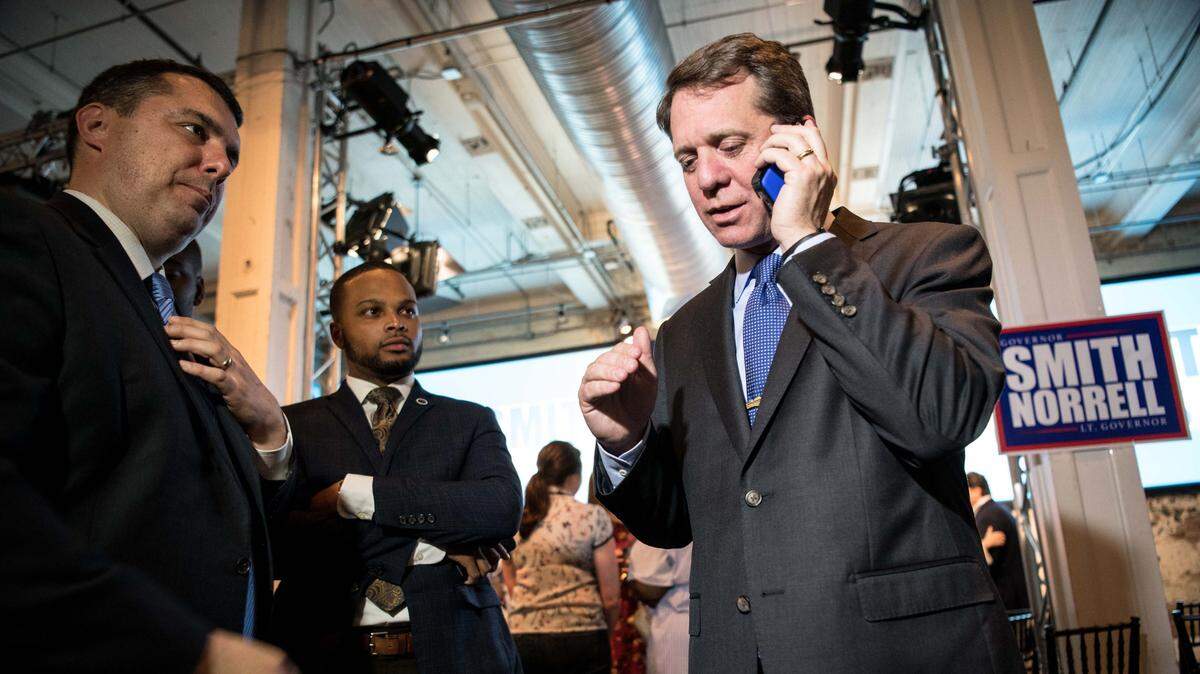
A short-lived bid to win the nomination of three small political parties could backfire on James Smith.
Some argue the move could force the Columbia Democrat off the November ballot for governor altogether — a concern Smith categorically rejected Monday.
Last week, state Rep. Smith, who won the Democratic nomination for governor in June, filed to run also as the gubernatorial nominee of the Green, Libertarian and Working Families parties.
But Smith’s campaign withdrew those applications Friday amid concerns that if he was rejected by any of the small parties, the Democrat could lose his spot on November’s general election ballot under the state’s “sore loser” law.
While “fusion” candidates — nominated by more than one party — are allowed under state law and fairly common in some races, state law also disqualifies from the ballot the nominee of one party who is rejected by another party.
On Saturday, after Smith had withdrawn his candidacy, the S.C. Libertarian Party voted against having Smith as that party’s nominee. After the vote by the party’s executive committee, party leaders said they plan to ask the state Election Commission to decertify Smith, potentially disqualifying him from appearing anywhere on the November ballot.
Smith brushed off that possibility Monday.
“It’s wholly inapplicable,” Smith said Monday of the state’s “sore loser” law. “We’re not a candidate, and we haven’t lost. ... We’re neither a loser nor a sore loser.”
S.C. Election Commission spokesman Chris Whitmire said election officials will consider the Libertarians’ request when they receive it.
But Whitmire said the state’s “sore loser” law was meant to protect a party’s nominee from facing the same opponent twice. That wouldn’t apply in Smith’s case since the Libertarians don’t have a nominee for governor. Also, the law doesn’t provide for a candidate being rejected by a party committee rather than a convention, Whitmire said.
“We’ll cross that bridge when we come to it, but considering the candidate withdrew on Friday, before the vote on Saturday, I would think it would be moot,” Whitmire said.
Experts say the Palmetto State’s combination of fusion and “sore loser” rules can cause problems.
“No other state has come up with such an illogical rule,” said Richard Winger, editor of the monthly Ballot Access News, who says the Smith case is unlike any he ever has heard of before.
“I don’t think there’s any precedent for this in any other state,” Winger said. “But I don’t think any state official will want to kick him off the ballot. ... He got 62 percent in the (Democratic) primary. That’s so powerful morally that nobody will mess with that.”
Former political science professor David Gillespie, who has written two books on third parties, agreed.
Gillespie was a supporter of Eugene Platt, the Green Party nominee for the S.C. House in 2008 who was kicked off the ballot as a Green candidate after losing a Democratic Party primary. Despite that precedent, Gillespie doubts Smith is in any danger.
“There’s a lot of discrimination against third parties but, because he has the Democratic nomination, that’s a feather in his cap,” Gillespie said.
Smith says his intent in filing for the nomination of the smaller parties was to show that “every voter deserved to be heard.” But, he added, he “got word pretty soon some would try to take political advantage of it.”
Smith tried to use the controversy to hit his opponent, Gov. Henry McMaster, R-Richland, whose campaign dismissed the Greens and Working Families as “fringe groups” with radical ideas.
“Henry has made it clear that, to him, their voices don’t count,” Smith said. “He cares only about a narrow subset of people in South Carolina — those who think a certain way, representing a limited ideological wing of one party.”
McMaster spokeswoman Caroline Anderegg shot back. “It is rich that James Smith, who tried — and failed — to game the electoral system with a half-baked ballot scheme, would criticize anyone for playing political games.”
Anderegg said, by seeking their nomination, Smith was endorsing the smaller parties’ more left-wing platforms, calling them a “radical departure from South Carolina values” that would “wreak havoc on our economy.”
On Sunday, the Green Party voted to endorse Smith — but not nominate him — at a meeting of its steering committee. Smith says he would seek a similar endorsement from the Working Families Party.
“When we were on our conference call, we asked Smith to call in briefly, which he did,” said Green Party steering committee member Scott West. “He said the fusion idea was well-intentioned, but that the discussion around it was turning negative, so he’d be happy with an endorsement. He answered some questions on policy and we were all good.”
But Libertarian Party Chairman Stewart Flood thinks even that decision could cause problems for Smith’s campaign.
“If they failed to nominate him, that decertifies him,” Flood said. “That could be used in a lawsuit.”
Flood indicated the Libertarian Party likely would not mount a legal challenge to Smith’s place on the ballot, citing the expense of filing a suit. “It would be a matter of whether we sell enough T-shirts” to pay for a lawsuit, Flood joked.
The S.C. Republican Party has not indicated if it would challenge Smith’s nomination in court.
Anderegg said the McMaster campaign has no plans to file a lawsuit. But, she added, the situation “raises serious questions about (Smith’s) competency that we plan on highlighting.”
This story was originally published August 6, 2018 at 4:47 PM.