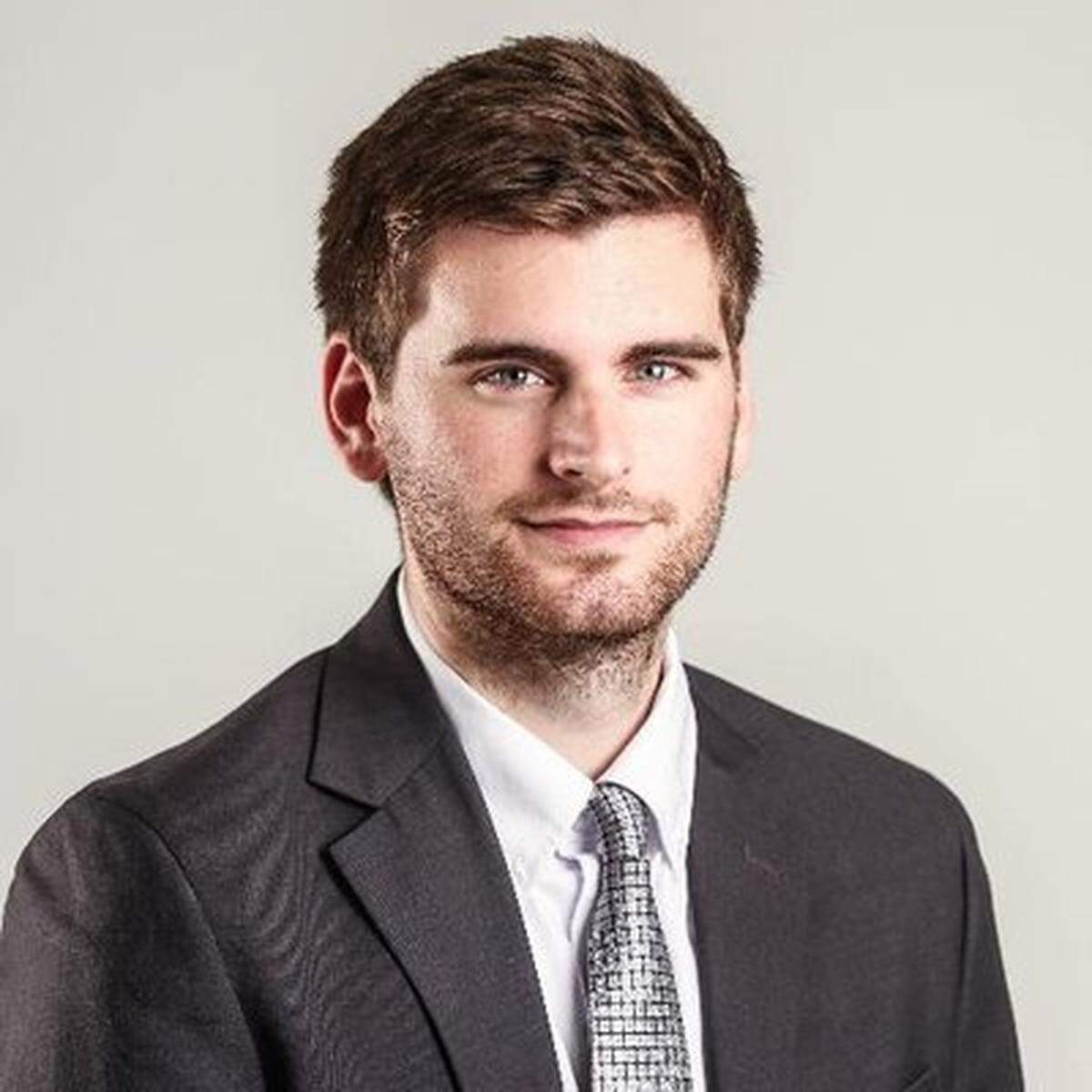
Midlands utility chairman indicted, charged with using office for personal profit
The former chairman of Tri-County Electric Cooperative in St. Matthews was indicted Friday on five charges of misconduct in office and using his position for financial gain.
A grand jury in Calhoun County voted to charge Heath Hill, a 69-year-old Lower Richland farmer, with using his longtime office to obtain hundreds of thousands of dollars in free or discounted power lines and electric service for himself and his family and to improperly secure an $80,000 cash payout from the co-op.
The indictment echoes a series of stories The State newspaper published last year that revealed problems at Tri-County Electric, a not-for-profit power distributor that serves 13,600 customers in six Midlands counties and has an annual revenue of about $45 million.
Last summer, The State reported Tri-County’s part-time board members were enriching themselves with excessive per diem payments, lavish trips and inappropriate perks while their customers in Richland, Lexington, Calhoun, Orangeburg, Sumter and Kershaw counties paid some of the highest electric rates in the state.
Tasked with keeping costs down for customers, who jointly own the co-op, Tri-County’s leaders had hiked their own pay to more than triple the national average, awarded themselves co-op funded health and life insurance plans, and created retirement plans that paid out nearly $81,000 to each board member in 2008.
Hill, a Tri-County board member since the mid-1990s, made nearly $79,000 from the part-time job in 2016.
The State also reported on Tri-County employees’ allegations that Hill and other board members had directed them to install power lines, perform landscaping work and provide electric service for board members or their friends and families for free or at discounted rates.
Those stories led Tri-County’s customers to take the unprecedented step of firing Hill and the rest of the board at a special meeting in August 2018. The reporting also prompted First Circuit Solicitor David Pascoe and the State Law Enforcement Division to launch the criminal investigation that produced Friday’s indictments.
Pascoe said a SLED investigation is continuing into the matter but he declined to answer questions about who else might be under investigation.
“At this point in the process, the indictments are mere accusations,” Pascoe said in a statement. “Mr. Hill is presumed innocent until proven guilty.”
Hill’s attorney, Columbia lawyer Joe McCulloch released a statement Friday afternoon.
“There are two sides to every argument,” McCulloch said. “Our system permits the prosecution to obtain an indictment — ‘mere accusations’ of misconduct as Mr. Pascoe himself calls this indictment — based upon the presentation of only one side, the prosecutor’s side.”
McCulloch continued: “Mr. Hill will have his opportunity to address these ‘mere accusations’ at the proper time. We appreciate the public’s confidence in Mr. Hill and their embrace of the presumption of innocence.”
Since The State began writing about Tri-County in May 2018, the newspaper has repeatedly requested comment from Hill. He has declined to discuss the situation.
The scandal at Tri-County led to new scrutiny of South Carolina’s 20 electric cooperatives, the independent, not-for-profit utilities that were created in the late 1930s to distribute electricity to rural areas that were still in the dark.
The co-ops, which serve some 1.5 million South Carolinians in all 46 counties, are jointly owned by their customers, who elect board members at annual meetings. Any profits they make are supposed to be distributed back to those customers.
But over time, The State reported last August, co-op board pay and expenses across South Carolina have soared, board members have retained their seats for decades and many customers have been effectively shut out of the process.
Earlier this year, the S.C. General Assembly passed a law that requires co-ops to be more transparent with their customers and puts the previously unregulated utilities under the oversight of South Carolina’s utility watchdog, the Office of Regulatory Staff.
After ousting their board, Tri-County Electric customers elected a new one last November, made up largely of customers who had pushed for change earlier that year.
Friday’s indictment alleges Hill “willfully and dishonestly failed to properly and faithfully discharge the duties of his public office ... by using the office of Trustee to obtain personal benefit to himself and (his) family members.”
According to the indictment, that includes having Tri-County Electric employees perform $300,000 worth of free or discounted work installing power lines on property owned by Hill and his family members.
The State reported last August — citing a sworn statement from a longtime Tri-County employee — that Hill paid just $2,677 for a roughly $300,000 project to install special three-phase electric lines that were needed to power irrigation equipment on farms owned by Hill and his family in 2007.
Friday’s indictment also accuses Hill of obtaining more than 15 years of free electric service from the co-op, worth about $23,000.
And it alleges Hill obtained a co-op-funded cash payment worth more than $80,000 that he “was not entitled to receive.”
The State reported last year that Tri-County — along with a number of other S.C. co-ops — controversially installed co-op-funded retirement plans for its directors that were not disclosed on tax forms until they paid out in 2008. Seven Tri-County board members got payouts worth nearly $81,000 from those plans.
That was money that could have been returned to customers instead of paid to board members.
A press release by Pascoe’s office said that a bond hearing for Hill will be set at at later date.
Hill comes from a well-connected family in lower Richland County. His father, Harold Hill, was a magistrate in Eastover for 25 years before retiring in 1992 while under investigation for allegedly persuading state troopers to drop speeding tickets against him and family members.
Hill ran for the S.C. House of Representatives in 2017 but lost to now-state Rep. Wendy Brawley, D-Richland, in the Democratic primary. Brawley later was one of several key organizers of the movement to fire the board last August.
This story was originally published November 15, 2019 at 12:05 PM.