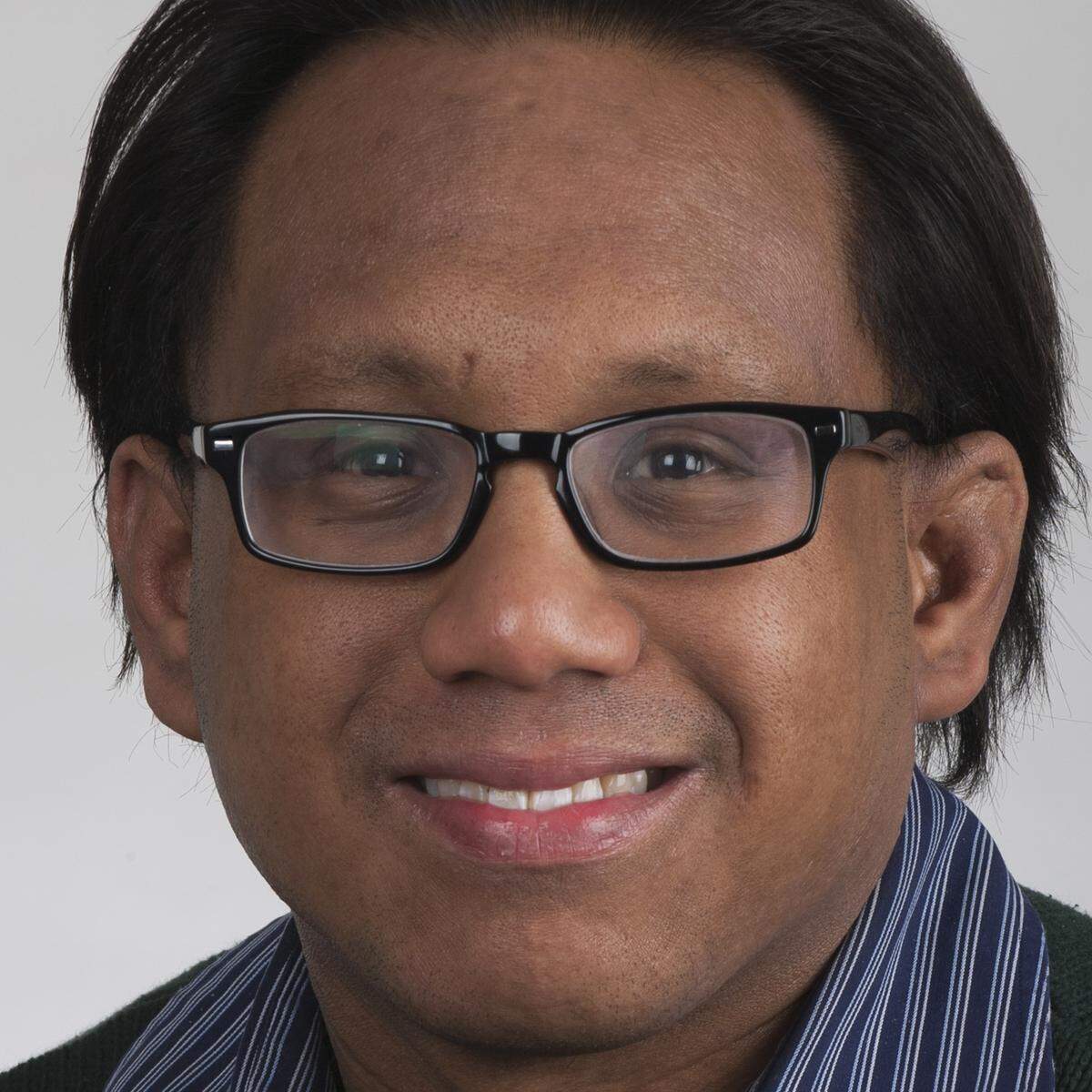
Deval Patrick visited The State to make his pitch to SC voters
Democratic presidential candidate and former Massachusetts Gov. Deval Patrick recently visited The State to discuss his campaign for the party’s nomination.
The conversation ranged from what his first 100 days would look like, to what it means to be the only remaining African American seeking the Democratic nomination, to whether he’s thought about where he would keep his bees (he’s a beekeeper).
Responses have been edited for brevity.
Q: The first 100 days, can you give some idea of what you look to accomplish?
A: The very first agenda that we want to push is what we call the democracy agenda, because I believe we’ve been treating our democracy for a long time as if it would tolerate limitless abuse without breaking. The amount of money in politics, much of it dark, the hyper-partisan gerrymandering, the impact of lobbyists, the vote suppression, the purging, all of these things, I think needs to be confronted right from the start. Because in many respects ... none of us can get democratic outcomes from our democracy anymore unless that’s addressed.
A big part of that ... is a call for universal national service. Because one element of the response to the disunity we have today is addressing the fact that we don’t know each other anymore. You know, we have very oversimplified impressions of each other: from different regions, from different parties, different racial, ethnic backgrounds on down the line. I am constantly being squeezed into a box where people try to do so. I don’t actually fit into a box. Most people don’t.
Q: And so what box frustrates you the most?
A: You know, I’ve been a business executive. I’ve been a civil rights lawyer. I’ve been a two-term governor. When people say, ‘Well, what’s your lane,’ they say it’s a progressive, is it moderate? And so on. It feels more and more like a ... moderate is a progressive who’s actually gotten stuff done. You know what I mean? I mean, it’s just that I’m not sure the language works quite anymore. And I have lived and worked and solved problems in so many different settings around the country and around the world, with so many different people whose first impression of me and mine of them, at least early on, was nowhere near complete. ... I think of the service opportunity as a way to bring Americans together from different parts of the country, different backgrounds, different perspectives in service of an unmet national or civilian or military need, as a way with a long term view of enabling Americans to know each other again.
Q: What would that look like?
A: It looks like Teach for America, Peace Corps could be service in the military ... We have so many unmet needs. .
Q: Would you want to see military service required?
A: We’re not ready for that. I’d love to. Israel does it. ... We all come to it with slightly different motivations. Mine is this notion that we need to rebuild our sense of national community. So that it isn’t as easy as it has been to divide us. And, I just, to the point about mandatory (service), (we’ve) done some polling, we’re not ready for that. But I think, you know, making it real will require that it’s not just my kids, it’s any young person. We need to pay folks and offer benefits. I would also like to tie a year of free tuition at a public college or university to every year of service.
Q: You’re the sole African American candidate in a party that relies heavily on African American support. Can you talk about what you are worried about, what that perception leaves with the voters?
A: Well, I’m concerned about what the perception of the last debate leaves. And I think that you know, the debates have taken on an outsized importance. We have a very diverse party, very diverse country, and we have a diverse field. But you wouldn’t have known that if your first impression was looking at and who participated in the debate, and I know that’s concerning to the leadership of the party, and I’m a little frustrated by their inflexibility in dealing with that ... I think that beyond race, the big difference between me and the others said of earlier is that everybody else has plans. I have results. And I think that ought to count.
Q: Why are you not for a Medicare for all program?
A: We should have a public option. I’m not ready to eliminate all of the forms of paying for health insurance. I like a public option and by the way, their public option, from my perspective, could well be Medicare. But I think there’s a value in having the competitive tension. On the one hand, in private insurance, you better believe is going to come up with some competitive product for the folks who move in droves to that no-cost or low-cost public option. And that’s good, because that’ll be one of the points that drives cost down system wide. ... There’s a value in having the the incentive to innovate on the public side. Because frankly, if you’re eligible for Medicare today, and you are able, you buy a supplemental policy on top of Medicare because Medicare doesn’t get the job done. And having that pressure to improve and respond to what people’s needs are, I think it is valuable and I think that comes from competition.
Q: Can you give us some ideas about the pillars of your economic policies?
A: I don’t think the economic indicators, cheery as they are, tell the whole story. Unemployment is low, as long as you count, you know, both or all three of the minimum wage jobs ... a lot of people have to survive. Inflation is low, as long as you kind of look away from the cost of housing, or of health care, or of education, the things that enable people to launch themselves and stabilize themselves onto a path of economic mobility ... Our opportunity agenda, which is the economic growth agenda, is about ideas, time and money in education, innovation and infrastructure. Education, because whether it’s pre-K, right up through public higher ed, it’s the single best buck the public spends on our collective future. And alongside that money, I believe should be innovation because the solutions are not the same for every child in every in every community.
... One of our biggest challenges going forward in this country is the so called middle skills gap. And so that’s folks who have more than a high school diploma — jobs that require more than a high school diploma — but not necessarily a college degree. It’s a certification or something like that, you know, precision manufacturing, for example. ... It’s not yesterday’s factory. ... Now you have to know you have to be able to code.
But that brings me to the third (point) — not without investment in infrastructure. It’s roads, rails and bridges. Yes. It’s also housing. It’s also high speed broadband.
Q: Elizabeth Warren came out with a proposal recently that said she would issue an executive order and obliterate $1.5 trillion in student loan debt ... So would you support a bold, you know, policy like that or is that too far?
A: Well, I support eliminating student debt. I don’t know yet if you can do that with an executive order. I still believe in a trilateral government and I just haven’t done the work to understand whether the president can do that with the stroke of a pen. I do believe that the president can order the refinancing of student debt. And if the refinancing is done down to current rates, and retroactively so current rates are in the zero to 1% range, I believe that’ll take care of a lot of it. And then I would use, rather than a wealth tax ... I would raise the estate tax back to the rates, to the levels it was, I think, once removed, so 50-55%, and use that, and I say that because I think of the estate taxes and non-recurring revenue ... And I believe you should use non-recurring income for non-recurring things, so a one time thing, if you will. So I think of the estate tax as addressing what remains of the student debt after the refinancing of interest, and then using it to start to pay down the national debt, which is a problem.
Q: What’s your response to the segment of Democratic voters (with) this visceral sense that ... you’re going to need to be a street fighter to beat Donald Trump in the General Election?
A: I don’t underestimate President Trump or his operation. I was disappointed he won, but I was not surprised. I think he spoke to I think the one truth, he says, as a candidate, was that conventional or establishment politics wasn’t working very well, for a lot of people. It’s the same message Barack Obama brought a decade and a half before and it’s still true, which is why I keep saying, you know, it’s important for us to win, but it’s equally important for us to deliver once we win. Something I think, frankly, Mitch McConnell understood more clearly than Democrats when Barack Obama was elected. I’ve been bullied before when I was in seventh grade and I understand that swing between rage and resignation.
I’m not going to be baited into his reality TV show. I don’t think that’s what America deserves as a president and that’s not who I am.
Q: Secretary Clinton won the popular vote by a lot, but lost, ultimately. What did the Democratic Party do wrong in 2016? What signs did they miss? And is the party going down the same road this time around?
A: People know when they’re being taken for granted. ... They know when you’re not there, when you don’t show up. ... I want the people of New Hampshire and South Carolina to know that they are important to me, and they are important to this campaign. And I need to convince them, by the way, I’m going to be here in between elections, because that’s the other thing. People know when you’re just you’re just a part of their formula to get from here to (there).
Q: If you’re elected, where in the White House would you keep your bees.
A: So that’s a great question. Because the, you know, they range about 10 miles ... and that is why in a lot of cities, you see people put them on the roof. There’s some other stuff up there like, like anti-aircraft guns or something like that. There was a terrific garden that Mrs. Obama started ... outside the East Wing, which could be just a great place. It’s a wonderful question, you know, but don’t ask me that. I don’t want to go too deep because that’ll sound to some people like I’m measuring for drapes ... I’m just thinking about it right now.
Q: So not the Rose Garden?
A: No, you know, people ... who don’t know honey bees, they freak out sometimes. And there are a lot of events that happen in the Rose Garden so it probably doesn’t make sense. But I will give that more thought now. Wow, you have to be prepared for anything.
This story was originally published February 4, 2020 at 5:20 AM.