DHEC picks military man to run SC health agency as disease sweeps through the state
The S.C. Department of Health and Environmental Control board has chosen a Navy officer and doctor to become its next director after months of searching for a leader during the coronavirus pandemic, a lethal disease outbreak unlike any South Carolina has experienced in a century.
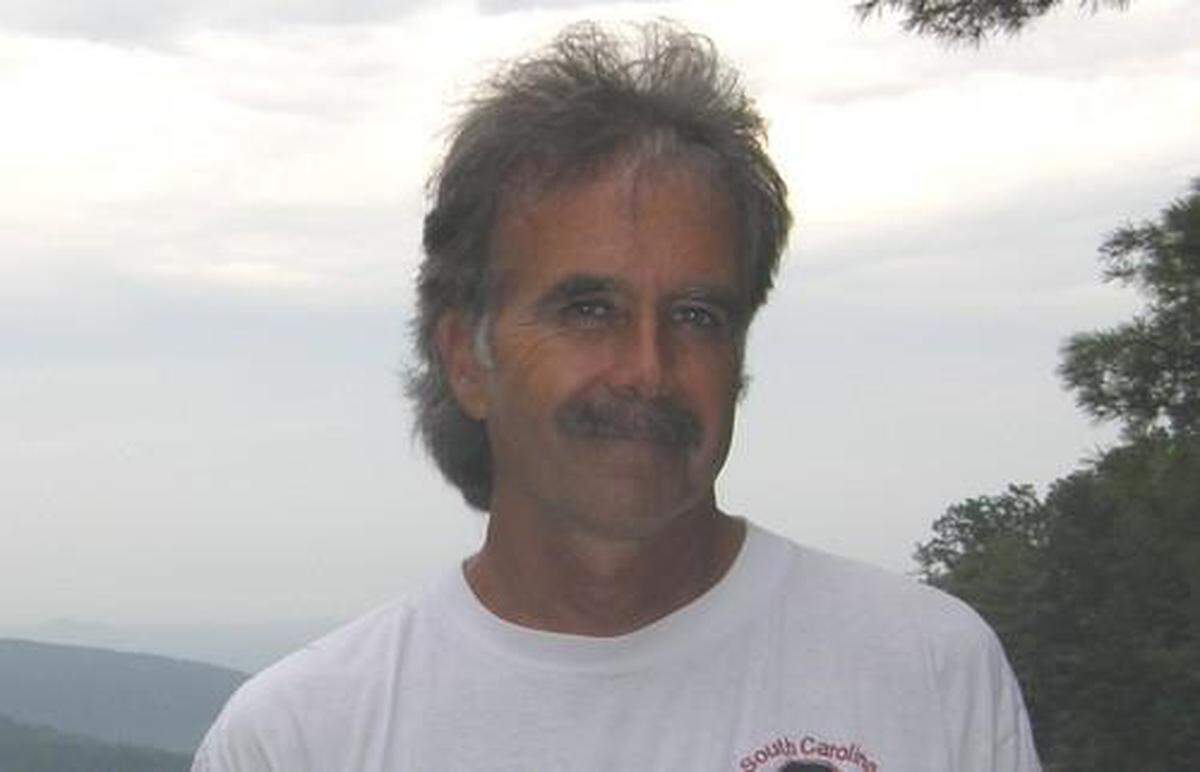
Edward Simmer, 56, would fill the post vacated by Rick Toomey this past June. Simmer is the chief medical officer and deputy director for the TRICARE Health Plan at the Defense Health Agency, which provides health and dental care to 9.5 million military members, their families and retirees.
Simmer, a U.S. Navy captain once stationed in Beaufort, will retire at the end of this month and move from the Washington, D.C.-area to South Carolina, according to plans. He was unavailable for comment Tuesday.
Just before announcing Simmer as its choice during a special meeting Tuesday, the DHEC board released the names of three finalists for the executive director’s job, then closed the session to discuss which one should run the expansive agency, one of South Carolina’s largest..
In addition to Simmer, other finalists were Greenville attorney Keith Munson, a Desert Storm military veteran who is with the Womble Bond Dickinson-US law firm; and Matthew Van Patton, a former Nebraska Health and Human Services Medicaid director and one-time chief of staff to former U.S. Rep. Trey Gowdy, R-S.C.
DHEC spokeswoman Laura Renwick said Simmer’s salary has been approved at $195,078 a year, which is the minimum salary for the job.
He would become the agency’s fourth director since 2012.
DHEC said Tuesday it had received 83 applications for the position, higher than the 65 previously reported by the agency. The board did not vote to narrow the list to three finalists in public session, but it did vote publicly for Simmer as executive director. The vote was unanimous.
“I am very pleased with the interest we have received for this position. Over the past several weeks, we have conducted several interviews of very impressive candidates,’’ Board Chairman Mark Elam said.
Board members said the three candidates were strong and could do the job at the agency, but Simmer stood out with his credentials and plans for DHEC. Board members said he “checked the boxes’’ for the type of director they were looking for.
“A captain in the United States Navy, medical doctor, highly credentialed, incredibly intelligent,’’ said board member Jim Creel, a Myrtle Beach businessman who served on a selection subcommittee.. “He seemed so cool under pressure.’’
Board member Rob Morgan, a doctor from Greenville, said “Dr. Simmer really blew me away, with all the answers to the questions that we posed.’’ Morgan added that “from day one, he takes this agency and runs with it.’’
In a prepared statement after the meeting, Elam said Simmer’s leadership skills, experience during a 30 year naval career, as well as his time in Beaufort, “will serve the agency, its many talented and dedicated staff and the people of South Carolina well.”
Simmer, who was not at Tuesday’s meeting, has testified before Congress in his role as chief clinical officer for TRICARE Health Plans at the Defense Health Agency. He is a psychiatrist who was deployed to combat areas, according to testimony he gave last February to a U.S. House Armed Services subcommittee.
Simmer, a Cleveland, Ohio, native, served from 2010-2012 as chief operating officer at a Navy hospital for Marine Corps recruits, retirees and their families at Parris Island near Beaufort, according to a resume released Tuesday afternoon by DHEC.
Simmer is a graduate of St. Louis University’s medical school and has a graduate degree in public health, with a focus on epidemiology, from the Eastern Virginia Medical School/Old Dominion University Consortium, DHEC said. He previously served as commanding officer at a naval hospital in Oak Harbor, Wash., and has “over 25 years of extensive clinical leadership and team-building experience’’ at a large health care system, the agency’s statement said. He also is board certified in general and forensic psychiatry, the agency said.
The board’s pick must be approved by Gov. Henry McMaster and the state Senate, meaning it could be late winter before that person is confirmed. McMaster, who said Tuesday he had tested positive for the coronavirus, said he supports Simmer’s selection.
“Dr. Simmer’s service and professional qualifications are remarkable, his career and achievements demonstrate the proven leadership and management skills required to direct the Department of Health and Environmental Control,’’ McMaster said in a statement. “The board has made an excellent choice and it’s my hope the Senate will confirm Dr. Simmer as quickly as possible.”
The DHEC director’s post is one of the most important in state government, overseeing public health as well as South Carolina’s environmental protection division.
But the agency has drawn criticism this year over its handling of the coronavirus pandemic. More than 250,000 South Carolinians — more people than the entire population of the city of Columbia — have been infected with Covid 19 since last spring. The coronavirus disease has killed more than 4,600 South Carolinians this year. Not since the Spanish flu more than 100 years ago has South Carolina experienced a pandemic like the coronavirus.
The DHEC board has also been criticized for moving too slowly to find Toomey’s replacement at a time when the state needed stable leadership.
In choosing Simmer, the board put its faith in a man with health care experience but it was unclear what expertise he has on environmental protection, the agency’s other mission.
DHEC has been without an executive director since Toomey announced in May he was quitting after 18 months on the job and only two months into the coronavirus crisis.
Toomey, a retired hospital administrator and former DHEC board member, left the department, citing health problems and a desire to spend time with his family. Department lawyer Marshall Taylor has overseen the agency as interim director through the majority of the coronavirus crisis..
The department has lost multiple high-level health staff that could have helped manage South Carolina’s response. Those include Joan Duwve, the top health official who serves under the director. Duwve left the job this past fall after spending about six months at DHEC. The health division is being overseen by an interim director.
This past summer, DHEC epidemiologist Linda Bell complained that Gov. McMaster’s staff had been difficult to deal with in DHEC’s effort to handle the crisis. McMaster’s staff denied that, but critics have complained that McMaster has not been aggressive enough in dealing with the coronavirus, which they say has had an effect on DHEC’s response. McMaster failed to heed the agency’s advice this past spring about when to open restaurants.
Bell, the most knowledgeable disease specialist at DHEC, was passed over as interim chief of the health division after Duwve left.
Simmer’s task is a tall one. Not only will he have to fill Duwve’s job and oversee the state’s vaccine plans for the coronavirus, but he will have to develop a management team to handle public health.
Critics have said the lack of an agency head and the departures of key health staff have hurt DHEC’s coronavirus response, although boosters of DHEC say it has done a good job with an unprecedented agency challenge.
Critics, including state Sen. Dick Harpootlian, D-Richland, say that while the agency has provided information, it has not been forceful enough.
Harpootlian said Simmer has a lot of work ahead to improve DHEC’s response to COVID 19. The Columbia attorney has blasted the agency for not shutting down businesses, such as bars, where COVID 19 is being spread, and for not being aggressive enough in pushing for mask ordinances in communities. The agency says it doesn’t have the authority to shut down bars and it has tried to get the word out about masks.
“DHEC has been nothing more than a scorekeeper during this pandemic,’’ Harpootlian said. “All we get out of them is how many people got sick today, how many people died today and where did it happen. But they’ve done nothing proactive to deal with the pandemic.
“They should have advised the governor he needed to do a statewide mask ordinance. The politics should have been trumped by the medicine.’’
DHEC, an agency formed in the early 1970s that today has more than 3,500 employees, is one of the few combined state public health and environmental agencies in the country.
Its duties range from dealing with public health crises to deciding whether hospital expansions are needed, regulating nursing homes and inspecting restaurants. But the agency also is charged with issuing permits for industries to release pollution into the air and water, regulating the quality of water and air, overseeing waste dumps and responding to spills of toxic pollution.
Those wide-ranging duties, and the department’s response to the pandemic, prompted State Sen. Harvey Peeler, R-Cherokee, to introduce legislation to break up the agency. Peeler, the senate’s president, wants to create a free-standing health agency that does not include an environmental department, which would arguably allow a more focused response to health crises.
The agency’s search process under board chairman Elam was secretive. The department employed a search firm to help find candidates. Until Tuesday, the department had refused to release a list of final candidates, as one open records lawyer says it should have done under the state Freedom of Information Act. The law requires those under final consideration for an agency director’s job to be released. Columbia attorney Jay Bender says releasing those names before a final decision gives the public a chance to flag state agencies of any potential problems.
It marks the second time in the past two years DHEC has refused to tell the public who its final candidates were before naming a director. The agency also did not do that when Toomey was chosen in December 2018.
Harpootlian said Simmer may be a fine choice, but the process of searching for a director needs improvement.
“The process doesn’t instill confidence in this selection,’’ Harpootlian said. “We don’t know how they got there.’’
This story is developing and is being updated through the day.
This story was originally published December 22, 2020 at 10:04 AM.