
Prosecutor Pascoe’s saga of exposing public corruption in Legislature comes to end
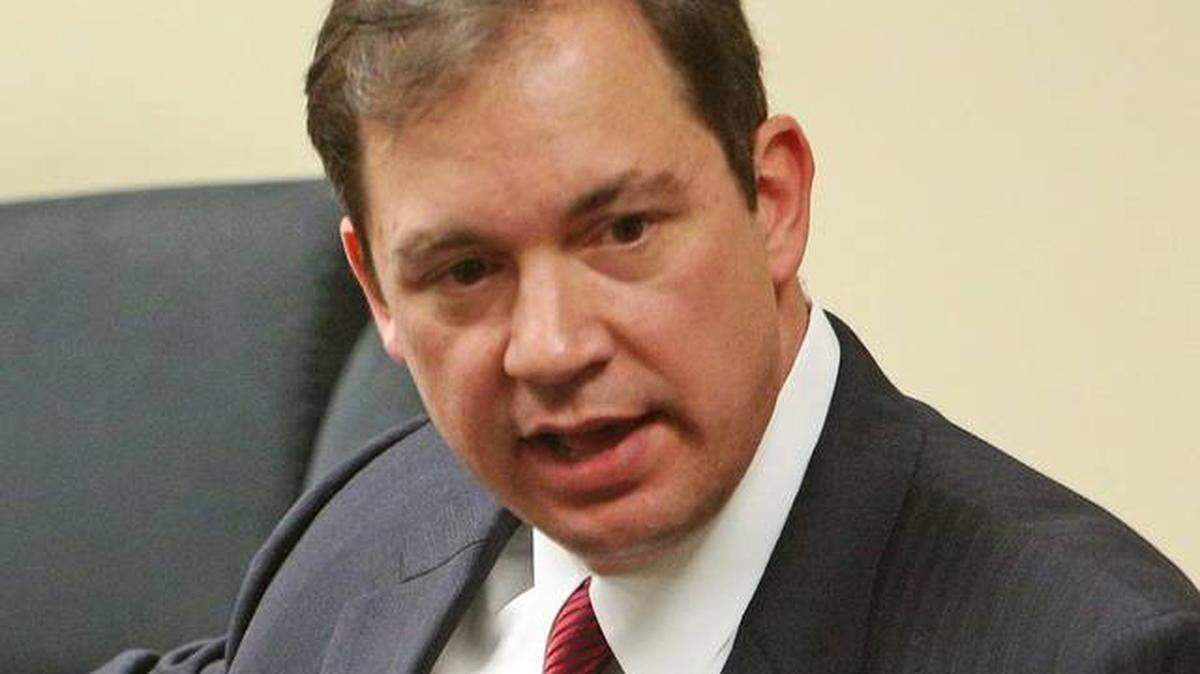
After more than six years of winning convictions against South Carolina politicians on public corruption charges, special prosecutor David Pascoe is turning his three remaining unfinished cases over to State Attorney General Alan Wilson.
“Procedural confusion” created by a recent S.C. Supreme Court decision that overturned one of his convictions was a major reason for halting what has been an ongoing house-cleaning of corrupt General Assembly lawmakers, according to a letter sent by Pascoe to the attorney general late Tuesday afternoon.
In that Jan. 21 decision, a divided Supreme Court said Pascoe — appointed special prosecutor in 2014 by Attorney General Wilson — only had legal jurisdiction to go after some, but not all, of the lawmakers against whom he brought charges.
An attorney general spokesman had little comment Wednesday afternoon on Pascoe’s letter except to release a letter from Wilson to Pascoe saying that Wilson will decide “the best course of action that ensures justice is served” after still-pending motions concerning the high court’s Jan. 21 decision are resolved.
In its January decision, the Supreme Court also ruled that Pascoe’s winning a 2018 conviction on perjury charges of former Rep. Jim Harrison, R-Richland, from a Richland County jury was lawful and that Harrison must start serving an 18-month prison sentence. Harrison will be the first state lawmaker in decades to serve a prison sentence on corruption-related charges.
“Appellant must serve the maximum eighteen-month sentence imposed by the circuit court,” the Supreme Court ruled.
In any event, Pascoe’s years-long string of public corruption convictions and removals from office of some of the state’s most powerful lawmakers was a unique achievement in state politics in the modern era.
In winning the convictions, Pascoe:
▪ Exposed the behind-the-scenes influence in the General Assembly of the political consulting firm Richard Quinn and Associates, which secretly passed hundreds of thousands of dollars to powerful legislators including Harrison.
▪ Contended with numerous efforts by defense lawyers and even Attorney General Wilson — who had close ties to the Quinn consulting firm — to shut him down and throw him off the case.
▪ Helped the state grand jury investigating Quinn Sr. and the lawmakers produce a public report detailing how the S.C. State House had been awash in “pay for influence” politics involving rivers of “dark money” centered around Quinn Sr.’s consulting firm.
▪ Secured agreements — called “corporate integrity agreements” — with five major South Carolina firms and institutions that had used Quinn Sr.’s consulting firm. The organizations — the University of South Carolina, AT&T, the former Palmetto Health Richland, the former SCANA and the S.C. Association of Justice — promised to operate legally. While not admitting any fault, they agreed to pay a total of $352,000. The money is currently in escrow and a state judge will decide where it should be spent.
Pascoe won guilty pleas against former House Speaker Bobby Harrell, R-Charleston; former Senate President Pro Tem John Courson, R-Richland; former House Majority Leader Rick Quinn Jr., R-Lexington; and former House Majority Leader Jim Merrill, R-Berkeley. Former Rep. Harrison, R-Richland, who had been chair of the powerful House Judiciary Committee, fought charges in court and was convicted. Pascoe’s efforts also won a $3,000 fine against a company owned and run by the influential Quinn Sr. for failing to register as a lobbyist.
Pascoe’s remaining prosecutions — which he is handing off to Wilson — include two cases against members of Wilson’s Republican Party: Courson and former state Rep. Tracy Edge, R-Horry. The third case is against a Wilson longtime mentor and confidante, political consultant Quinn Sr.
Courson has pleaded guilty but has yet to be sentenced. Edge, charged with misconduct and perjury, has yet to be tried. Quinn Sr., charged with perjury, has yet to be tried.
Wilson also must decide whether to retry Harrison on the misconduct charges that the Supreme Court vacated. The Supreme Court ruled that Wilson must also announce his decision.
Wilson must now also decide how he and his office will proceed in the unfinished cases or name an independent prosecutor to finish what Pascoe started.
In his letter, Pascoe — who didn’t give up his normal job as 1st Circuit Solicitor while being special prosecutor — also referred to his nearly seven years of labor prosecuting public corruption as a “Sisyphean task,” a reference a Greek myth whereby a man is condemned to endlessly push a boulder up a hill.
Closing the books on the State House corruption probe also gives Pascoe closure as he faces a possible job change. Pascoe is rumored to be on the short list for nomination by President Joe Biden to the prestigious post of U.S. attorney for South Carolina. Pascoe declined to comment on any possible nomination, saying, “My letter to Attorney General Wilson speaks for itself.”
Pascoe, a Democrat, is one of 16 elected state prosecutors, called solicitors. Pascoe’s 1st Circuit Solicitor’s Office handles criminal cases in Calhoun, Orangeburg and Dorchester counties. Wilson, a Republican, is the state’s top lawyer whose office handles numerous types of state civil and criminal cases.
In 2014, Wilson — citing possible conflicts — appointed Pascoe to be a special prosecutor in a case against then-House Speaker Harrell. Harrell had been named in a State Law Enforcement Division report as having participated in various questionable activities.
In the fall of 2014, Pascoe’s investigation, which used the SLED report as a starting point, got Harrell to resign and plead guilty to misconduct in office involving illegally using campaign money for personal expenses and cheating on campaign expense accounts.
At that point, Pascoe pressed to be allowed to continue investigating two other state lawmakers named in a confidential section of the SLED report — Merrill and Quinn Jr. — both political allies of the attorney general.
But not until midsummer 2015 did Wilson’s office finally allow Pascoe to start an investigation into Quinn Jr. and Merrill. Pascoe asked SLED Chief Mark Keel for help; Keel assigned agents to Pascoe.
In 2016, as Pascoe and SLED sought to convene a state grand jury with subpoena power to conduct a more in-depth investigation of Quinn Jr. and Merrill — Wilson tried but failed to kick him off the case and appoint a new special prosecutor, former 5th Circuit Solicitor Dan Johnson. But Johnson refused the appointment. Pascoe then won a decision in the State Supreme Court allowing him to stay on the case and convene a state grand jury.
In ensuing years, Pascoe’s and SLED’s investigation forced Quinn Jr. and Merrill to resign their offices and plead guilty to misconduct in office.
But thanks to the state grand jury’s subpoenas, Pascoe’s investigation also unearthed records from Quinn Sr.’s consulting firm. Those records showed Courson was getting secret payments — some $159,000 over six years — from Quinn Sr.’s political consulting firm. In 2018, Courson pleaded guilty to misconduct in office.
Pascoe also learned that former state Rep. Harrison, while chairman of the House Judiciary Committee, had over 13 years accepted nearly $900,000 in secret payments from Quinn’s political consulting firm. The state grand jury indicted Harrison on charges of misconduct and perjury. Harrison chose to go to trial.
In October, 2018, a Richland County jury found Harrison guilty of two counts of misconduct and perjury. State Judge Carmen Mullen sentenced Harrison to 18 months in prison.
In January, the State Supreme Court vacated Harrison’s misconduct charges, finding that Pascoe exceeded the jurisdiction granted to him in 2015 to investigate Quinn Jr. and Merrill, the two lawmakers named in the confidential section of the SLED report.
But the Supreme Court let the perjury charges — and the 18-month prison sentence — stand since Harrison had lied to the state grand jury during Pascoe’s investigation. That offense fell within Pascoe’s purview, the court ruled.
“The procedural confusion should not diminish the fact that many powerful and corrupt players in state government were brought to justice,” Pascoe wrote in his Tuesday letter to Wilson.
Pascoe also reminded Wilson that the Richland County jury that found Harrison guilty of misconduct had heard “extensive evidence” of his guilt, and Wilson should remember that as he decides “whether to hold Mr. Harrison accountable for his wrongdoing.”
John Crangle, a Columbia lawyer and longtime observer of SC officials’ ethical lapses, said in an interview that in general, Pascoe deserves an “A” for getting the convictions of powerful lawmakers despite great odds.
“Pascoe was able to identify the major culprits and get them criminally charged,” said Crangle, who wrote a book on the General Assembly’s last major scandal, Lost Trust in the 1990s, in which a small army of FBI agents participated in a federal sting that netted more than 28 defendants, among them 18 lawmakers, assorted lobbyists, executive branch officials, a university administrator and a businessman. Only one was found not guilty by a jury. The other 27 either pleaded guilty or were found guilty.
Pascoe had limited resources with which he had to battle “some of the best defense attorneys in South Carolina” and suffered public verbal abuse from Attorney General Wilson in 2016 when Wilson was trying to kick Pascoe off the case, Crangle said.
“But Pascoe was unruffled by it,” Crangle said. “He just kept going even though defense attorneys said he was on a witch hunt. Those weren’t witch hunts — he was after real witches.”
On the negative side, Pascoe could have made more of an effort to recover money from the ex-lawmakers who pleaded guilty, including Harrison who was able to keep all of the nearly $900,000 that Quinn Sr., secretly paid him, Crangle said.
And Pascoe “botched” the sentencing of Quinn Jr. by introducing evidence that Quinn Jr. had not admitted to in hopes of getting Quinn Jr. a stiffer sentence than the no-prison plea bargain the younger Quinn eventually agreed to, Crangle said. Quinn Jr.’s guilty plea eventually went to the State Supreme Court, which upheld the sentence and scolded Pascoe for trying to get state Judge Carmen Mullen kicked off the case.
Crangle said Pascoe, who likes to prosecute wayward politicians, was likely frustrated by South Carolina’s weak ethics laws and will be a good fit in the U.S. attorney’s post if he gets that job. Federal criminal are much stronger than South Carolina laws when it comes to public corruption, Crangle said.
“Pascoe has been using a water gun, but if he gets that U.S. attorney’s post, he’ll have a .50 caliber machine gun at his disposal,” Crangle said.
This story was originally published February 16, 2021 at 6:54 PM.