
No Ivy League, but SC Judge Michelle Childs ready for US Supreme Court, observers say
She didn’t go to Harvard or Yale — just the plain old public University of South Carolina School of Law.
She didn’t have a prestigious clerkship with a top federal judge or justice — or clerk for any judge for that matter.
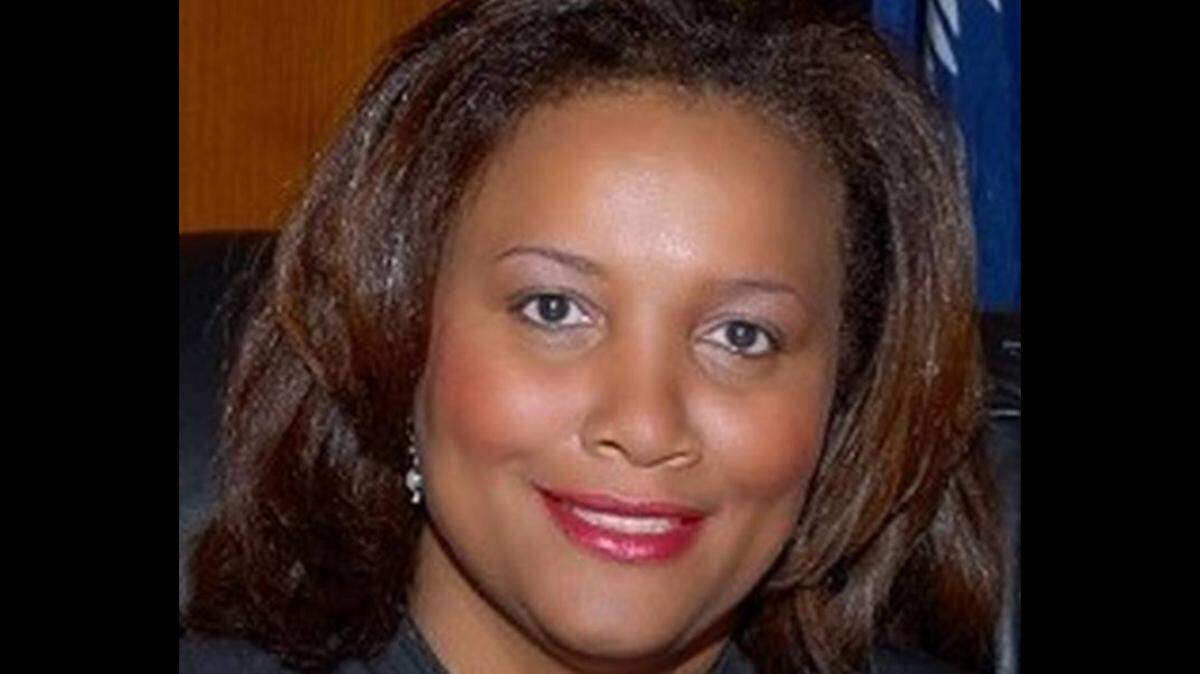
But South Carolina’s federal judge Michelle Childs has the personality, the intellect and the in-the-trenches legal and court experience that would make her an unusual asset on the U.S. Supreme Court, numerous S.C. lawyers and judges say.
Due to a historic rare alignment of political and legal dynamics, the little-known Childs, 54, is suddenly being talked about as a contender for a coveted justice’s post on the U.S. Supreme Court, should a vacancy open up, according to a front-page article in Monday’s New York Times.
Childs, 54, is one of more than 700 federal judges around the country. It’s unusual that any district judge — the third and lowest rung in the federal judicial hierarchy — would be mentioned for consideration for a U.S. Supreme Court seat.
People who know Childs say she’s up to the task and, with 30 years of experiences dealing with real clients, real plaintiffs, real trial lawyers and complex business, legal and other court dilemmas, she would be able to look at matters through a lens of humanity as well as the law’s cold black-letter prisms.
Most U.S. Supreme Court justices have degrees from Harvard or Yale law schools, have clerked for a Supreme Court justices, held appellate court posts and done high-level stints in the White House or Department of Justice. Chief Justice John Roberts and associate justices Neil Gorsuch, Elena Kagan and Stephen Breyer went to Harvard Law. Justices Samuel Alito, Brett Kavanaugh, Sonia Sotomayor and Clarence Thomas went to Yale Law. Amy Coney Barrett went to Notre Dame Law School.
But those elite lineages lack something the court badly needs, Childs’ supporters say.
“One of the problems with current Supreme Court justices we’ve been picking for the last 20-30 years, it’s all about their academic pedigree,” said former S.C. Gov. Jim Hodges, who picked Childs, then in her early 30s, in 2000 to be deputy director of the S.C. Department of Labor and then in 2002 to be a judge on the S.C. Worker’s Compensation Commission, which hears claims from injured workers.
“She’s a perfectly charming person, very down to earth and, at a young age, had an incredible resume. She was clearly someone who was going places,” said Hodges, now a Columbia lawyer and lobbyist. “She would bring something to the Supreme Court that I think all too often is lacking — dealing with people’s everyday problems, real life and common sense.”
Before Hodges picked Childs for state government work, she had worked for Nexsen Pruet, a top South Carolina law firm where she started off as a law clerk in 1991 after graduating from law school, specialized in employment law and made partner in 2000. She was the first African-American woman to make partner, a position that means she was entitled to a share of the firm’s yearly profits.
“I can’t say enough good things about her,” said former Columbia mayor Bob Coble, who worked at Nexsen Pruet with Childs. “Outstanding lawyer, outstanding person. She’d make an excellent Supreme Court justice.”
Leighton Lord, who was an attorney for Nexsen Pruet with Childs and now is managing the firm’s managing partner, said, “I tried to talk her out of leaving. I just thought the sky was the limit for her if she’d stayed in private practice.”
As a state judge from 2006 to 2010, Childs attracted the attention of S.C. Supreme Court chief justice Jean Toal.
“She was a go-to judge for me with gnarly cases with tough issues,” said Toal, who assigned particularly contentious or complex cases to several judges around the state. Childs was one of those judges.
Childs has also held a number of important posts in the the state bar association and the American Bar Association, Toal said.
“She’s got a reach for a young Columbia, South Carolina woman, that is very national in scope,” Toal said.
SC pols push Childs’ name
The idea of a little-known federal judge in South Carolina to suddenly emerge as a possible favorite for a Supreme Court justice post is an equation with three major parts and an unknown. The major parts are:
▪ President Biden has said he will name a Black woman to the high court;
▪ Biden will pay close attention to Rep. Jim Clyburn, D-S.C., who by most accounts is partly responsible for Biden being president. Last February, when Biden’s campaign was on the verge of sinking, Clyburn’s endorsement on the eve of the S.C. Democratic primary helped Biden to win an overwhelming victory. It was a turning point: Biden went on to win other major primaries, forcing other candidates to drop out.
▪ Clyburn, who was among those who recommended Childs in 2009 for a federal judgeship, is now through intermediaries urging Biden to nominate Childs to the Supreme Court.
In an interview, Clyburn confirmed The New York Times statements that he has been advancing Childs’ name.
An important fact about Childs is that her diversity includes her not having graduated from a so-called “elite” law school, Clyburn said. “I’m irritated by this whole elitist attitude that’s creeping in to judicial appointments.”
Former U.S. Supreme Court Associate Justice Thurgood Marshall, the court’s first African American justice, graduated from Howard University School of Law, Clyburn noted.
Over the years, Clyburn told The State, he has had numerous judges and lawyers say that Childs is “outstanding.”
Bakari Sellers, a former S.C. lawmaker and CNN commentator who supported now-Vice President Kamala Harris for president, has also contacted Harris through intermediaries to advance Childs’ name.
“If I had one ask of this administration, it would be to give Michelle Childs consideration,” said Sellers.
The unknown, of course, is that there currently are no vacancies on the nine-member Supreme Court.
That hasn’t stopped leading Democrats from hoping that current Associate Justice Stephen Breyer, 82, known as a moderate-to-liberal justice, will announce his retirement soon because if the Democrats — who hold “the narrowest of majorities,” according to The Times — lose control of the Senate in 2022, the new Republican majority will likely block any Biden Supreme Court nominations.
“We don’t want to get Ginsburged again,” says Columbia lawyer and State Sen. Dick Harpootlian, D-Richland, a longtime Biden confidante and fund-raiser. Harpootlian is also trying to get Childs named to the U.S. Supreme Court.
-- “Getting Ginsburged” is a reference to the late liberal associate justice Ruth Bader Ginburg, a liberal justice who died in September at the age of 87, leaving President Trump and the then-Republican Senate just enough time to install U.S. Court of Appeals 7th Circuit Court Judge Amy Coney Barrett to the high court. Republicans hope Barrett will be a reliable conservative vote.
Harpootlian says Childs is the kind of justice Biden wants — not some stuffed-shirt judge who’s had his ticket punched at an Ivy League schools but someone more like Biden himself, a regular person who is a graduate of the public University of Delaware. Childs graduated from the public University of Southern Florida before coming to University of South Carolina to study law.
The bottom line about Childs, says Harpootlian, “She’s a person with real life experience who has excelled at everything she’s done. She’s had to make decisions on the fly in trials I’ve been in and unerringly gotten it right — and some of them went against me.“
A high-profile case record
A native of Detroit, Childs came to Columbia when she was 13 and graduated from Columbia High School, where she was valedictorian, student body president and in the National Honor Society. Her father was a police officer; her mother worked for the telephone company.
Since becoming a federal judge in 2010, Childs, 54, has ruled or presided over numerous high stakes cases, as well as the usual run of methamphetamine, gun and other drug cases.
Her higher profile cases include:
▪ In a 2014 gay marriage case, Childs ruled a state law unconstitutional when she upheld a Lexington County lesbian couple’s bid to get legal recognition from the state of South Carolina for their out-of-state marriage. The couple, Highway Patrol trooper Katherine Bradacs and Tracie Goodwin, had been legally married in the District of Columbia in 2012, had three children and their lawsuit alleged their children were adversely affected by South Carolina not acknowledging they are legally married. Childs ordered State Attorney General Alan Wilson, the loser in the case, to pay the couples’ $80,000 in legal bills.
▪ In the aftermath of a historic FBI investigation of South Carolina’s Irish Travelers, Childs presided over some 50 convictions of massive white collar fraud defendants carried out by members of the Aiken area reclusive community. In one case, at the request of a defense attorney, she closed a hearing to the public. But after being contacted by a State newspaper lawyer who stressed that open courts were guaranteed by the U.S. Constitution, she kept her courtroom open.
▪ She also presided over some of many civil cases that erupted in the wake of the $10 billion business failure in 2017 of a nuclear power project of the former SCANA electric utility. In one 2018 case, after two days of hearings, Childs blocked SCANA from imposing a rate hike on its 700,000 ratepayers.
▪ Last year, Childs presided over cases that pitted alleged voting fraud concerns against the rights of voters in a pandemic to vote safely. After numerous hearings and thousands of pages of filings, Childs eventually ruled, in a 71-page opinion heavy with medical evidence about how contagious COVID-19 is, that the S.C. Election Commission was prohibited from enforcing the requirement that a person who votes absentee must have someone witness their signature.
Childs said her order only applied to the upcoming election, and “were it not for the current pandemic, this ... may have cut the other way.” She described the pandemic as “the worst ... this state, country and planet has seen in over a century.”
Republicans and the Election Commission appealed her decision. The U.S. Supreme Court eventually ruled against her.
Childs’ decision in that case is still criticized by Republicans.
“We saw evidence of Judge Childs’ judicial activism when she struck down the requirement for witness signatures on absentee ballots, which was overturned by the U.S. Supreme Court during the 2020 election,” said S.C. Republican Party chair Drew McKissick in a statement. “This chatter (the New York Times story) is just further proof of Biden and Democrats looking to have Obama repeats for the next four years.”
‘An amazing talent’
In court, Childs is unflappable, pleasant and is not shy about questioning attorneys. “Charming” is a word often used to describe her.
But she is no pushover.
In 2018, as Childs was sentencing a sickly Irish Traveler grandmother to prison for serious white collar crimes, the woman’s lawyer, Peter McCoy (now U.S. Attorney) of Charleston, asked the judge for a home confinement sentence.
Childs was unmoved. “The Bureau of Prisons does have a hospital that takes care of these issues,” she told McCoy.
Numerous attorneys volunteered that one thing they like about her is that she does not have “black robe disease,” also called “robitis,” legal slang for an arrogant judge whose power has gone to his or her head.
“With some judges, you have to kiss their ring — not her,” said longtime Columbia lawyer Jack Duncan, who has appeared before Childs in federal court, state court and workers’ compensation.
“She enjoys wide support from attorneys,” said U.S. Judge Joe Anderson, a federal judge in Columbia since 1986 who has followed her career. “She has excelled at every step. She’s everything you want in a judge: smart, hard-working, fair and courteous, with a deep and abiding appreciation for the rule of law.”
Anderson said most justices on the high court don’t have actual courtroom experience as a trial judge. “The Supreme Court should have a mix of backgrounds, and that includes a judge who has actually held trials.”
Veteran Columbia criminal defense lawyer Jack Swerling, who practiced law in South Carolina nearly 50 years, called Childs’ temperament and demeanor “extraordinary,” a good match for her “superior academic, intellect and legal knowledge.”
Columbia Mayor Steve Benjamin has known Childs in the early 1990s when they were both in law school. “Michelle is an amazing talent, a force. I’ve never known anyone to outwork her,” Benjamin said.
In the legal community, Childs has a broad reach. She holds drug court — a program to give first term federal drug offenders a change to reform — and has taught continuing legal education classes for lawyers. In 2016, got an advanced degree in legal studies from Duke University School of Law. An abbreviated resume of her achievements and experience runs seven pages.
Former chief justice Toal said of Childs, “She’s the full package, I can tell you that.”
This story was originally published February 28, 2021 at 5:00 AM.
CORRECTION: This story has been corrected to note that U.S. Supreme Court Associate Justice Amy Coney Barrett came from the U.S. Court of Appeals 7th Circuit.