Betting on horse racing in SC? Lawmakers studying billion-dollar equine industry
Fewer than 80,000 of the nation’s horses live in South Carolina but account for a nearly $2 billion-a-year impact for the state.
Now, South Carolina lawmakers are wading into how the state can leverage that industry that stretches throughout many of the state’s 46 counties, and they are looking for ways to delete barriers that would ultimately stop that industry from growing.
For some lawmakers, that doesn’t stop at better publicizing the state’s industry and opening up more opportunities to train and run more horses in the state. But it means potentially putting horse betting on the table, an effort that has failed to see light in the past.
Though not explicitly outlined, the topic has become one component of a new joint legislative committee that met for the first time in June, chaired by state Rep. Russell Ott, D-Calhoun, who said the committee will look at ways to bring more resources into the state.
What the committee can examine is pretty clear and also expansive: Study the potential for equine business growth; identify barriers and eliminate or reduce them; compare the state’s incentives and barriers to other states, and determine whether the state should “encourage” interstate cooperation with equine facilities nearby.
It also states the group can examine “any other issues that the committee determines are of interest and benefit” South Carolina’s equine business.
The group will issue a report by Feb. 15, 2022.
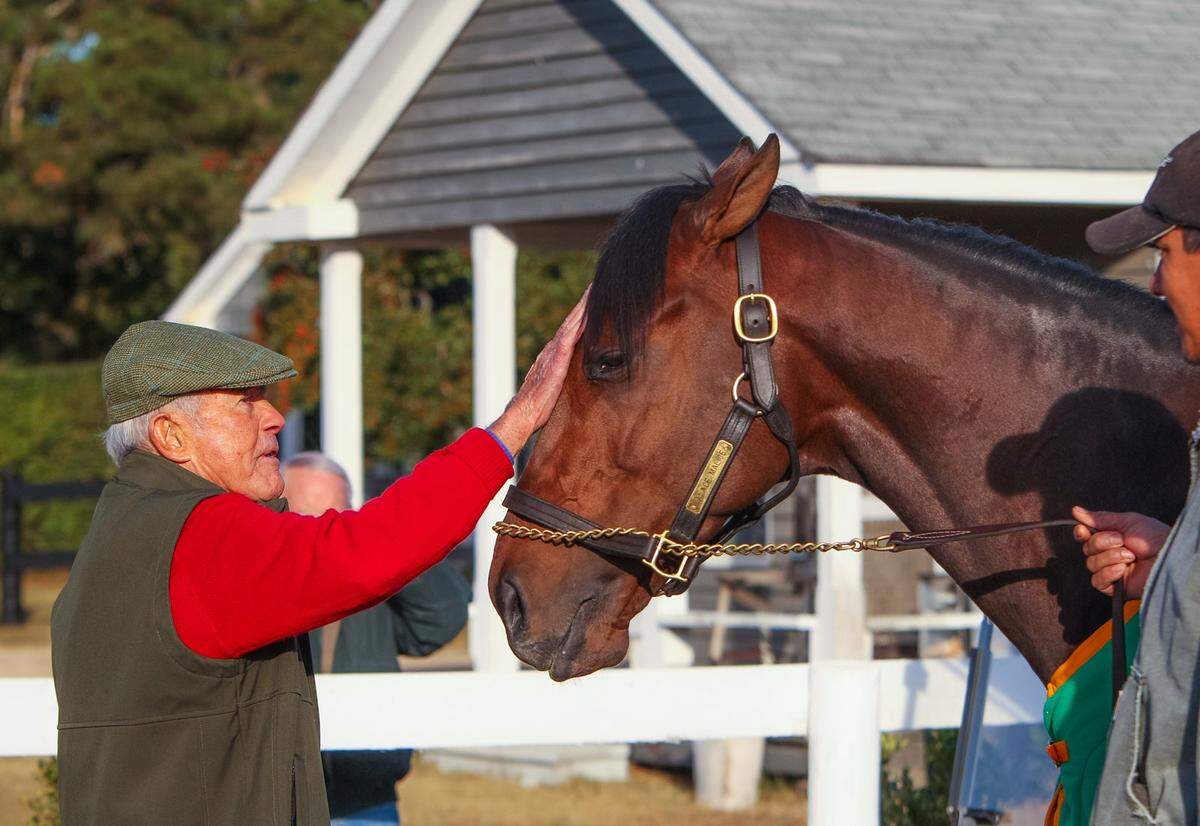
It’s a “long time coming,” said Ott, who plans to hold meetings in other equine-heavy parts of the state, such as Aiken, Clemson and Camden. “It’s very important to South Carolina. I think it can be even more important.”
South Carolina law is pretty clear on where it stands on betting — it’s not allowed, though that doesn’t mean it doesn’t happen.
Lawmakers have unsuccessfully proposed on and off for years opening up the state to the betting industry.
That was especially true after 2018, when the U.S. Supreme Court gave the green light to states to legalize betting, striking down a federal law that barred the practice in most states and cleared states to pass their own legislation. Today, 31 states and the District of Columbia either have live betting or have allowed sports betting but have yet to launch, according to the American Gaming Association.
Part of the issue may be South Carolina’s fraught relationship with gambling, outside of the lottery.
In the mid-1980s, the late Sen. Jack Lindsay, a Democrat from Marlboro County, was able to attach a provision to legislation that resulted in legalized video poker, which was later ruled illegal. Then, a few years later, betting became part of the center of a major corruption scandal in the General Assembly, coined Operation Lost Trust, when lawmakers were caught in an undercover sting taking cash to vote for a bill that would legalize horse betting. It also became a focus of the 1998 governor’s race.
Hurdles to legalized betting
Today, the Legislature has had little appetite to fully embrace betting legislation, in large part because of what it’ll take to pass.
Legalizing gambling and betting would mean a change to the South Carolina Constitution. To make that change requires a two-thirds vote in the House and Senate and a majority of votes in a public referendum. Translation: it’s not an easy lift.
But given the possible economic benefit to state coffers, some lawmakers see no reason to continue disallowing it.
To start, agribusiness is a boon for the state, producing some $46 billion a year and some 250,000 jobs, lawmakers heard in June.
And though South Carolina’s horses make up about 1% of the U.S. horse population, lawmakers heard last month the state’s equine industry represents a nearly $2 billion-a-year economic impact to the state and accounts for nearly 29,000 direct and indirect jobs.
Of that economic impact, a 2019 equine study between the state’s Department of Agriculture and the University of South Carolina showed that half of that is tied to employment income, Agriculture’s Clint Leach told lawmakers. But nearly $360 million is tied directly to racing and competitions such as steeplechases and riding cups, and nearly $285 million is tied to recreation and pleasure horses, he said.
The impact study did not account for wagering.
“We all know that equine is directly tied to the agriculture industry,” Leach said. “But what we saw was the vast support that it gave to the vet services industries, the real estate industries, the hotel and restaurant industries and general hospitality industries.”
It’s an industry, Leach said, that could go from $2 billion a year to $4 billion, all the way to $10 billion.
State Sen. Dick Harpootlian, D-Richland, is one member of the committee who has taken a particular interest in betting.
“I’m interested in bringing horses here, tourists here, people here to participate and be entertained by the horse industry,” Harpootlian said at the committee meeting. “And if having tracks where people can bet, ... I want the money to be here.”
South Carolina’s equine community may not be there quite yet but left open a window to looking at it.
“As far as that being a recommendation from the equine community, I’m not saying it would be off the table, but I think we’re a ways away from that as a recommendation (at) this point,” said committee member Kip Elser, a former steeplechase rider who operates Kirkwood Stables in Camden.
“It would certainly be worth studying very hard.”