SC House passes bill to stop COVID vaccine mandates by public employers
South Carolina House members passed a measure that would stop public employers from firing a worker for being not getting the COVID-19 vaccine, a measure that initially received objections from business associations.
The measure passed Thursday in a 67-31 vote. The amended version of the legislation removed a provision to prevent private businesses from firing a person for not being vaccinated. However a person terminated from their job for not being vaccinated would be eligible for unemployment benefits.
“We realized what we were up against, and nobody wants to infringe on anybody’s business,” said state Rep. Stewart Jones, R-Laurens, who was the primary sponsor of the legislation. “It limits what can be done, it protects the employee and the employer.”
House Republicans fast-tracked the bill this week, passing it out of the Ways and Means Committee and giving it immediate consideration.
The legislation would prevent both public employers from firing workers, including first responders, for not taking the COVID-19 vaccine. It also would prevent school districts and local governments from requiring employees and students to take the COVID-19 vaccine.
The Biden administration mandated vaccines for all federal contractors, health care workers and businesses with more than 100 employees. All three of those mandates have been put on hold by federal courts.
“If one of these stays is lifted, imagine the people who are going to lose their jobs right around Christmas,” Jones said.
State Rep. Chris Wooten, R-Lexington, said the state could not afford to lose first responders because of a vaccine mandate.
“We’ve got folks that need to keep their jobs and we need to keep our lives safe, and we’re not going to do it without them,” Wooten said.
The S.C. Department of Health and Environment Control and the Medical University of South Carolina would each get $10 million from the state reserves to help businesses pay for weekly testing for those employees who are subject to a federal mandate, to prevent those businesses from missing out on federal dollars.
Lawmakers also added a provision to ensure religious or medical exemptions are honored, including the presence of antibodies, a prior positive COVID-19 test or pregnancy.
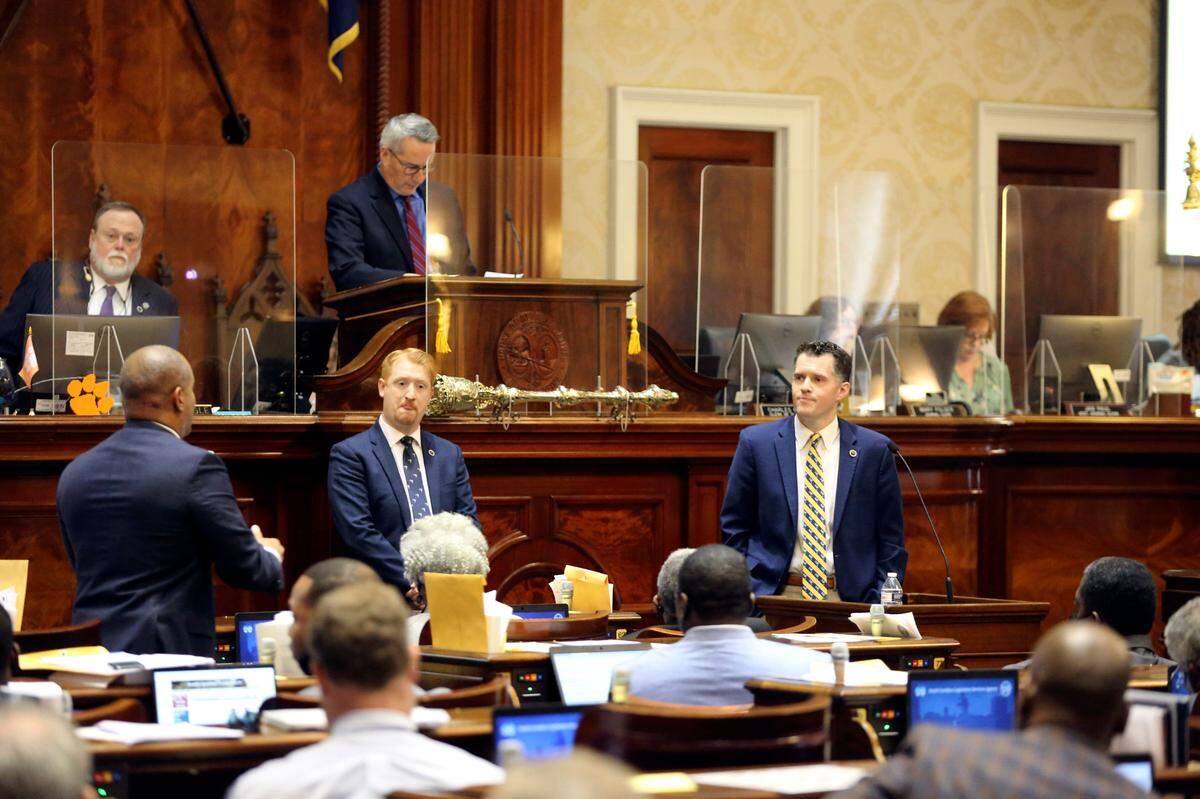
Debate over legislation
On Wednesday, 28 business associations, including several chambers of commerce and the state manufacturing association, objected to the bill. However, after Thursday’s amendment, those groups were still reviewing the latest change to the legislation.
Several Democrats voiced opposition to the legislation on Thursday.
“Businesses may close down because of this because of the number of lawsuits that may (occur) because of this legislation,” said state Rep. John King, D-York.
State Rep. Russell Fry, R-Horry, who is running for Congress in the 7th District, spoke in favor of the legislation, saying local governments should not mandate the vaccine on their employees.
“Mandates, quite frankly, are a lazy way of governing,” Fry said.
Fry said vaccine mandates create two groups of people, where vaccinated people have more opportunities.
“But my concern is that you have a real problem that is being created in our society right now, where you’re creating two different types of people depending on the choice that they make on the vaccination,” Fry said. “I think it’s the wrong approach.”
After the bill was changed on the floor of the House, state Rep. Russell Ott, D-Calhoun said the legislation moved so quickly that lawmakers did not have a chance to discuss the possible unintended consequences.
Ott said an employer can now find another reason to fire an employee other than not being vaccinated.
“If you’re trying to get them unemployment funds, I think you just made it harder to get them unemployment funds,” Ott said.
Ott said the bill was being pushed for political reasons.
“This is about groups getting ready for their primaries,” Ott said.
This story was originally published December 9, 2021 at 7:50 PM.