Inside McLeod’s departure from the Democrats: Blame, worries and next steps
Mia McLeod’s messaging may have been fuzzy during her campaign for governor, but the South Carolina senator’s feelings were crystal clear when she lobbed a stunning grenade at state Democratic Party leadership after her primary loss:
You failed me, and I quit.
The announcement that she was leaving the party, timed to the opening day of the 2023 legislative session for maximum attention, railed against what she sees as the Democrats’ insistence on running white men for the governor’s office, and losing time and time again.
While surprising, McLeod’s decision to leave the party, South Carolina Republicans, as they were before, remain in charge of every statewide office and control the state Legislature.
But after speaking with about a dozen political insiders, some on the record and some granted anonymity in return for their candor, a picture emerges of potential intrigue ahead. Is McLeod’s announcement part of a plan to replace the current party chairman, who reportedly turned down an offer to run her campaign, with someone she views as more friendly to her? Will any tumult within the party derail the state’s hopes of becoming a first-in-the-nation presidential primary? And will McLeod’s words have any long-lasting impact on Democrats’ ability to lure quality Black and women candidates in the future?
Those questions aside, those who spoke to The State — the newspaper conducted more than a dozen interviews — near unanimously agreed on two things: 1) The state Democratic Party indeed has problems, and 2) those party problems had little to do with why McLeod lost her primary. Instead, they say, McLeod needs to look in the mirror.
To blame: The party, or a bad campaign?
McLeod was never going to be South Carolina’s governor. Neither was Joe Cunningham, a former one-term congressman from Charleston and her opponent in the primary. The last time a Democrat won the governor’s office was in 1998 when Jim Hodges defeated David Beasley.
McLeod, who represents parts of Kershaw and Richland counties, genuinely seemed to think otherwise, some Democratic Party members said. She certainly felt she would win the primary and galvanize Black voters. But her campaign struggled for relevance from the beginning. She lost to Cunningham, receiving only 31% of the vote. She lost her own district and home county.
In her eyes, the reason was clear: The party failed to support her. She wasn’t looking for an endorsement, supporters said, but the party’s failure to publicize who was running the primary, what the candidates brought to the table, the issues they were supporting, and general election awareness hurt her chances deeply.
McLeod declined to speak to The State for this story, saying its past coverage of her has lacked objectivity and balance. “I seriously doubt that anything I say will change your narrative,” McLeod said in a text message to a reporter.
On Sunday, Jan. 22, two days after The State reached out McLeod for comment, the state senator spoke on radio show “On Point with Cynthia Hardy,” ramping up her frustrations with the party by accusing leadership of intentionally trying to torpedo her campaign.
“I have receipts and all kinds of information that I have not shared publicly, showing they were very intentional about keeping my primary on the (down low) because they didn’t want people to know a Black woman was running,” McLeod said on the show. “They didn’t want Black voters to be engaged because it was counterproductive to the success of their chosen candidate.”
McLeod blamed the media as well, saying it was “complicit” in what seemed to be a “well organized, orchestrated effort.”
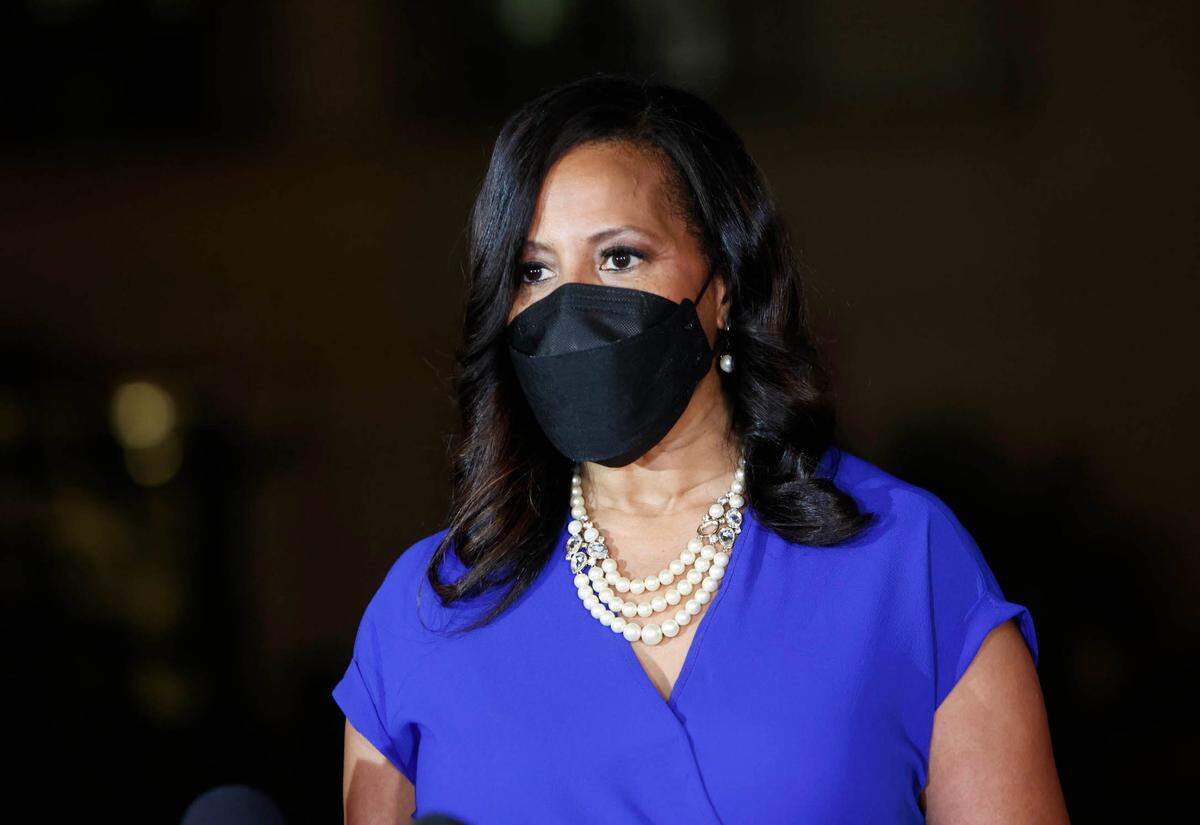
McLeod did not provide any evidence of her claims. Attempts to reach McLeod Friday, Jan. 27, to ask about the claims were unsuccessful.
Meanwhile, sources within the S.C. Democratic Party said McLeod’s campaign was seriously flawed, with no infrastructure, inexperienced people and no plan to overcome a lack of money and poor name recognition.
“You need to get people that have done this professionally (in) other states running statewide campaigns. You do need to pay to get the best people to do it that have had the experience,” one senator told The State. “Some of the folks (on McLeod’s campaign) did not have the experience of doing it before to know what it takes.”
Hurt by the lack of resources — a serious problem, party leaders admit, especially for Black women running for statewide office — and a slim campaign staff, even McLeod’s supporters and those within the party’s leadership say she could not get her message across.
“There’s still that notion of folks thinking, well, why is a female running for that office? And should she be running for that office,” said Lessie Price, the state Democratic Party’s first vice chair.
One S.C. Democratic Party source was less generous, saying that referring to McLeod’s operation as a “campaign” would be giving it too much credit.
“(McLeod) lost. She’s not a good candidate, she’s M.I.A. in the Senate, and she was M.I.A. in her gubernatorial race,” the state representative said. “Now she wants to blame everyone but herself. It’s time for some self-reflection.”
Ask about McLeod’s fundraising, and opinions differ on how hard she tried to raise money.
She only raised $544,000 for her campaign. Cunningham raised more than $1.8 million just for the primary.
One S.C. Democratic Party source with knowledge of the campaign contended McLeod did not like asking for money and “she didn’t like campaigning.”
The lack of money kept her from running television advertisements.
“If she had been on TV, she would have beat Joe,” the Democratic source said.
Instead, Democrats were frustrated that McLeod could appear petty and immature, wasting time venting personal frustrations on social media and forgetting the one basic fact of any campaign: Ground game is important, and going to your voters is what matters.
After House Minority Leader Todd Rutherford, D-Richland, endorsed Cunningham, McLeod lashed out on Twitter, leading to a social media back-and-forth between her and the lawmaker.
“I think some of the things that (McLeod) could have worked on is not getting into it with people who aren’t your opponent,” said state Rep. Jermaine Johnson, D-Richland. “I think where we kind of made a mistake was getting into it with somebody who’s not your opponent.”
Will party leadership change hands soon?
McLeod’s harsh words for Democratic leadership apply pressure squarely on Trav Robertson, the chairman of the state Democratic Party, and highlight a unique dynamic between the two.
Robertson ran McLeod’s campaign for state Senate in 2016, and, according to Robertson, McLeod wanted him to leave his chairmanship to run her gubernatorial bid. Robertson declined.
“There is no denying the fact that I was asked to participate in her campaign, to leave my chairmanship to run her race,” Robertson said. “But because of some of the individuals advising her, they did not understand the role of a chairman and that I felt as though I could be a better service to our candidates as chairman of the party because of the various fundraising and financial mechanisms we have at the disposal of candidates running for office.”
Robertson declined to say whether McLeod’s statement was about revenge for not taking the job. Instead, he said, it was about her and others’ frustration over whether the party does enough to support Black women candidates.
Brandon Upson, who chairs the South Carolina Democratic Party’s Black Caucus, says he is considering a bid for Robertson’s position. He says McLeod is supportive of the idea.
Upson lamented the party didn’t have a coordinated campaign ahead of the general election that would have turned out base voters while the candidates focused on persuading infrequent voters, swing voters or moderate Republicans who might cross over.
Running that type of campaign last year wasn’t feasible because the party didn’t have enough money to make it happen, Upson said.
Robertson has accepted the blame for the party’s failures in 2022. Others say blame should be shared.
“Are there things the state party could have done better? Yes, there are things I specifically as a state party officer could have done better,” said Jalen Elrod, the third vice chair of the state Democratic Party. “But I think that if we’re going to take responsibility as a state party, others have to take responsibility, too, because this is a group effort, and we’re going to fall together. We’re going to move forward together.”
Party Second Vice Chair Anthony Thompson said candidates have a misconception of what the party is supposed to do.
“There could be some very unrealistic expectations, particularly when you don’t know how the party supports your running,” Thompson said. “People run on these tickets, and then they have this preconceived notion of how the party is supposed to support them without asking or knowing the details or what we can or (have) the ability to do. And then when things don’t turn out the way they may want them, then the party gets blamed for it.”
The state party will have a chance to address the leadership issues this spring at a state convention.
Robertson’s latest two-year term as the state party leader ends in the spring, and he has yet to decide whether he’ll seek another term. Upson has said he is not going to make a decision on running for chair until after the Democratic National Committee votes on the presidential primary election order.
“If I didn’t think I could do better, I wouldn’t consider running,” Upson said. “I absolutely love Trav. I love him as a person. Most of us do love Trav as a person.”
Upson’s ties to McLeod became a minor controversy during the campaign after the Black caucus tried to organize a debate. The Cunningham campaign said “no” because Upson and other members of the caucus appeared on McLeod’s campaign expense report.
Upson was paid $900 by McLeod for the “acquisition” of an email list of 100,000 names to use for fundraising. Upson said he did nothing wrong and helped any campaign that asked for support.
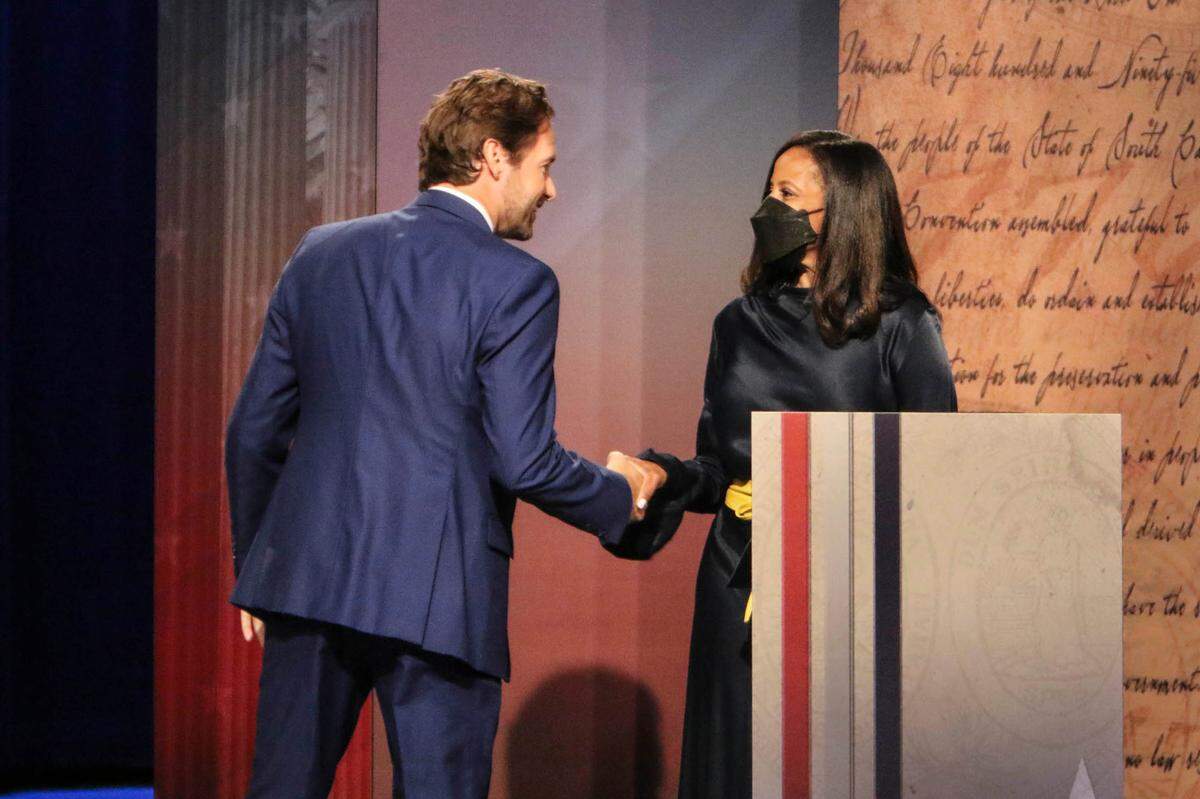
Cunningham and McLeod eventually debated on South Carolina ETV three days before the primary.
Could presidential primary chances be hurt?
McLeod’s very public departure from the party led to immediate concerns it could hurt the state’s chances of holding the first Democratic presidential nominating primary in 2024.
President Joe Biden has proposed making South Carolina first in the primary order, a proposal the full DNC is set to formally approve next week. A DNC panel gave New Hampshire and Georgia a June 3 deadline to make changes as part of the new calendar.
“I think there’s a chance that it affects a lot of things negatively for somebody that should not have the ability to impact anything,” one state representative said.
Tyler Jones, who worked as Cunningham’s general campaign consultant, said McLeod’s announcement may unintentionally sabotage the state’s chances.
“It makes it look like there are deep divisions in the party, when in reality, the divisions don’t exist within the Democratic electorate, they exist within the party establishment,” Jones said.
But a state senator said fear of losing the opportunity to have the lead-off primary is short-sighted and the party needs to work to elect people who reflect the electorate and improve its grassroots organizing.
“I would argue that just going for the first-in-the-(nation) primary without worrying about the things that makes the party relevant in terms of winning actual elections, and calling attention to who candidates are, if we do one without the other then we’re gonna become a loser of both,” the senator said.
McLeod said as much in an email to supporters, saying fixing the party’s ongoing losing strategy has to be the priority:
“If the definition of insanity is doing the same thing year after year, election after election, and expecting a different result, then the S.C. Democratic Party is the poster child for what a losing strategy on repeat looks like.”
Focus turns to candidate recruitment
McLeod was the first Black woman to run for governor in South Carolina, a welcome sign to many Black voters who time and time again had watched white male politicians aim to pose serious challenges to their Republican counterparts, only to fall unsuccessfully by wider and wider margins each year.
Whether McLeod’s allegations about the party deter other Black women from running for office is not immediately known, but in the meantime, candidate recruitment is top of mind for party leaders.
Running for office requires work raising money and reaching out to voters and donors.
“People who may be interested in running for office in the future are going to look at this, look at Sen. McLeod’s recent comments, and be scared to death about running for office,” Jones said.
Robertson said every election cycle is different and circumstances may be what push candidates to run.
“You can’t have a democracy without candidates,” Robertson said.
In 2022, no Democratic candidates ran for the statewide offices of attorney general, commissioner of agriculture and comptroller. The S.C. Democratic Party also was unable to field a candidate in 56 of the 124 state House races last year.
Recruiting better candidates is the job of the person who runs the party, one state senator said.
“You had four years to work on that,” the state senator said. “And not that you would have convinced Darrell Jackson or Todd Rutherford to run (for statewide office), but there are other people out there, maybe, that would’ve liked to have had a conversation on that. That’s all I’m saying about the party. That’s the conversation that no one wants to have.”
Robertson said candidate recruitment is already under way but would not go into specifics.
State Rep. Gilda Cobb-Hunter, D-Orangeburg, lamented the losses of Black Democratic women Krystle Matthews, Kimberly Johnson, Wendy Brawley and Chardale Murray from the Legislature, saying they were future leaders of the party.
“The thing that is so distressing about it for me,” Cobb-Hunter said, “is that they were pretty much all very strong women who didn’t just go along to get along and who didn’t just do what they were told, and therein is part of a problem of why they are no longer here.”
Brawley, a Black Democrat whose Richland County seat was redrawn into a district with state Rep. Johnson, forcing them into a primary against each other, said she understands McLeod’s motivation for leaving the party.
Brawley said the party could have promoted McLeod’s candidacy for governor without tipping the scales in her favor.
“At the end of the day, the party needs to help motivate and inform voters on the issues, and the candidates are on their own to stake their claim on those issues. I did not see that at the statewide level,” Brawley said.
Party leaders, however, say candidates had opportunities before the primary to speak to party caucuses and at county party events and conventions to promote themselves.
“The female candidates that run stand on their credentials,” Price said. “They stand on their own their goals and their platform of what they intend to do, and that’s how they managed to get to the voters and try to convince the voters that this is what I am going to do.”
McLeod’s future a mystery
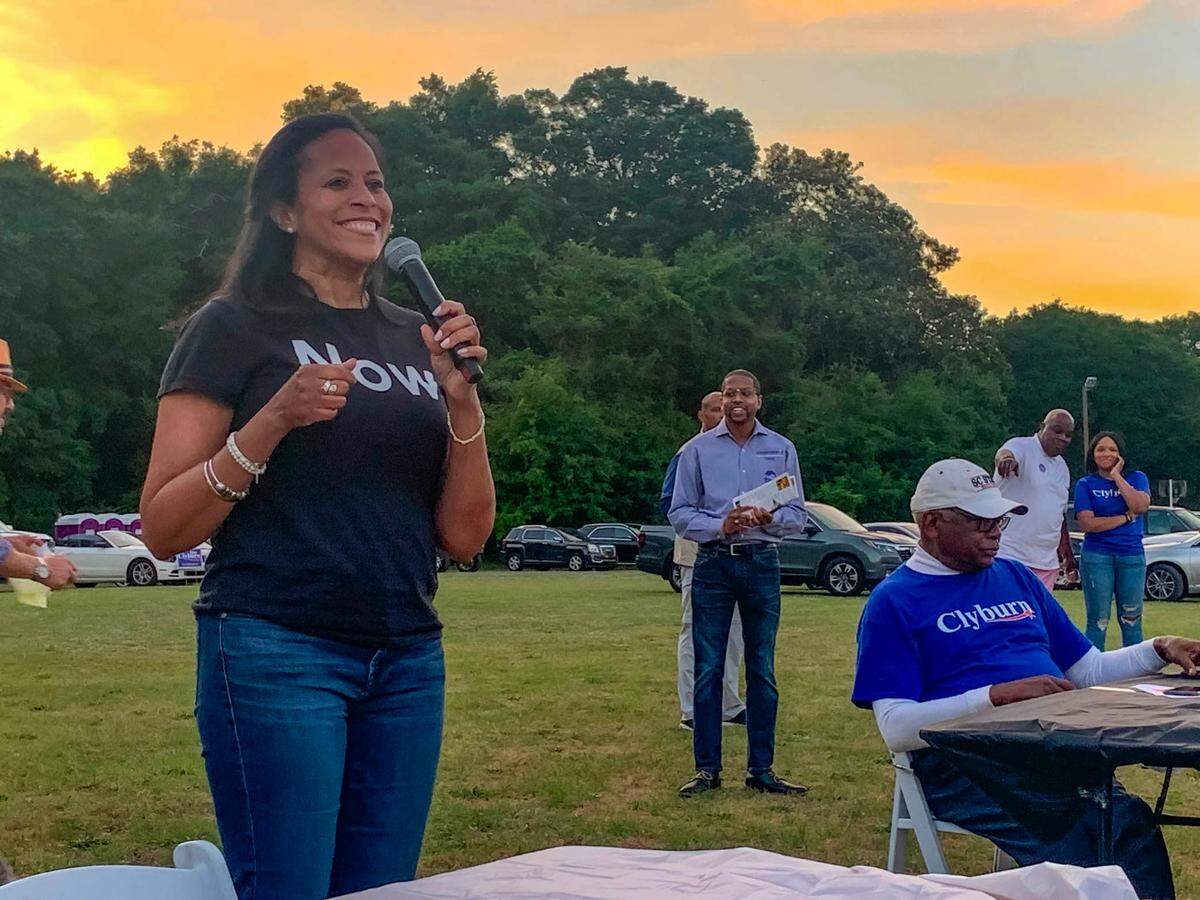
It’s unknown where McLeod goes from here. On the Sunday radio show, she said she was undecided whether she’ll seek reelection to the state Senate in 2024. In her district, about 60% of the votes are projected to be Democratic, according to Dave’s Redistricting, a popular map analysis website.
Officials within the state party aren’t exhibiting any ill will toward her.
“She is a wonderful human being,” Robertson, the party chairman, said. “She has nothing but the brightest future and serving the people of this state if that’s what she chooses to do, and she inspires a lot of people. And I appreciate her being in the state Senate.”
Robertson added McLeod would be welcomed anywhere she goes and said, “the Democratic Party is the party that welcomes everybody.”
For the time being, McLeod will still be able to caucus with Senate Democrats, similar to how independent U.S. Sens. Bernie Sanders of Vermont and Angus King of Maine usually caucus with Democrats.
It’s possible she could return to the party one day, particularly if the party chairmanship goes to Upson, who said structural changes would need to happen.
“Mia has more support than folks who are upset with her or against her,” Upson said.
Not all party members may welcome her back with open arms.
“I just don’t think those challenges we had last year and the difficulties we faced last year gives anyone an out or an opportunity to simply abandon the Democratic Party, our value system, our beliefs, our goals,” one county party chair said. “If you’re truly a Democratic candidate, you’re going to stand with this party, rebuild, and you’re going to unite the party.”
Another Democratic lawmaker was more succinct:
“She’s put herself out there. When you do that, there is no coming back from that.”
This story was originally published January 29, 2023 at 5:00 AM.