
Gov-appointed judges gets backing from SC’s top prosecutor, solicitors and sheriffs
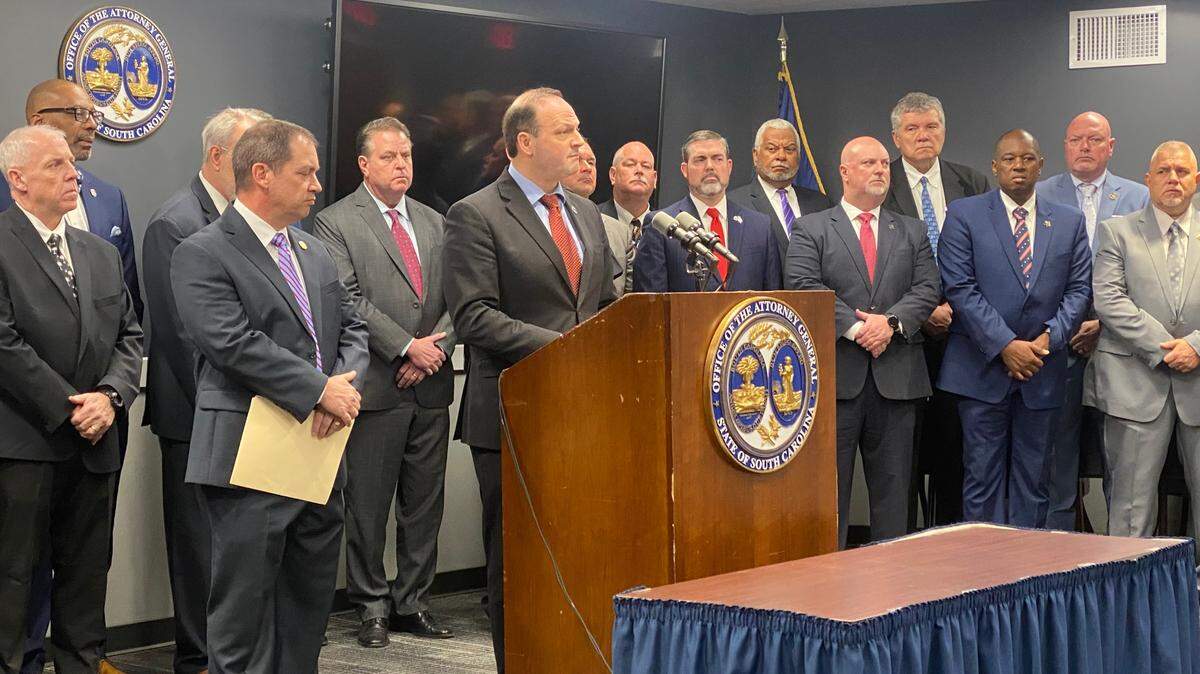
A bipartisan group of South Carolina prosecutors and sheriffs on Monday called for a new law that would allow the governor to play a major role in selecting state judges, a move they say would boost public confidence in the judiciary.
That would be the first step in changing how South Carolina now picks its state judges, said Attorney General Alan Wilson, a Republican who assembled the group with an assist from 1st Circuit Solicitor David Pascoe, a Democrat who has advocated for such changes.
“Let the executive branch sit at the table, let us have a say in the screening and qualifications of those that we have to appear in front of,” Wilson said Monday, surrounded by more than 25 solicitors and county sheriffs from around the state.
Despite the state’s having three branches of government — legislative, judicial and executive — the executive, or the governor, “is completely cut out of the process,” Wilson said. Government works best when all three branches participate, he said.
South Carolina’s method of choosing judges periodically surfaces as an issue, often with little change resulting. The state is one of two in which the legislature plays the dominant role in judges’ selections.
The latest push to implement changes in judicial selection has the backing of Gov. Henry McMaster, who in his State of the State address in January said he favors a more “accountable and transparent” way to choosing judges. Specifically, McMaster said he would like to see the governor appoint judges with the advice and consent of the Senate.
As is it stands now, the state’s 170 lawmakers play an outsized role in selecting the state’s 46 trial judges, who make about $200,000 a year and oversee major criminal and civil litigation, Wilson said.
Lawmakers also select approximately 60 family court judges, nine judges for the state Court of Appeals and five justices for the state Supreme Court.
Lawmakers oversee judicial vetting
State lawmakers not only elect state judges, but they also control who is allowed to run by means of a legislatively-appointed screening group, called the Judicial Merit Selection Commission, Wilson and Pascoe pointed out.
Of the screening commission’s 10 members, six are lawmakers. Four other members are from the general public, split between two who are chosen by the House speaker and two who are chosen by the Senate president.
The commission vets all candidates for judicial posts and then forwards a maximum of three people deemed qualified for that post to the General Assembly for a vote.
Wilson and others at the press conference called for three possible changes to the current system. They are:
▪ Allowing the names of all candidates — not just three — found qualified for a judge’s post to be voted on by the General Assembly
▪ Allowing the governor to pick members of the commission with Senate approval. The state Bar and others could make recommendations to the governor
▪ Not allowing lawmakers who are lawyers to be on the commission
“We all agree, that whatever is done, that the executive branch of government have an equal say,” said Wilson, who is rumored to be a future candidate for higher office, possibly governor. However, Wilson recently told The State Media Co. that he is happy where he is.
Any proposed change will face legislative opposition.
Those favoring change cannot point to abuses or any bad judges, and allowing the governor to nominate judges would give him too much power, said House Minority Leader Todd Rutherford, D-Richland, a 24-year veteran lawmaker and member of the Judicial Merit Selection Commission.
“What the attorney general seems to want to do is to bring Washington to South Carolina,” said Rutherford, noting the president nominates people for federal judgeships.
“No one can hold the governor accountable unless they have enough money to challenge him in a race,” Rutherford said. As it currently stands, any lawyer can now file to run for a state judgeship, and the public is welcome to comment and come to commission meetings, he said.
Senate Majority Leader Shane Massey, R-Edgefield, indicated Monday that lawmakers may be open to having more than three judicial candidates for any one post reported out to the General Assembly.
Massey filed a bill, S.444, in January that would require the Judicial Merit Selection Commission to report out all qualified judicial candidates to be voted on by the General Assembly. The bill was referred to the Senate Judiciary Committee, but has not received a hearing.
Senate Judiciary Committee Chairman Luke Rankin, R-Horry, could not be reached.
As for other changes, Massey appeared satisfied with the current method of choosing judges.
“There are positives and negatives to any system, but if you look around the country at the places that have elections of judges, you have much more corruption than what we experience,” he said. “If you look around the country where you have states who follow the federal model, of the governor appointing and then Senate confirmation, those are very political selections as well. South Carolina’s system has historically produced very high-quality judges, and they are typically middle of the road judges.”
On Monday, Wilson at his press conference said judges have confided in him that they are sometimes uncomfortable when a lawmaker who votes on judges or who is on the Judicial Merit Selection Commission appears before them in court.
“I’ve had judges tell me that over the years, that they are nervous about ruling for lawyer-legislators,” Wilson said. “Even if it’s the right ruling, people are going to question it. We want to protect all parties.”
In any case, Pascoe said, the current way of choosing judges is “too cozy.”
“There are too many inside deals going on in the selection of judges,” he said.
Advocates call for modernizing the system
The group on Monday went out of its way to frame their proposals as diplomatically as possible.
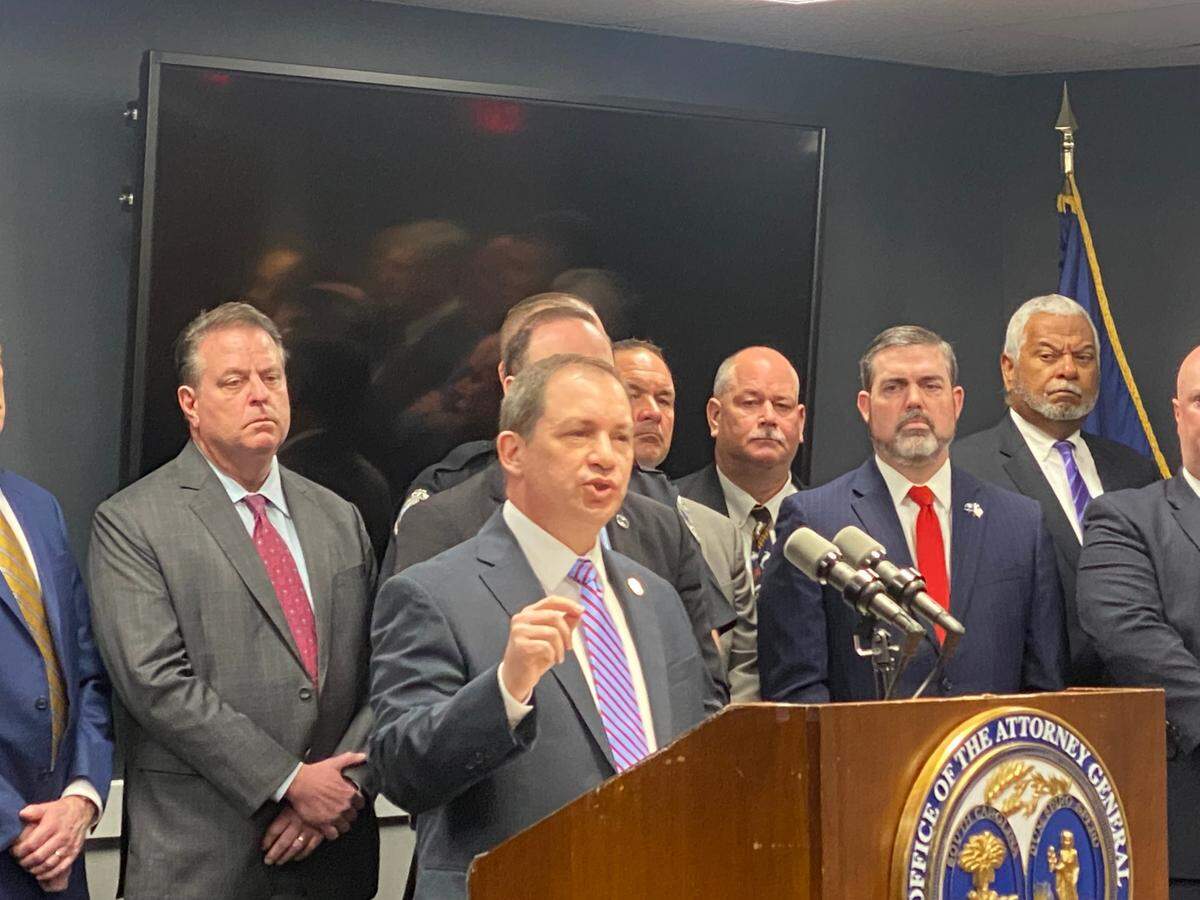
“This press conference today is not meant to be an attack; it’s not meant an indictment on those serving in the judiciary or the men and women serving in the General Assembly,” Wilson said.
Despite their pressure and filed legislation, Wilson and Pascoe acknowledged it’s likely too late in this year’s legislative session, which ends in early May, to pass a bill that would give the governor more say in the judges’ selection process.
“But that doesn’t mean we shouldn’t start talking about it right now,” Wilson said.
Pascoe said to enact major changes — such as moving to popular elections for judges — would take a change in the state Constitution. But to change the powers of the judicial commission would only require a change in state law, meaning the Legislature just has to pass a bill, Pascoe said.
Although both Pascoe and Wilson favor changes in the screening commission, Pascoe said he favors eventually moving to popular elections for judges, while Wilson would be against electing judges by popular vote.
“It’s really just modernization. We need to modernize the system that we’ve got,” said Richland County sheriff Leon Lott, who joined Wilson and Pascoe Monday.
The group appearing with Wilson Monday included 18 out of the state’s 46 sheriffs and 10 of the state’s 16 solicitors.
In addition to Pascoe, solicitors included Chip Finney of the Sumter-based 3rd Circuit; Byron Gipson of the Columbia-based 5th Circuit; Rick Hubbard of the Lexington-based 11th Circuit; Ed Clements of the Florence-based 12th Circuit; Jimmy Richardson of the Conway-based 15th Circuit; and Kevin Brackett of the York-based 16th Circuit.
Besides Lott, sheriffs included Lexington County’s Jay Koon; Kershaw’s Lee Boan; Chesterfield’s Cambo Streater; Chester County‘s Max Dorsey; Newberry’s Sheriff Lee Foster; Orangeburg’s Leroy Ravenel; and Horry County’s Phillip Thompson.
In recent years, Pascoe and Wilson have at times been on opposite sides of controversial issues, such as when Wilson unsuccessfully tried to block Pascoe from pursuing a high-profile corruption scandal in the General Assembly that involved close friends of Wilson’s.
At Monday’s press conference, however, they were working together, putting past differences aside.
“If anyone needed proof that public confidence is waning (in the judiciary) and that we need legislative action now, when did you think that Alan Wilson, David Pascoe and 30 solicitors and sheriffs would get together and call .... for judicial reform?” Pascoe said.