
Judge to consider whether SC House Freedom Caucus can raise cash, influence elections
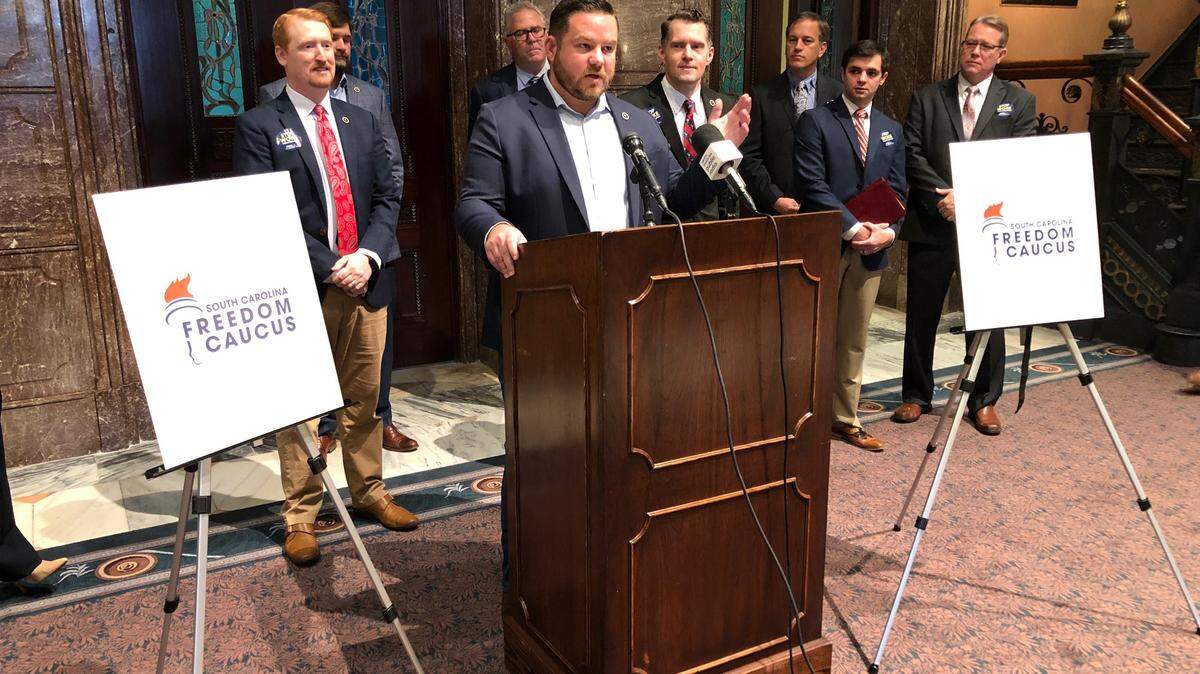
A federal judge could soon decide whether an organized group of ultra-conservative South Carolina legislators can raise money and campaign, a decision that would offer the group of House Republicans the same powers afforded to other state-recognized caucuses.
In February, the South Carolina House Freedom Caucus sued their colleagues on the House Ethics Committee — a panel chaired by Rep. Jay Jordan, R-Florence, and made up of Democrats and Republicans — asking the court to allow them the same perks of the Republican, Democratic, Black and women’s caucuses to raise money and advocate for candidates.
Those caucuses are currently permitted different rules under the state law that spells out two kinds of caucuses: one that is organized around party, race or gender issues and can raise money and spend sizable political contributions, and the other is special interest caucuses, organized around, for instance, conservative or liberal principles.
Special interest caucuses, such as the freedom caucus, are sharply limited in their fundraising abilities.
U.S. Judge Cameron McGowan Currie could issue a blanket OK to the 18-member freedom caucus, or she could keep the lawsuit alive by allowing the 10 House ethics members to move forward and seek discovery — the initial phase of a lawsuit where both sides can request evidence and documents from the other.
The ethics committee members are defendants in the case because they are charged with enforcing House rules and, as such, would presumably be in charge of disciplining freedom caucus members if they flouted state law limiting powers of special interest caucuses.
Ethics committee members named in the lawsuit are Republican Reps. Jordan, Paula Calhoon, Micah Caskey, Robby Robbins and Neal Collins, and Democratic Reps. David Weeks, Beth Bernstein, John King, Leon Stavrinakis and Todd Rutherford.
Currie spent much of a Thursday hearing meticulously questioning Christopher Mills, a Charleston lawyer representing the freedom caucus, and Susan McWilliams, who with Mark Moore and Michael Parente, represents the ethics committee members.
No lawmakers attended the hearing in Currie’s spacious third-floor courtroom, the largest in the courthouse. The Legislature was in session Thursday, the final day of the regular session.
In the hearing, Currie asked about the origin of the law granting full powers to some caucuses over others. She also questioned whether ethics committee members are the proper targets for the lawsuit, and what should the language say should there be an injunction.
“The bottom line is you want the special interest caucus to be able to do everything the favored caucuses can?” Currie asked Mills.
“Yes, we are asking to be treated like the legislative caucuses,” Mills replied.
The lawsuit comes amid a political tug-of-war between South Carolina House Republicans, dating back to the June 2022 primaries when two Republican lawmakers, now in the freedom caucus, helped a candidate try to oust one of their Republican colleagues. The effort was unsuccessful.
The freedom caucus has also sued school districts, accusing them of teaching critical race theory.
The South Carolina House freedom caucus is one of 10 similar state caucuses around the country formed through the State Freedom Caucus Network, which itself began in 2021 with the support of the U.S. House Freedom Caucus.
In its lawsuit against House Ethics Committee members, the freedom caucus is also being represented by America First Legal, an organization led by former Trump administration senior advisor Stephen Miller to fight “the radical left,” according to its website.
Not having the ability to raise and spend money or campaign robustly to influence issues is a violation of the freedom caucus free speech rights under the First Amendment to the U.S. Constitution, Mills told Currie Thursday, quoting the U.S. Supreme Court’s 5-4 decision in 2010 that removed limitations on campaign contributions by corporations.
In defense filings, McWilliams referred to Operation Lost Trust, a General Assembly bribery scandal in the 1990s, whose exposure by the FBI caused state lawmakers to place limits on special interest caucuses by limiting their fund raising powers.
From the 1970s to the 1990s, a 40-member special interest caucus, known as the Fat and Ugly Caucus, “coerced lobbyists to fund its Thursday lunches or face having the bill the lobbyists were supporting killed by members of the caucus,” McWilliams wrote.
Limiting special interest caucuses’ power to raise money is a legitimate government interest that helps fight “corruption and fraud,” McWilliams wrote.
McWilliams also sought permission to begin discovery and, in a formal written reply to the freedom caucus’ complaint, said that caucus members already engage in robust political outreaches.
“Plaintiff holds press conferences and speaking engagements, operates Facebook and Twitter pages maintained by paid staff, and benefits from donations solicited by the State Freedom Caucus Network,” her answer to the complaint said.
State Rep. RJ May, R-Lexington, who runs a political consulting firm, said the lawsuit “isn’t about fundraising.”
This is about ensuring that the laws that the Legislature passed, which (are) clearly intended to protect the moderate majority and their ruling coalition with Democrats, that there’s rules for them, but not for us; this is about ensuring that we are on equal playing field with the swamp,” said May, who is vice chairman of the freedom caucus.
Reporter Joseph Bustos contributed to this story.