Racial gerrymandering in Alabama slapped down by SCOTUS. Could the same happen in SC?
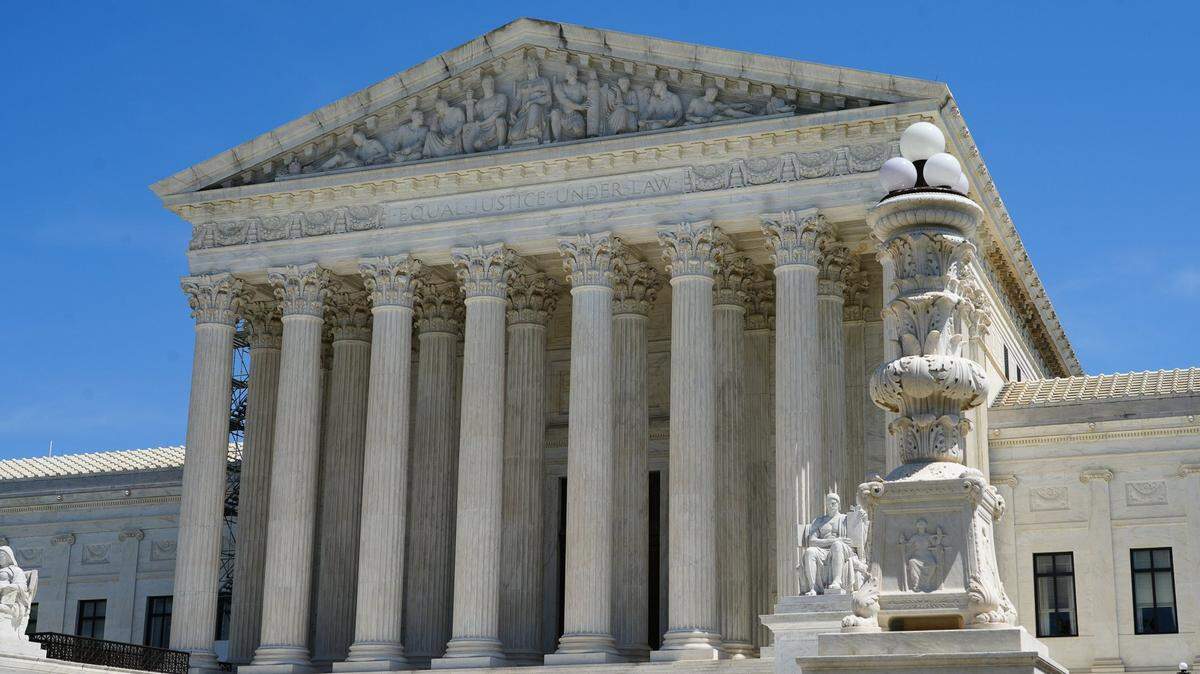
South Carolina voting rights advocates who challenged how the state’s Congressional districts were drawn are “encouraged” by a recent U.S. Supreme Court decision that rejected Alabama’s congressional map.
The Alabama case mirrors concerns raised in South Carolina, specifically that both state’s Congressional maps discriminate against Black voters.
The U.S. Supreme Court ruled last Thursday that Alabama’s map violated the federal Voting Rights Act. The 5-4 ruling upheld a lower court decision that said Alabama’s map was likely unconstitutional because it included only one majority Black seat out of seven districts in a state where more than one in four residents is Black.
South Carolina also has seven congressional districts, and only one — the 6th District at 47.8% — is close to being majority Black. The state’s population is about 27% Black, according to the U.S. Census, compared to 25% Black in Alabama.
Meanwhile, a panel of three U.S. District judges earlier this year ruled South Carolina’s 1st Congressional District, represented by Republican Nancy Mace, is an unlawful racial gerrymander that discriminates against Black voters in violation of the U.S. Constitution. South Carolina Republicans appealed the decision to the U.S. Supreme Court, while the NAACP and ACLU of South Carolina filed a motion asking the high court to affirm the lower court’s decision. The court is expected to hear the case this fall.
Allen Chaney, legal director for the ACLU of South Carolina, said while he’s “thrilled” by the Supreme Court’s ruling in the Alabama case, it’s uncertain whether the high court will follow suit in South Carolina because each case involved different claims.
“That said, we are certainly encouraged that the Court respected the trial court’s findings of fact and remained committed to its own legal precedent,” Chaney said. “If the Court does the same in our case, I feel confident that our win will be affirmed.”
Differences between the Alabama and SC cases
The differences between claims raised in Alabama and South Carolina center around different legal theories.
The case in Alabama was brought under a theory that the design of the state’s congressional map harms the ability for Black voters to exercise their electoral power under the Voting Rights Act.
Plaintiffs from Alabama convinced a lower court that the minimization of Black voters into one congressional district diminished their ability to elect two candidates of choice rather than one. The Supreme Court agreed.
In South Carolina, two claims were raised under the U.S. Constitution — the 14th and 15th Amendments — as opposed to Alabama’s claim being based on a federal statute, the Voting Rights Act.
One claim in South Carolina alleged that Republican lawmakers sorted voters on the basis of race without a compelling state interest. Another said that the state intentionally designed the map to ensure that Black voters in the 1st Congressional District lacked electoral power. That is, by setting a target for a very low population of Black voters in that district, Black voters would be unable to impact elections there.
Despite the differences, however, the cases in Alabama and South Carolina essentially allege the same thing, said Leah Aden, a Legal Defense Fund attorney and one of the lead counsels who argued the South Carolina case. Namely, racial gerrymandering limits the ability for Black voters to elect lawmakers who represent their interests.
“But if you step back very globally, these are all different theories trying to get at how Black voters are harmed by the (congressional district) drawing process,” Aden said.
“Despite them being different cases, I think, with respect to ours (in South Carolina) ... three judges on a panel all agreed that there was racial discrimination (from the map), and we think they followed the law and credited the facts to get to a unanimous decision,” Aden said. “And we think all of that should be affirmed by the Supreme Court and is likely to be affirmed by the Supreme Court.”
A history of the controversial congressional map
South Carolina’s Republican-controlled General Assembly passed the redrawn congressional map in January 2022 over the objection of Democrats and public interest groups, which argued the map carved up the area around Charleston along racial lines and guaranteed largely uncompetitive U.S. House races.
The South Carolina chapter of the NAACP challenged the map in court, alleging lawmakers had used race as the predominant factor when drawing the 1st, 2nd and 5th Congressional Districts in order to dilute the voting strength of Black South Carolinians and maintain political power.
Republican leaders settled similar allegations leveled against the state House of Representatives map by agreeing to adjust that map’s lines but could not resolve the dispute over the congressional map. A bench trial over the contested congressional map was held last fall in Charleston federal court.
Republican lawyers argued at trial that politics, not race, had motivated line-drawing decisions.
The map, they said, was drawn to shore up Republican control of the competitive 1st Congressional District, and they stressed the importance Republican lawmakers placed on ensuring Mace, who won by only one percentage point in 2020, retained her seat. Their efforts were successful, as the Lowcountry congresswoman cruised to a nearly 14-point victory in her redrawn district in November.
What the court ruled
The panel of three U.S. District judges didn’t buy the Republicans’ argument, at least as it related to the 1st District. Following testimony from statistical experts, who analyzed the map and found it to be racially biased, the panel opined that Republicans had intentionally discriminated against Black voters in the 1st District.
The judges did not, however, find the contested 2nd and 5th districts to be unconstitutional racial gerrymanders.
“South Carolina enacted a congressional map that minimizes Black voters’ power and silences our voices,” said Taiwan Scott, one of the plaintiffs in the pending South Carolina case, in an Legal Defense Fund news release issued in March. “As the panel of judges already recognized, rectifying this egregious discrimination requires enacting a fair map. We believe the Supreme Court will uphold the panel’s decision so that we can move one step closer to achieving the fair representation that is constitutionally required.”
This story was originally published June 12, 2023 at 10:22 AM.