
Is SC headed for future power blackouts? Why an electric leader is ringing alarm bells
Mid-Carolina Electric Cooperative wants you to know that power blackouts may become a “routine” part of your life if you live in South Carolina. State co-op leaders have been ringing alarm bells for a few months, but their messages haven’t resulted in the action they want: more power generation and natural gas plants
Now, they’re urging South Carolina leaders and Congress to do something.
However, to understand the full extent of the issue, some warn to look deeper than what the electric cooperatives are saying and understand it’s more than just a Republican versus Democratic battle on energy.
This week, Mid-Carolina Electric Cooperative CEO Bob Paulling spoke before South Carolina lawmakers urging them to understand the need to increase the natural gas capacity to supply new power plants.
S.C. House Speaker Murrell Smith, R-Sumter, was also at the meeting, where he touted South Carolina’s growth and development. More people and businesses mean more electricity demands. Smith encouraged the conversation Paulling was bringing to the table.
However, some South Carolina environmental and energy experts warn that the calls for change are not as urgent as the cooperatives are making them out to be.
Paulling and state electric cooperative leaders’ concerns are about reliability. South Carolina has had an influx of population growth the past few years, and the state has been pushing for increased economic development as well. As the state becomes busier and fuller, more electric generation is needed to keep everything running.
The state does have renewable energy sources, such as solar energy. However, those types of energy aren’t necessarily always reliable, Paulling said.
A prime example, he said, of why reliability is a concern: Christmas 2022.
Dominion Energy’s South Carolina customers almost had rolling power blackouts over Christmas 2022 due to high demand from cold weather and diminished production from the state’s solar power facilities, officials have said. About 500,000 Duke Energy customers did lose power in North Carolina on Christmas Eve.
“On a normal spring day, it’s not a big deal,” Paulling said. “It’s critical days, like what happened in December, that we need to worry about. We haven’t built (new major power plants) in nearly two decades. We’re way behind, and we need to catch up, quickly.”
The Christmas blackouts coincided with a planned, or rolling blackout of some back-up facilitators. Because Duke Energy and Santee Cooper had already shut down plants for regularly scheduled maintenance and due to unprecedented levels of cold weather taking them by surprise, the ones that were working became too overloaded.
This is why Paulling has specifically requested approval for more electric generation, or base-load generation, that’s available 24 hours a day, seven days a week. Paulling said the only fuel looking into the future that can power base-load generation is natural gas, and he’s pushing for the expansion of natural gas pipelines within South Carolina.
“It’s a pretty simple problem to lay out but a complex solution to solve,” Paulling said.
Not everyone agrees.
Some South Carolina environmental and energy experts argue that the state is not facing an energy emergency. While Paulling and other co-op leaders aren’t necessarily wrong to be concerned, some say, the situation may not be as dire as the co-ops claim.
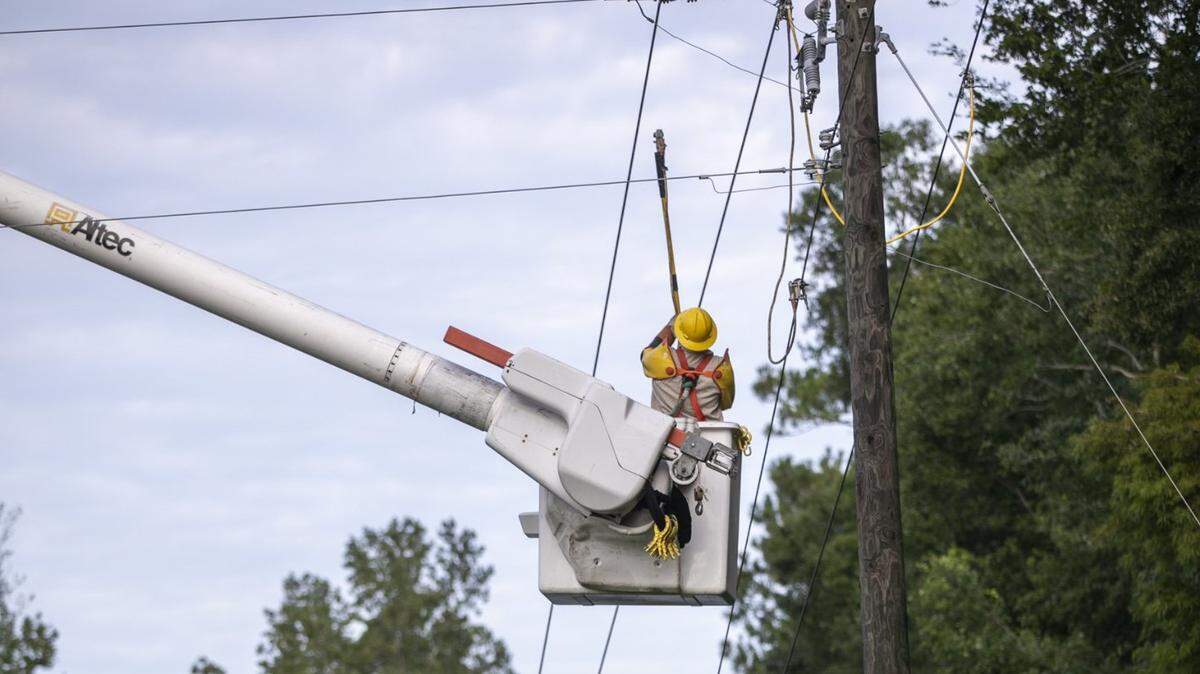
Those critics argue that more than the power-generating source — whether it be solar or natural gas or coal or otherwise — much of the reliability of our electricity actually depends on the distribution channels. Look at it this way: Most the time, when the power goes out at your house, it’s because of interrupted distribution line that goes to your house. This has to do with storms, trucks backing into things, trees falling over, not a problem at the power plant itself.
Eddy Moore, senior energy program director of the S.C. Coastal Conservation League, said the system provides reliability as a whole; it’s not necessarily one energy source that provides it by itself.
Moore said he believes there needs to be more regional coordination.
“We don’t have any one entity that can dispatch a distant power plant if the near power plant isn’t working,” Moore said. “And that’s within the state’s power to make that happen.”
“People should know, yes, there are state officials that are responsible for this and utility companies that are responsible for reliability, and they are vetting the long-term plans right now,” Moore said. “But they should also know that we can do a better job if we enhance regional coordination.”
Environmental experts say energy companies need to be better about planning ahead to make sure, if a system failure occurred, there would be a backup.