’Political malpractice’: SC Legislative Black Caucus opposes ‘regressive’ DEI bill
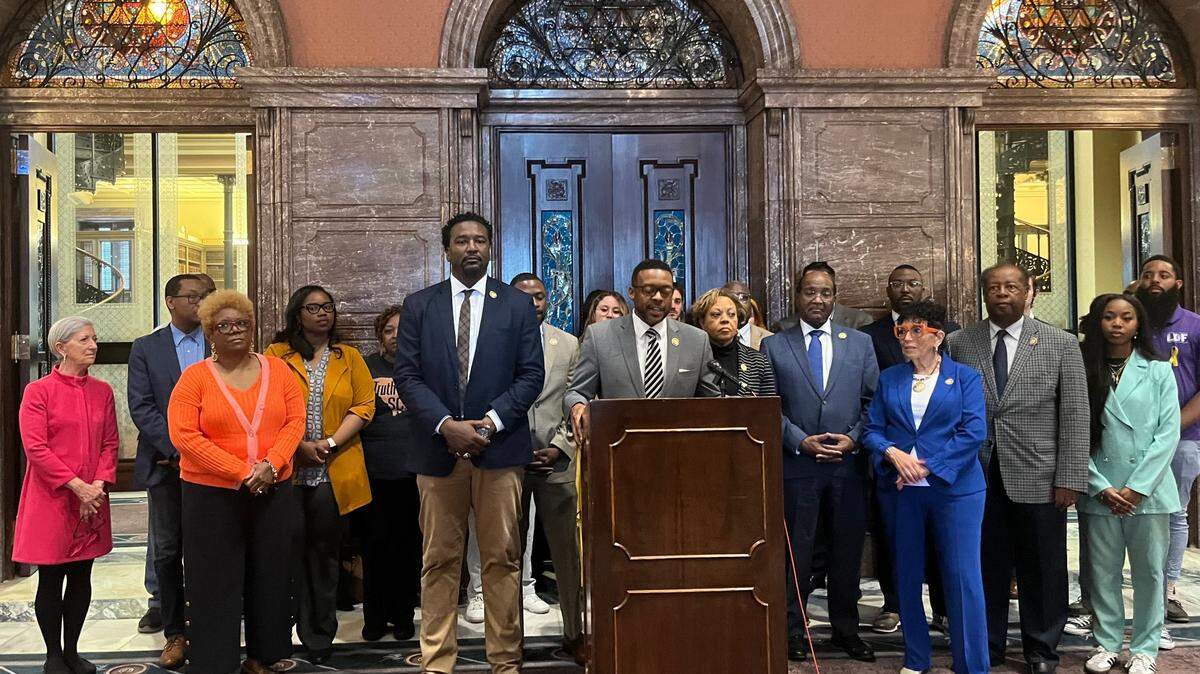
The South Carolina Legislative Black Caucus is opposing a newly-passed bill targeting diversity, equity and inclusion, which members call a “regressive” piece of legislation.
“One would think it is 1964 instead of 2024,” said Rep. Ivory Thigpen, D-Richland, chair of the SC Legislative Black Caucus. “But today, the South Carolina Legislative Black Caucus stands united in the defense of diversity, equity and inclusion initiatives within our educational institutions. ... Weaponizing DEI is political malpractice.”
H. 4289, a bill introduced last spring, targets diversity, equity and inclusion efforts at the state’s 33 public institutions of higher education.
The bill prohibits the schools from making admission or employment decisions based on an applicant’s commitment to/or disagreement with any political ideology, including statements regarding DEI and other issues. If schools receive such statements, applicants cannot be given any differential treatment.
The proposed legislation wouldn’t remove funding from DEI programs at schools. But it would require them to annually report how much they spend on DEI-related programs, as well as program descriptions, the number of jobs associated with DEI and any complaints made.
According to the bill, it won’t limit institutions from complying with federal law, including anti-discrimination laws, and it won’t limit grant application or complying with terms of accreditation.
Proponents of the bill say that it is merely an effort to fight discrimination on college campuses and protect all viewpoints.
H. 4289 passed the house on Wednesday in a 84 to 30 vote along party lines.
While the bill is less restrictive than its brother, H. 4290, the caucus describes the bill as a vague and a “thinly-veiled” part of extremists’ agenda.
“This legislation was drafted by members of this General Assembly and did not include anybody at the table that looked like me, but this legislation will affect people who look like me,” said Rep. Jermaine Johnson, D-Richland. “This is much like reliving the civil rights movement. We are going through things that our forefathers went through.”
Rep. Rosalyn Henderson-Myers, D-Spartanburg, called the House’s passage of the bill a day she “would not easily forget.”
“It was a day when South Carolina took a step back,” Henderson-Myers said. “Inclusion is not just a buzzword. It’s a fundamental principle that lies at the heart of a fair and just society. ... The national attack of weaponizing DEI is alarming and offensive to the great strides that we have made.”
Diversity, equity and inclusion programs are not about giving handouts, providing unfair advantages or taking away from deserving individuals, Henderson-Myers said, rather leveling the playing field, providing resources and acknowledging historical inequalities.
If the bill becomes law, it is still unclear how it would actually impact the existing DEI programs at South Carolina’s colleges and universities. But some, like Johnson, are certain that these programs serving students from underrepresented backgrounds will be under attack.
“We know when there’s vagueness in legislation, it creates collateral damage and problems and unintended consequences,” Thigpen said.
The SC Legislative Black Caucus was joined in opposition by the South Carolina ACLU, the South Carolina NAACP and several students and professors at the University of South Carolina.
“This bill is in search of a problem that doesn’t exist,” said Todd Shaw, a USC professor. “We do not engage in viewpoint discrimination, as the bill alleges, and in no way do we indoctrinate students, for that would be a violation of the highest principles of free speech, academic freedom, scholarly inquiry and creative endeavors.”