SC residents could see larger income tax cut this year under Senate spending plan
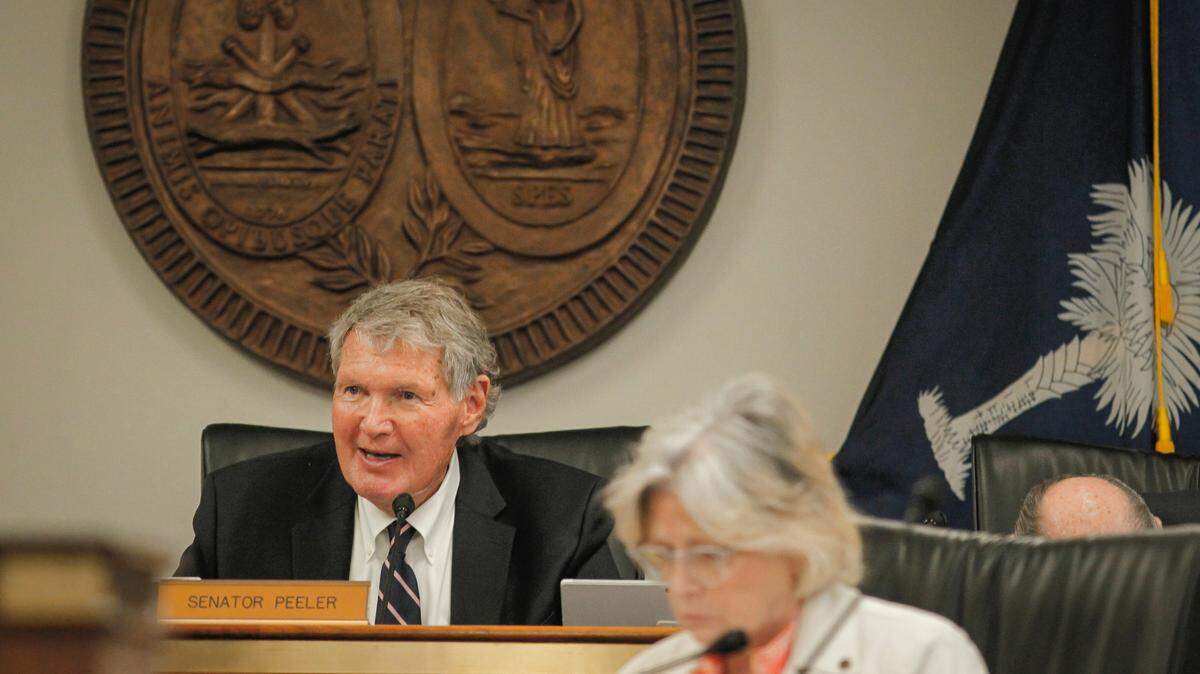
Surplus sales tax money originally collected for property tax relief would be used to speed up the planned income tax cut, additional road construction, and USC’s health campus, under a plan approved Wednesday by the state Senate Finance Committee.
It’s a departure from the state House’s plan to use $500 million for one-time property tax relief and sets up a potential disagreement between the two chambers when they come together to finalize a spending plan for the upcoming fiscal year.
Senate finance committee members voted to accelerate the state’s planned income tax reduction by bringing the maximum rate to 6.2%. The rate is currently 6.3% and the cut to 6.2% is planned for next calendar year if revenue to the state is high enough.
The step-by-step reduction in the income tax rate is part of a phased-in cut that will bring the maximum income tax rate to 6%.
Instead of using the money for property tax cuts, Senate budget writers in a $13.8 billion spending plan, want to provide $200 million to county transportation committees, $117.4 million on rural road safety, $100 million on bridges, $30 million on rural infrastructure and $53 million for the health campus for the University of South Carolina.
The $53 million will be coupled with an additional $47 million to help the school avoid issuing debt to build out the health campus.
Elsewhere in the budget proposal, the Finance Committee put in $175 million for the Clemson University veterinary school construction. A disagreement last year over how much money to send to Clemson for the vet school and making sure USC and MUSC were treated equitably led to a fight between the House and Senate last year.
Senate Finance Chairman Harvey Peeler said he hopes the funding for the health campus will help avoid that fight when the House and Senate hold a conference committee to finalize the budget. He added that both the medical school campus and vet school are needed in the state.
“I didn’t want to get into the tit for tat, Gamecocks versus Tigers,” Peeler said. “I’ve never liked that.”
As part of the House spending plan, budget writers proposed using the $500 million for one-time property tax relief, which the chamber hoped to continue in following years.
The draw back in the House plan is it’s only guaranteed for one year and it may look like property taxes will go up the following year if lawmakers don’t have enough money to continue it.
Money for the proposed tax cuts is available in a homestead exemption fund. In 2006, the state sales tax increased to 6% from 5% in exchange for cutting property taxes on owner-occupied houses in half. However, money in the property tax relief fund has accumulated to $600 million since 2020, the first year the account had a surplus.
The Senate Finance proposal would suspend restrictions on how the money could be used.
Gov. Henry McMaster suggested using $500 million of the homestead exemption fund to address aging bridges in the state. The House opted to use $500 million for a one-time property tax rebate for owner-occupied homes, and funded $200 million for bridges with other cash.
The Senate is poised to go a different direction.
“An income tax reduction is the best way. But how great it is, how wonderful it is to have the House and the Senate fighting over which tax reduction is best. There (were) arguments how much you could tax more now arguing about how much becomes less. And I think that’s a good thing.”