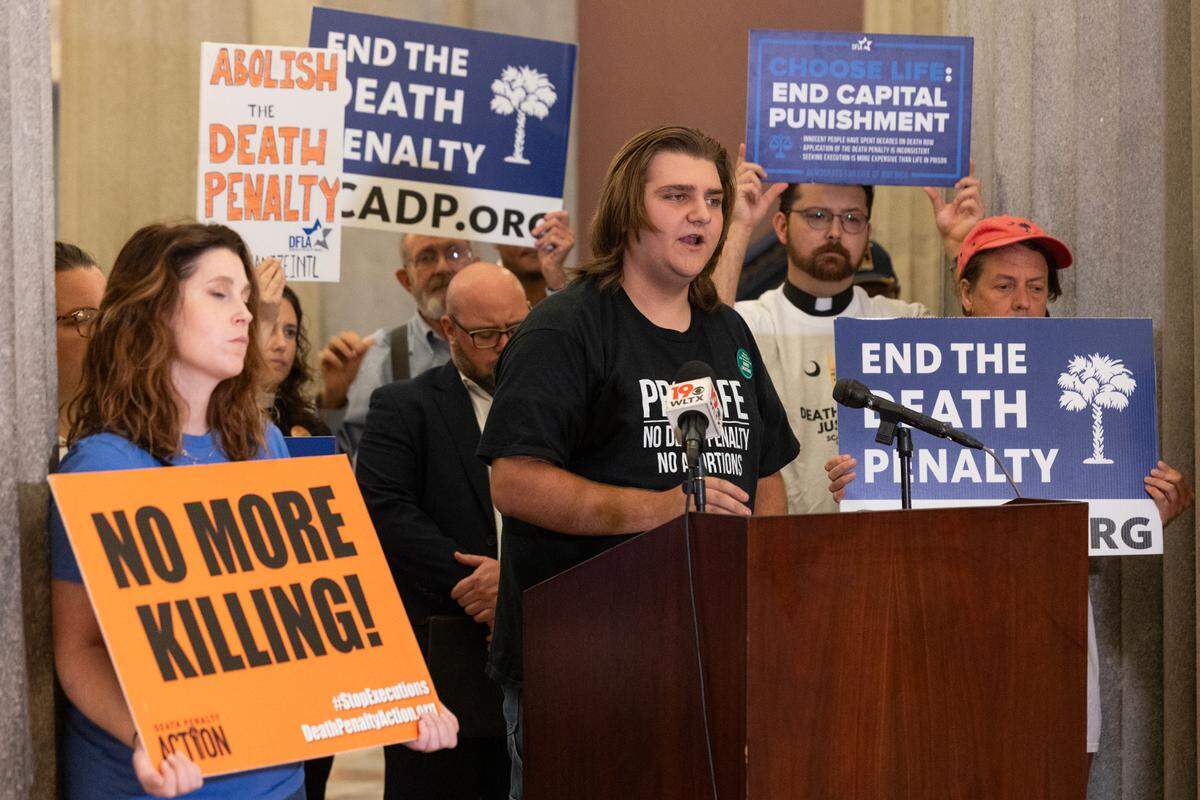
SC anti-death penalty advocates won’t stop protesting. Will it change McMaster’s mind?
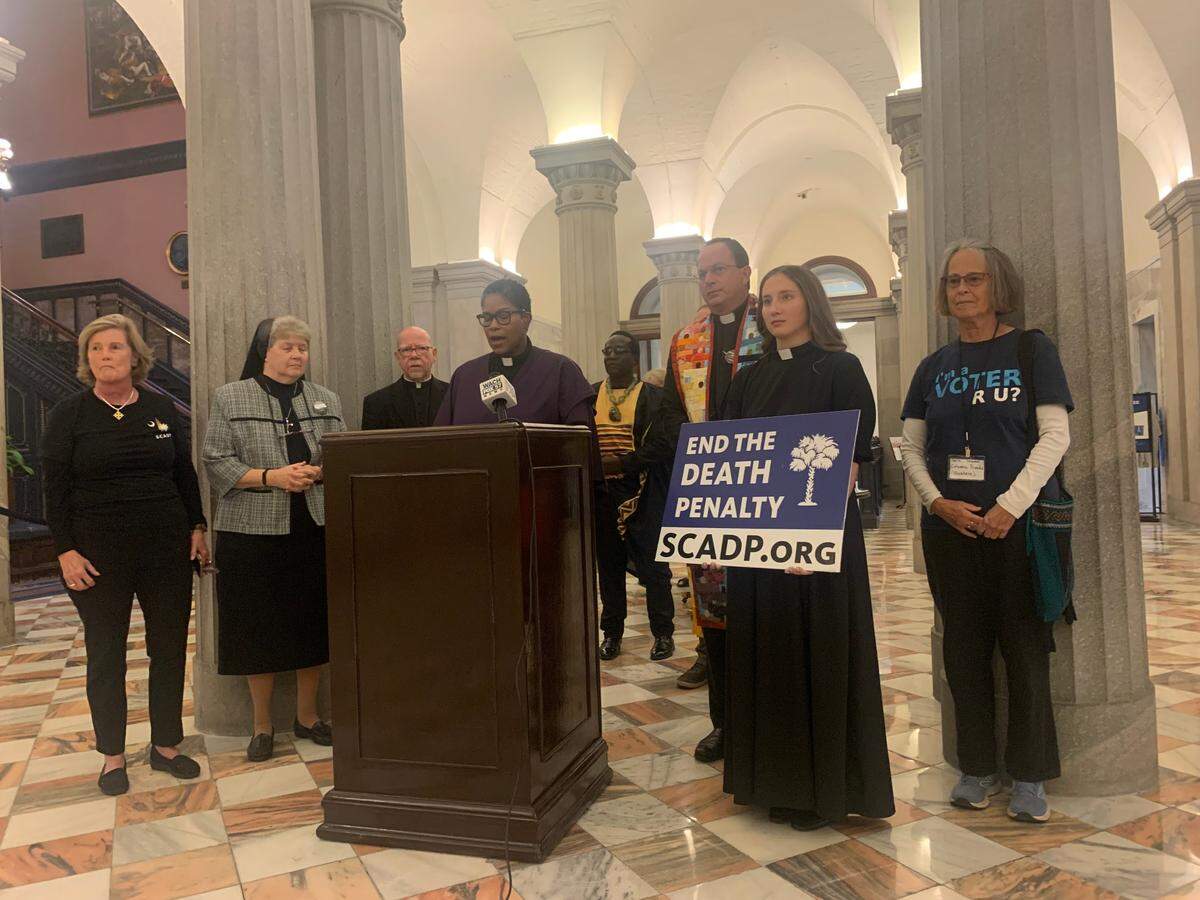
The Rev. Bryan Pigford stands behind a lectern surrounded by other clergy, including one holding a sign that says “End the death penalty.” He’s wearing a stole made by a woman who was involved in protest movements.
When speaking in the first floor lobby of the State House, he used the stole in an allegory. If one of the patches was removed, the stole would lose part of its beauty.
“The loss of human life and violent crime is tragic. It affects the beauty of God’s good creation. Removing another human life does not restore that beauty. It only causes more rips and brokenness to occur,” Pigford said. “By showing the same mercy that God shows each and every one of us, we have an opportunity to repair rather than rip apart. To heal, rather than inflict more suffering.”
Pigford was one of several clergy speaking on behalf of South Carolinians Against the Death Penalty at a recent State House news conference.
It’s a message they had before Freddie Owens was executed. One they’re repeating before the Nov. 1 execution of Richard Moore, who was convicted in 2001 of murder, armed robbery, possession of a firearm during the commission of a violent crime and assault with intent to kill. Those against the death penalty are planning to repeat the message ahead of the other four executions expected through March.
Because of a 13-year pause on executions and legal rulings that eventually allowed executions to restart in South Carolina, the ritual of the issuance of an execution notice, protests against the death penalty, a delivery of petitions calling for clemency, vigils the day of the execution, a phone call with governor and attorney general on clemency, then presumably the execution, and a hearse leaving Broad River Correctional Institution is expected to be repeated five more times through March.
“So there were folks who were not in the state as this was going on,” said the Rev. Regina Moore, the executive minister and CEO of the South Carolina Christian Action Council and is not related to Richard Moore. “So now that there are more and more state persons slated to be executed, we have to bring about an awareness in a consistency so that people can understand our platform and our goal, which is to stop executions in South Carolina.”
Citing their faith in call to end executions
In its messaging last week, South Carolinians Against the Death Penalty called on lawmakers to end the death penalty in the Palmetto State. They delivered a petition calling for the end of the death penalty in South Carolina on the day set aside as World Day Against The Death Penalty.
“I’m here to remind Gov. McMaster and all our legislators, many of whom claim to follow Jesus with their lives, too, that all life is sacred in the eyes of God,” Pigford said.
Those same advocates plan to deliver another petition calling on McMaster to commute Moore’s sentence.
“The message is not going to change because the scriptures don’t change. We’re standing on scripture,” Regina Moore said. “All faith communities have sacred texts. We’re standing on those sacred texts. That does not change for this.”
The death penalty in South Carolina had not been carried out in 13 years until the execution of Owens South Carolina could not obtain the drugs necessary to provide the lethal injection option until the state passed a shield law.
And after several legal challenges, the state Supreme Court in July ruled all three options for execution, including the electric chair and firing squad, are constitutional.
When legal challenges to the death penalty and South Carolina’s methods were resolved, six men were out of appeals. Owens was executed Sept. 20. Moore is scheduled to be executed Nov. 1.
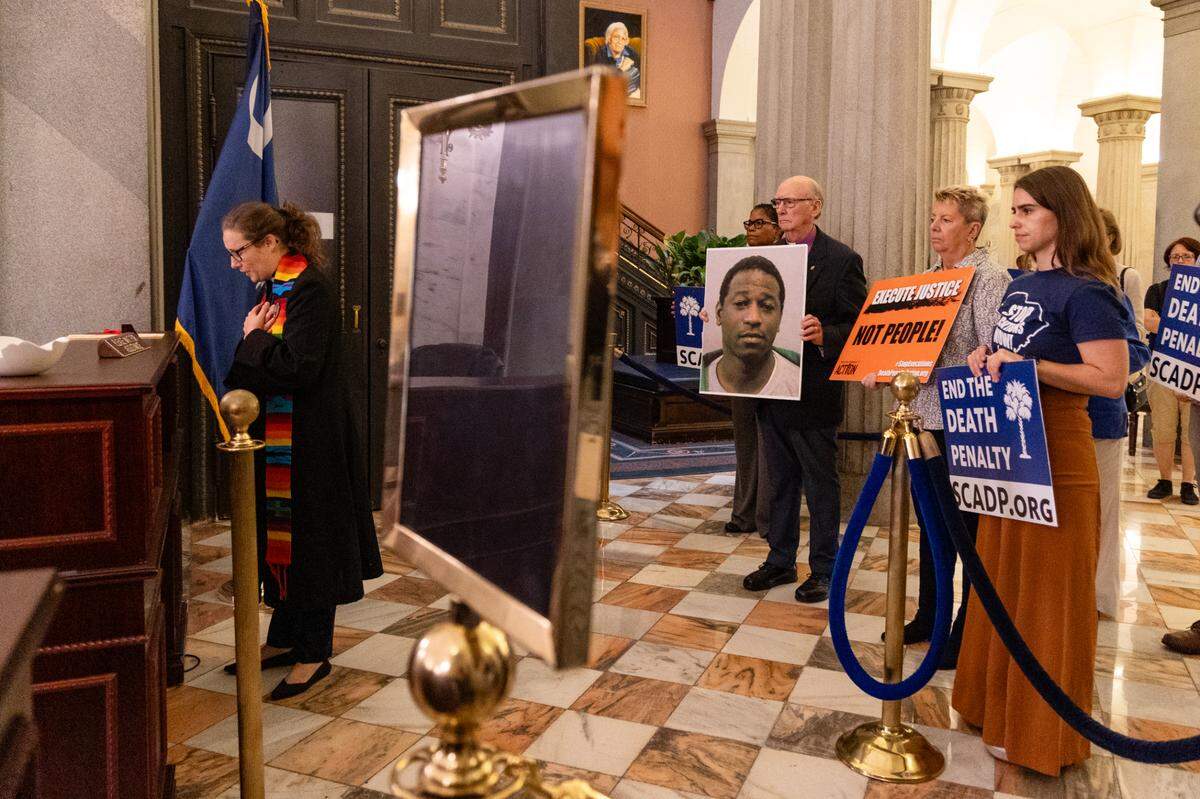
With the state Supreme Court setting a minimum five-week timetable between executions, protesters are expected to continue bringing their petitions and making speeches against the death penalty, while calling for clemency.
McMaster says he wants to read how those petitioners view the facts of the cases.
“I’ve noticed sometimes the court opinion of the facts and the facts as recited in some of the petitions are not quite the same,” McMaster told reporters Tuesday. “So, then I try to understand what exactly the facts are. I try to have a thorough understanding of the nature of the crime, the nature of the people involved and the law, and then make a decision. It takes some time.”
McMaster says he doesn’t make a decision on clemency until right before the execution.
“That’s when you have to announce it and there’s always a chance that something may change a governor’s mind,” McMaster said.
Moore’s attorneys have sued in federal court to strip McMaster of his clemency powers because of previous statements the governor has made about Moore’s case.
As part of this process is a phone call that includes the governor, attorney general, S.C. Department of Corrections Director Bryan Stirling and the prison warden that starts 15 minutes before an execution.
McMaster is in his office with staff listening to a narration of the execution and is asked whether he wants to grant clemency.
“It was quiet, it was contemplation, it was listening, it was a very serious mood,” McMaster said of the phone call during the Owens execution.
McMaster was attorney general for several executions and he recalled one during the Mark Sanford administration when family members of a victim came to Columbia for the execution. But they all couldn’t view it. So they went to McMaster’s office and sat in the conference room to wait for updates.
After the execution was completed, McMaster went into the conference room to tell the family members it was over.
“You could feel the relief of those people and there was sobbing, there was hugging,” McMaster said. “There’s no other way for closure in these cases, according to a lot of people, and without closure, there’s no end to it. So the decades of litigation over this and experience, I believe, have shown that the death penalty is a horrendous and awesome power, but it is a necessary event in our society today, and has been for many, many, many years.”
Just like when anti-death penalty advocates delivered a petition with more than 10,000 signatures calling for Owens’ clemency, McMaster wasn’t available to meet with the group Oct. 11. So they gave the petition, calling for the end of the death penalty, to the administrative assistant for the governor’s office.
Regina Moore said she expects interest in trying to eliminate the death penalty in the state will grow as South Carolina continues to carry out the death penalty in the next several months.
“I hope and pray that people will take what they believe and apply it to their everyday lives and have the rationale and the faith to believe that there has to be a different way than killing another human being,” Regina Moore said.