
SC nonprofit got $800K grant to fight crime. Where did the money go?

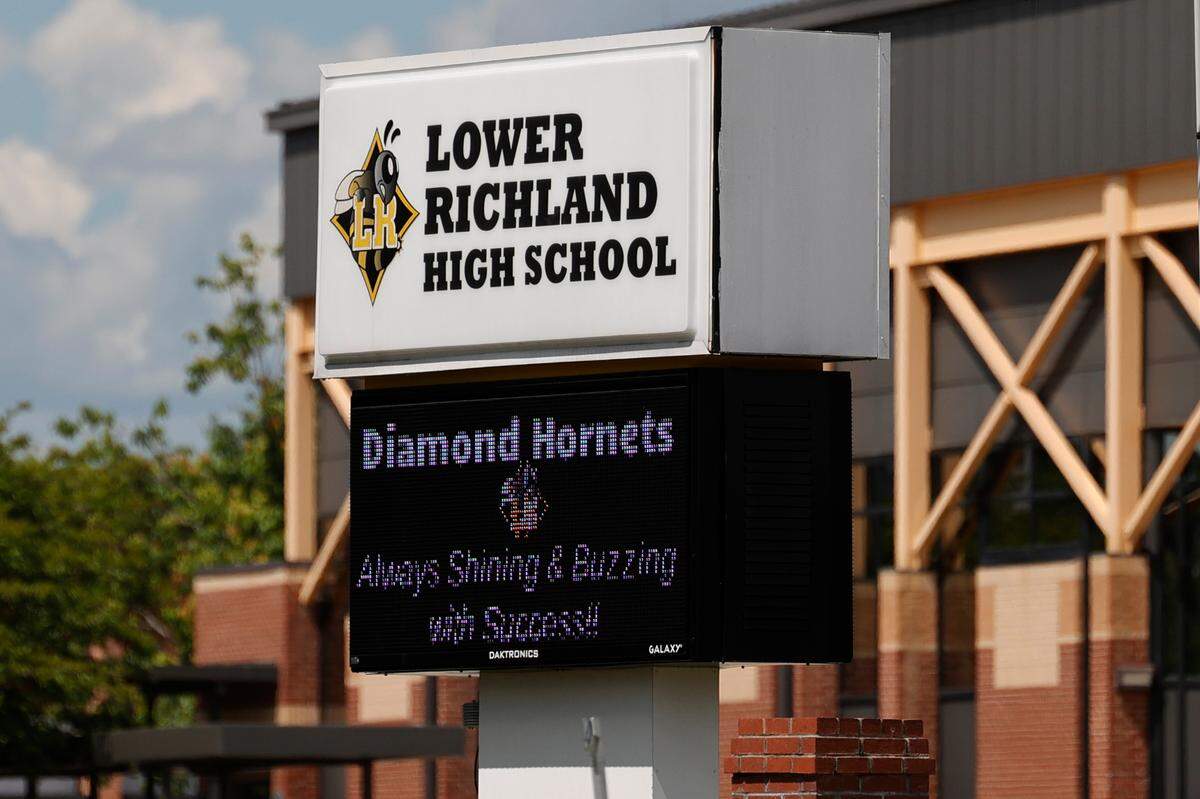
In April 2023, a who’s who of Richland County Democrats gathered at a sheriff’s substation on the campus of Lower Richland High School to announce the kickoff of a local anti-crime initiative called the Community Cares Project.
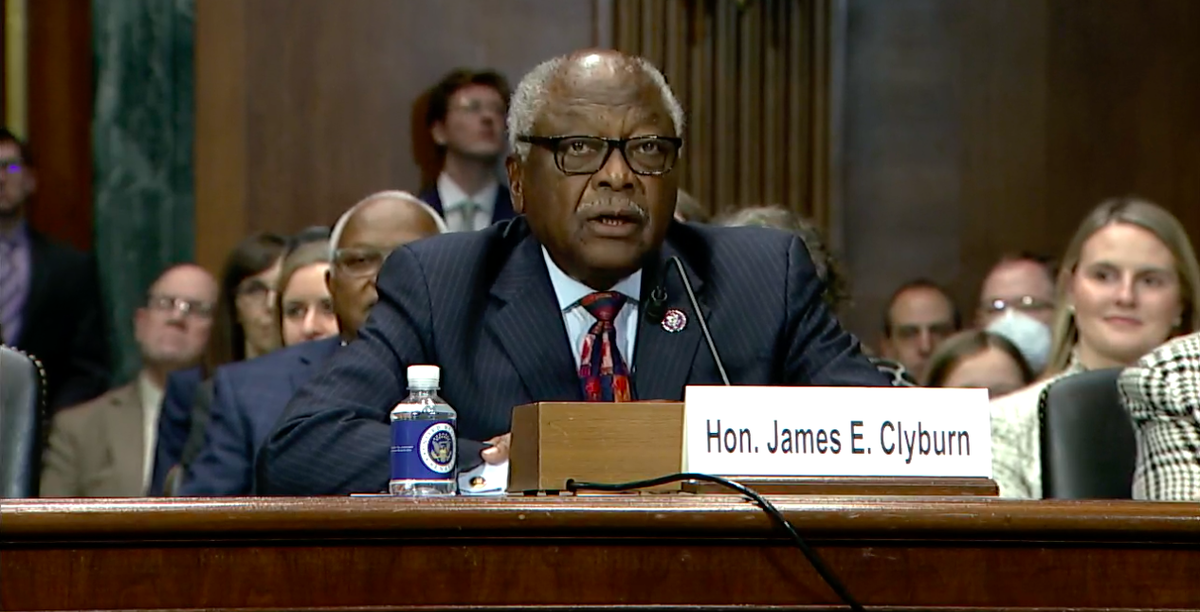
For too long, the rural communities of Eastover, Gadsden and Hopkins had been starved for resources and plagued by violence. But now, thanks to an $800,000 federal grant from U.S. Rep. Jim Clyburn, there was reason for hope.
A small, politically-connected alumni group with a $45,000 annual budget and no apparent criminal justice track record would be leading the effort in partnership with the Richland County Sheriff’s Department and several other local government and community organizations.
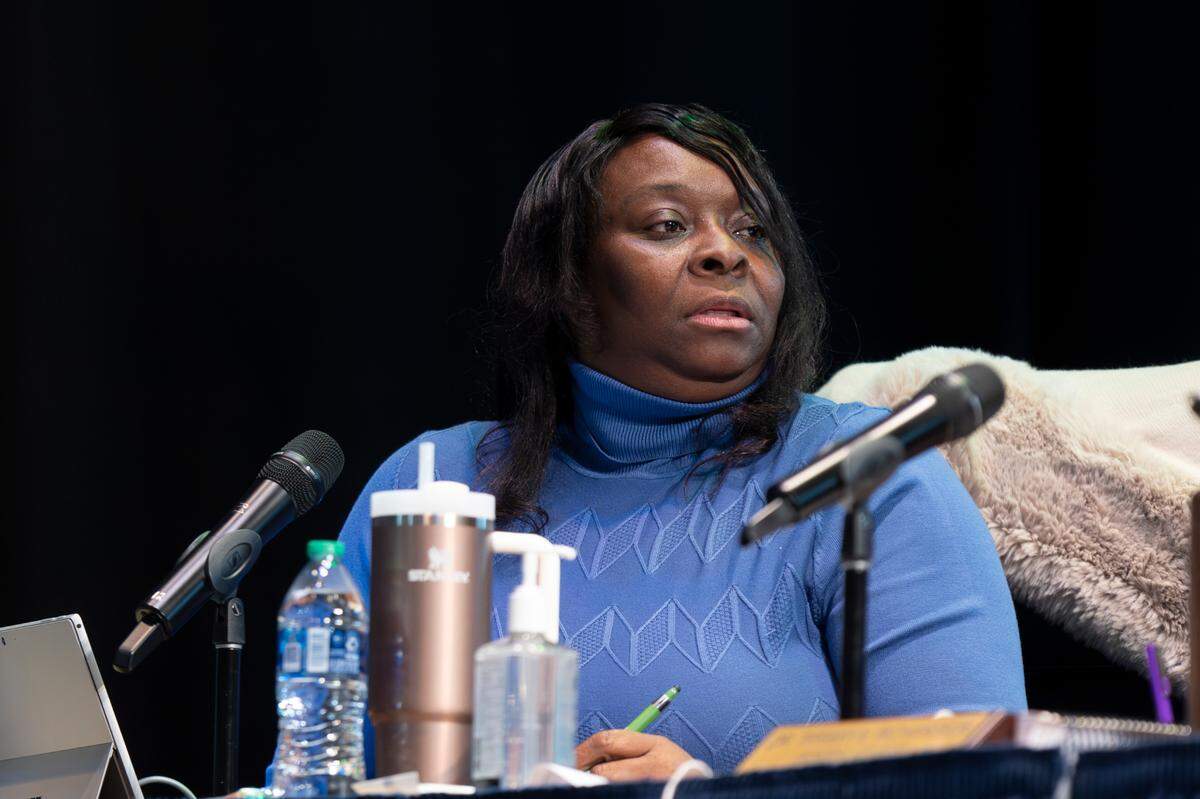
The Lower Richland Alumni Foundation, run by then-Richland 1 school board chair Cheryl Harris and Columbia-based consultant Cleveland Wilson, had until that time been known for hosting gospel music festivals, awards galas and high school football tailgates.
But with the Byrne Discretionary Grant in tow, the nonprofit set out to systematically study and redress the conditions contributing to all manner of crime in the Lower Richland area.
“This organization felt it was past time that we stand up and regain our community,” Harris told those gathered at the event.
More than two years later, it’s unclear how the LR Alumni Foundation is spending or has spent much of the federal award.
Neither Harris nor Wilson responded to multiple requests for comment. And due to a series of filing extensions the organization received, it hasn’t had to submit any annual financial reports since it began receiving the grant money.
A public records request seeking information about the federal grant returned only a smattering of heavily-redacted documents.
Two undated progress reports from 2023 are the only records the Justice Department’s Office of Justice Programs provided that pertain to the organization’s post-award activities.
The self-reports, which are not corroborated with any documentation, contain lists of planning meetings the group said it held with community stakeholders at the outset of the grant period and more than 60 events and programs it launched or would be launching in the months ahead.
In many cases, it’s not clear what became of the initiatives or what role the LR Alumni Foundation had in financing, planning or executing them.
The State Media Co. contacted individuals associated with each of the five community-led programs promoted on the alumni group’s website and all eight of the public bodies or agencies identified as partners in the organization’s grant proposal.
The 11 that responded reported receiving an estimated $65,000 combined from the LR Alumni Foundation, between subgrants, payments for services and donations of supplies.
Another $36,000 went to Harris as salary in 2023, according to a deposition she gave last year as part of a lawsuit filed by a former Lower Richland High School principal.
The State could not account for the remainder of the grant money.
Clyburn, who recorded robocalls supporting Harris and other Richland 1 incumbents in last year’s school board election, defended his decision to steer $800,000 to the alumni group rather than a more established criminal justice nonprofit or law enforcement agency.
“I support Community Project Funding requests that will improve the lives of my constituents by responding to a demonstrated need in their communities,” the congressman wrote in an emailed statement that expressed satisfaction with the LR Alumni Foundation’s anti-violence efforts.
Clyburn’s office did not respond when asked if the congressman knew how the grant money had been spent.
Richland County sheriff’s role smaller than advertised
The thesis of the Community Cares Project was that law enforcement’s frayed relationship with the Lower Richland community was making it harder to fight crime.
Creating a “culture change,” the organization explained in its grant proposal, could be accomplished by adopting best practices for community-based policing, collecting data on how those strategies were working and making adjustments, as necessary.
The Richland County Sheriff’s Department would be involved every step of the way — from providing the group access to years of detailed crime data for the creation of a “hot spot” database to participating in listening sessions, focus groups and “trust building” activities out in the community.
During the deposition last May, more than a year after the Community Cares Project launched, Harris described the initiative as “a project that I work on with Sheriff (Leon) Lott and others to keep the crime rate in Lower Richland down...”
In reality, Lott said, the law enforcement agency was not “heavily involved” in the project.
The sheriff confirmed in an interview that members of the department assisted with a youth leadership program called Project L.E.A.D., but admitted knowing next to nothing about it.
He said the agency was not involved in any other aspect of the Community Cares Project.
“I couldn’t tell you what all they were doing,” Lott said.
A sheriff’s department spokeswoman wrote in an emailed statement that as part of Project L.E.A.D., deputies from the sheriff’s Youth Services unit spoke to middle school and high school students about making good decisions, setting goals and mapping out career plans.
The sheriff’s department declined to grant an interview request with any of the deputies who participated in the youth leadership program, and referred all additional questions to the LR Alumni Foundation.
“While there are youth programs that are managed by RCSD, Project LEAD is not one of them,” Master Deputy Alexandra Salrin wrote in an email.
Invoices show the LR Alumni Foundation paid the sheriff’s department $4,455 over 13 months to supply deputies for the program, which was held at the agency’s Lower Richland substation. The department does not charge outside groups to use the room where the program was held.

Few public partners involved in Community Cares Project
Most of the LR Alumni Foundation’s other public partners also reported having little to no involvement in the Community Cares Project.
Of the seven other public bodies the alumni group identified as “partners” in its anti-crime initiative, only two – the town of Eastover and the Richland County Recreation Commission – reported working with or receiving anything from the organization.
The rest denied any involvement with the project, although Richland School District 1 said it let the alumni group use Lower Richland High School for a back-to-school event.
Eastover Mayor James Faber said the tiny town of barely 600 people got $6,000 from the alumni group last summer to create a jobs program for middle school students.
“It was one of the best programs we ever had,” gushed Faber, who said about a dozen 12-to-14-year-olds worked in a variety of government settings, including at the library, the town manager’s office and the judge’s office. “It’s a program that’s really needed.”
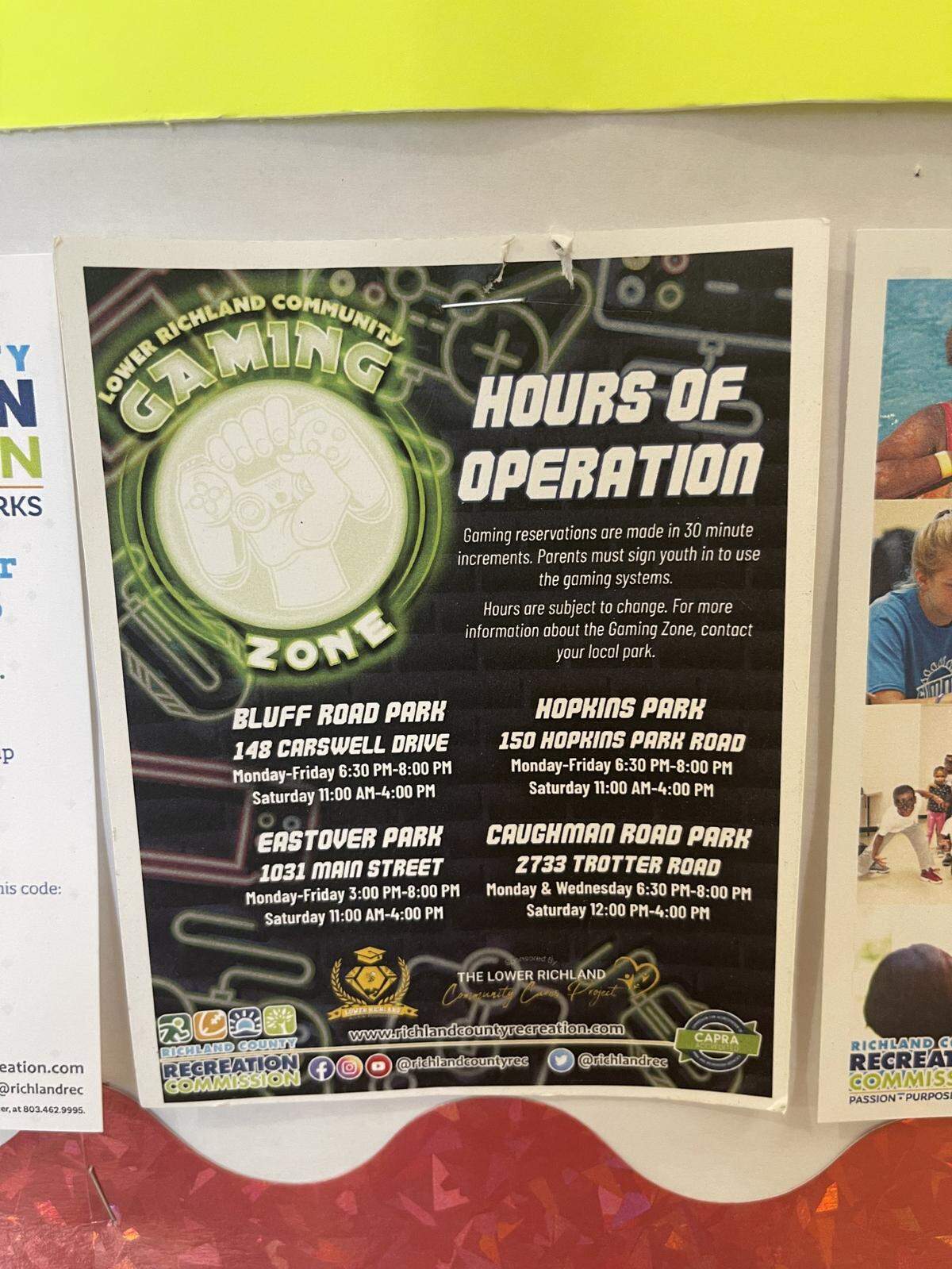
The Richland County Recreation Commission reported receiving an unspecified number of computers, televisions and video gaming systems from the LR Alumni Foundation.
The electronics were spread across four Lower Richland parks to create “gaming zones,” where children could gather under adult supervision to play non-violent video games.
Harris said in a speech last year that the alumni group’s gift amounted to nearly $40,000 in gaming equipment.
“When we first wrote this grant, we were looking at making sure that the children of the Lower Richland community had things to do,” she said at a June 2024 ceremony where the LR Alumni Foundation was recognized for its donation. “And I’m proud to say when I talk to folks such as Sheriff Leon Lott that this project has done exactly what we wanted it to do.”
The gaming zone at Bluff Road Park was empty when a reporter visited late one afternoon in April.
Park staff said the equipment is kept in storage unless a group of five or more people ask to use it and an employee is available to supervise their play. As a result, the gaming zone doesn’t get much use outside of special events, staff said
.
LR Alumni Foundation sponsored lessons, camps
In addition to its public partners, the Community Cares Project worked with several small businesses to offer free music and photography lessons to local youth.
Maurice Middleton, the owner of M&S Studios, said the LR Alumni Foundation supplied 10 keyboards and paid his company to provide three sessions of joint piano and voice classes, beginning in Fall 2023.
The classes met twice weekly — once at the C.R. Neal Dream Center in Columbia and once virtually — for a total of four weeks during the summer and eight weeks in the fall and spring, he said.
In total, Middleton estimated he and his partner trained between 40 and 45 children.
“They were well behaved and like sponges ready to take in everything you had to offer,” he said.
Middleton, an Orangeburg County music teacher, couldn’t recall what the LR Alumni Foundation paid his company, but said it wasn’t “astronomical.”
“It was enough for the company to survive,” he said.
Around the same time, Rodney Williams, of Creative Images Photography in Columbia, partnered with the alumni group to offer free digital photography classes.
The weekly classes met for six weeks in the fall and winter of 2023, and included lessons on exposure, lighting and composition, Williams said.
“It was a general how-to to get them interested in it,” he said.
Williams estimated he was paid a few thousand dollars for teaching the classes, but couldn’t remember exactly what the LR Alumni Foundation compensated him.
A third instructor who led an alumni group-sponsored drummer’s academy did not respond to requests for comment.
The Community Cares Project also supported two children’s camps that ran simultaneously last summer at church facilities in Eastover and Hopkins.
The 10-week summer camps, free for children ages 5 to 13, offered math, reading and creative writing enrichment, a computer lab, Bible study and other activities, according to promotional flyers.
Sandra Cook, the pastor of Church of Restoration and Transformation in Eastover, ran one of the camps and members of the LR Alumni Foundation ran the other.
Cook declined to speak with a reporter about her relationship with the alumni group and said she couldn’t divulge how her camp, the ABBA Center, was funded.
She has, however, thanked the LR Alumni Foundation on Facebook for its support of her camp and appeared in a documentary the alumni group produced last year to promote its work in the community.
In the film, Cook said the nonprofit provided funding for her staff and paid for the camp’s educational software.
“I stand here today to testify of the greatness that came out, not only for the ABBA Center, but for the community of Eastover,” she said in the documentary.
In addition to classes and summer camps, the LR Alumni Foundation also has touted its sponsorship of several church and school-related events, including Field Day, a competition between schools in the Lower Richland cluster; Unity in the Community, a church festival with food, music and games; and Generation of Gospel, another local nonprofit’s music workshop.
It isn’t clear what level of support the organization provided to any of the events, which all appear to be annual functions with multiple sponsors.
Did LR Alumni Foundation misuse county grant funds?
In July 2023, Richland County awarded the LR Alumni Foundation a separate reimbursable grant to expand its Community Cares Project.
The alumni group proposed using the $156,000 American Rescue Plan Act grant to create five year-round “educational learning centers” in the Lower Richland area.
Local students struggling with COVID-related learning loss could visit the centers to receive rigorous tutoring, learn test-taking strategies and develop the skills necessary to succeed in college and the workplace, according to the organization’s proposal.
But the LR Alumni Foundation struggled to justify its tutoring center expenditures to the county, which ultimately redirected most of the group’s grant award to other projects.
Emails show that only two of the centers ever opened, and The State found no evidence that either operated anything like the “Sylvan Learning Centers style” locations described in the LR Alumni Foundation’s proposal.
Unlike Sylvan, which bills itself as the world’s largest private employer of certified K-12 teachers, hardly any of the alumni group’s tutors were licensed educators.
Many of them, including Harris and her children, had close ties to the alumni group, documents show.
Moreover, a review of grant reimbursement requests submitted to the county raised the possibility that the alumni group’s tutoring centers and summer camps were actually the same thing. If confirmed, it would mean county grant money was used on an unauthorized project, in violation of the grant agreement.
Documents show the tutoring centers and summer camps were housed at the same church facilities, employed the same people and used the same educational software.
The LR Alumni Foundation also frequently conflated the camps with the tutoring centers in its communications with Richland County.
Emails show Wilson, the alumni group president and administrator of the ARPA grant, referred to the group’s “camps” or its “summer camp” employees when discussing the tutoring centers and often sought reimbursements for summer camp-related expenses.
Expense reports he filed with Richland County identify the group’s employees as “tutors” or “instructors,” but the supporting documentation he attached makes clear they worked at the summer camps.
In fact, all of the payroll reimbursement requests he submitted for the Hopkins tutoring center were supported by either a staff sign-in sheet labeled “2024 Community Cares Project Summer Camp” or by checks cut to summer camp workers.
In one case, Wilson included a summer camp flyer advertising a cookout, outdoor games and prizes in a grant reimbursement packet he submitted to the county. Among the supporting documents he provided was a $349 receipt from the Party Spot in Irmo, a purveyor of inflatable bounce houses and character costumes for children’s birthday parties.
The receipt showed that on June 19, 2024, Harris purchased an inflatable hoop, sack race, “Tug A War” and jumbo versions of UNO, Jenga and Connect 4.
Two days later, the LR Alumni Foundation’s Facebook page shared a photo gallery from its Hopkins summer camp that included pictures of an inflatable basketball hoop, a tug-of-war setup and giant UNO and Connect 4 games.
While it’s common for grant projects to evolve over time, a grantee must negotiate any changes with its granting body and codify them in a formal modification agreement, said Mike Chamberlain, CEO of the Grant Professionals Association.
None of the documents obtained by The State in response to public records requests indicate the LR Alumni Foundation ever sought or received permission to spend its county grant award on the summer camps.
Both Richland County and an auditing firm the county used for grant compliance declined to comment.
Richland County raises concerns with tutoring centers
Richland County paid the LR Alumni Foundation an initial $44,000 reimbursement for tutoring center expenses in June 2024. But within a couple months, county officials were raising questions about “discrepancies” in the organization’s filings and the lack of supporting documents, emails show.
Initially, the concerns were confined to the alumni group’s paperwork — allegations that numbers didn’t add up, invoices were missing and duplicate payments had been submitted. But by November, officials were questioning the group’s compliance with several grant requirements and the validity of expenses the county already had reimbursed, emails show.
County officials wanted to know:
Was the organization adhering to the Fair Labor Standards Act?
One employee reportedly worked 17 11-hour days in a single month and earned the equivalent of just $6.41 an hour, according to documents the LR Alumni Foundation submitted. Other employees worked more than 40 hours a week without overtime pay or were paid amounts that didn’t correspond to the number of hours they worked, the group’s records show.
Why did the alumni group pay people in 2024 for work they reportedly performed years earlier?
Reimbursement requests the alumni group filed for at least five tutoring center staffers, including Wilson, sought payment for work performed before the grant was awarded.
Why was the organization seeking reimbursements for individuals it did not employ or pay?
Some of the tutors were employees of the Church of Restoration and Transformation in Eastover, and were paid by the church, not the LR Alumni Foundation, documents show.
Did the tutoring sessions provided by church employees have a religious component, in violation of the grant agreement?
Nothing the alumni group submitted for reimbursement identified the tutoring centers as religiously-focused, but the organization’s summer camps advertised Bible study and daily devotions. Videos from the camps shared on social media show children reciting prayers and singing Christian music.
Wilson, who paid himself $55 an hour to manage the tutoring center grant, attempted to allay Richland County’s concerns, emails show.
He explained that tutors were not hourly workers, but instead had agreed to work for $400 a week, regardless of how many hours they worked on any given day.
Some tutors, Wilson wrote, had worked in 2022 and 2023 “with hopes of being compensated in the future.” After grant funding became available in 2024, they were paid for their past work, he explained.
Wilson denied the tutoring was infused with religion and told county officials the alumni group sought reimbursement for the church’s expenses because the church and its affiliated ABBA Center were LR Alumni Foundation partners.
His explanations failed to satisfy Richland County, which denied all of the alumni group’s subsequent reimbursement requests.
“After reviewing the provided materials, we regret to inform you that we are unable to process your request,” Richland County budget director Maddison Wilkerson wrote to Wilson on Dec. 27, before running through a litany of issues with the requests he’d submitted, including some for which the county had already reimbursed the group.
The county reallocated nearly three-quarters of the LR Alumni Foundation’s awarded funds to other projects, but did not attempt to recover the roughly $20,000 officials acknowledged in emails had been paid out to the alumni group in error, spokesman Todd Money said.
Instead, he explained, county officials “reconciled” the improper payouts with allowable expenditures from the group’s subsequent reimbursement requests.
LR Alumni Foundation’s shaky financial history
A review of the LR Alumni Foundation’s pre-Community Cares Project finances revealed an organization largely reliant on public dollars that has struggled to manage its money and fulfill its charitable aims.
Between 2020 and 2022, more than 80% of the LR Alumni Foundation’s revenue came from discretionary spending directed by state and county lawmakers, records show.
The group sank most of its money each year into a gospel music festival that, while ostensibly a fundraiser, cost more than twice what it raised from parking and ticket sales, according to financial filings.
Since the LR Alumni Foundation’s only other source of revenue was another annual fundraiser that lost money, the organization consistently ran deficits, records show.
The group only dug out of its financial hole due to the pandemic, which forced the cancellation of its money-losing fundraisers, but didn’t stanch the flow of government dollars, documents show.
As a general rule of thumb, charity watchdog groups recommend nonprofits spend at least 65% of their money on program activities and no more than 35% on fundraising and administrative expenses.
The LR Alumni Foundation flipped that maxim on its head, spending nearly 80% on fundraising and only 18% on charitable programming, or roughly $6,600 annually, documents show.
Discrepancies in the alumni group’s reports also raise questions.
In one case, the LR Alumni Foundation filed a budget document with the S.C. Department of Parks, Recreation and Tourism that contained substantially different information than the annual financial report it submitted to the S.C. Secretary of State.
Both documents covered the 2022 calendar year, but none of the numbers matched.
The document filed with PRT, which has administered state budget earmarks designated for the alumni group’s Diamond Festival in four of the last five years, reported revenues and expenses that were about 130% higher than those contained in the Secretary of State report.
The more detailed PRT document showed the LR Alumni Foundation paid Harris ($26,630) and Wilson ($13,689) more than five times what it spent on charity ($7,599), in stark contrast to the $0 the alumni group told the Secretary of State went toward “salaries or other compensation.”
When asked whether PRT had noted the financial discrepancies when processing the nonprofit’s earmarks, a spokeswoman said the agency didn’t have the authority to audit earmarks or the entities receiving them.
According to the transcript of her May 2024 deposition, Harris denied under oath that she’d been a paid employee of the LR Alumni Foundation prior to 2023.
When the attorney deposing Harris presented her with the PRT document indicating she’d been paid more than $26,000 by the organization in 2022, she questioned the document’s accuracy, but did not deny being compensated.
Harris went on to explain that the money she received was likely a reimbursement.
“When we book flights and whatnot, a lot of times I use my cards because I have American Airlines, etcetera, things like that,” Harris said, according to the transcript. “There’s a lot of travel involved, so it’s mileage. Computers and stuff like that I’ve had to buy for various things.”
It’s not clear from the transcript why a local alumni group would reimburse its vice president for air travel, or why she would have traveled on LR Alumni Foundation business so much in a single year.
At the 2022 IRS mileage reimbursement rate for charities, Harris would have had to drive 190,214 miles — more than 520 miles per day — to qualify for a reimbursement the size she claimed to have received.
Harris told the attorney questioning her that the LR Alumni Foundation should have records related to her 2022 expense reimbursement requests, but it’s not clear from the transcript if she provided them or was asked to do so.
Two days after the deposition, she amended the economic interest statement she’d filed with the S.C. Ethics Commission 15 months earlier to clarify that she had been paid by the LR Alumni Foundation in 2022, records show. The alumni group has not, however, amended its 2022 annual financial report on file with the Secretary of State.
This story was originally published May 7, 2025 at 6:00 AM.