Debate on adjusted anti-DEI bill expected on the SC House floor. Here’s how it’s changed
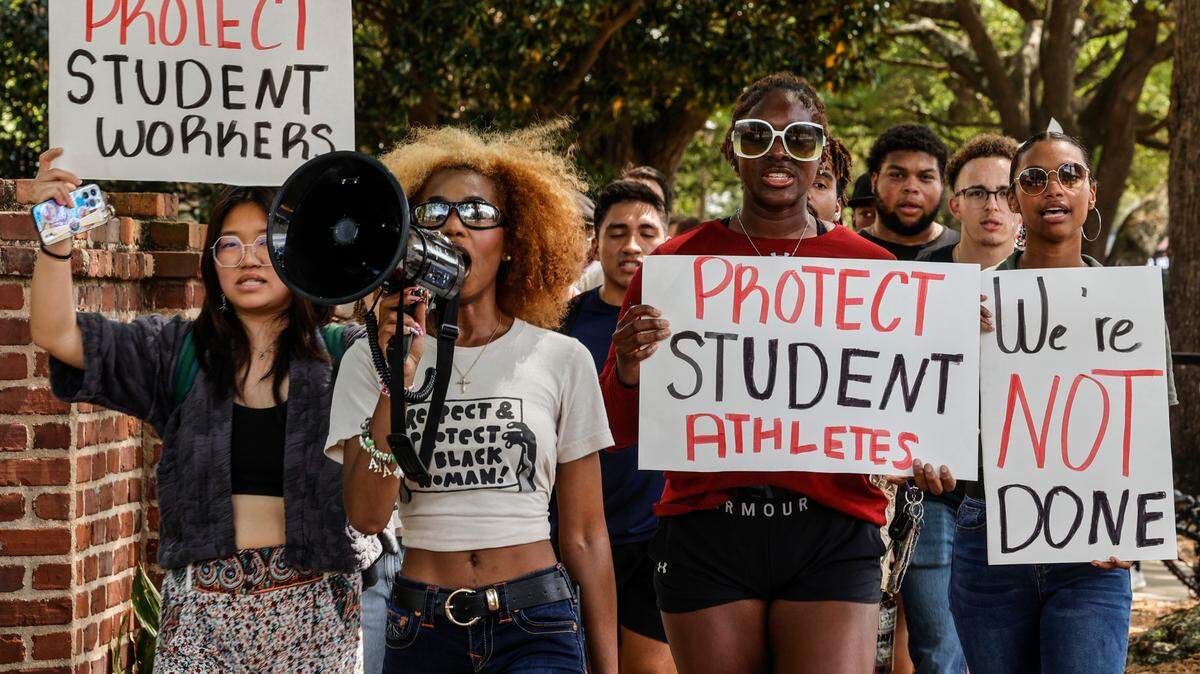
When House members take up a bill to limit the use of diversity, equity and inclusion practices on the floor, expected next week, they will consider a piece of legislation more focused than the version almost every Republican signed onto as a co-sponsor.
The most notable change, the provisions that sought to dictate that businesses who have contracts with the state not use DEI practices was stripped from the bill.
The bill instead focuses on colleges and universities, state agencies and quasi-state agencies, school districts and local municipalities.
“I believe businesses have the right to do whatever they want to do. It should be a free market,” said state Rep. Tim McGinnis, R-Horry. “And if you want to have that type of program, as long as you’re not violating any type of law, you can have that type of program.”
After an anti-DEI provision was removed from the House budget proposal, House Republicans planned to push the DEI bill through committee and start debating it on Wednesday, March 26.
The language in the bill incorporates the killed budget proposal well as language from a higher education DEI bill from last year that passed the House but didn’t move in the Senate.
The proposal in the budget was considered more of a scalpel approach than the sledgehammer approach of the original legislation.
The legislation will ban colleges and universities from having DEI offices, ban state offices and colleges from giving preferential treatment based on DEI, and bans discrimination based on race, color, sex or national origin. Colleges and school districts also can’t require people to provide DEI statements. The bill would ban mandatory training on diversity, equity and inclusion.
Moving the bill allows the GOP-dominated House to fulfill a push from national Republicans to fight back against diversity, equity and inclusion initiatives.
In recent years, the House has pushed efforts to push against critical race theory and environmental social governance.
“We represent the entire state of South Carolina, and we listen to our constituents, and we listen to their concerns, and we come up here and we try to do the best by them,” McGinnis said. “And yeah, when big things happen in society, these social issues, we have ... to be calm and reasonable as we make policy and as we make law.”
McGinnis said DEI started off as a noble initiative, but it took “awarding merit away and gave it to awarding more based on your group identity.”
Nothing in the bill prohibits colleges from complying with federal law or court orders, or applying for grants or accreditation.
The bill would not impact Black history month programs, groups that support historically marginalized communities, women’s history program, or efforts to diversify the teacher pipeline such as “Call Me Mister.” McGinnis argued groups such as NAACP and LGBTQ groups would still be allowed.
“Diversity isn’t a bad word, equity is not a bad word. Inclusion is not a bad word. The issue, to me, is merit based over promoting somebody based upon a group identity. I think the person, I think the person who is most qualified for the job, or most qualified for the admission, or most qualified, regardless of what their background is, is the person who deserves the slot or the position,” McGinnis said.
However, the bill will face opposition from Democrats even though they only have 34 members in the House.
State Rep. Kambrell Garvin, D-Richland, voted against approving the bill in the House Education and Public Works Committee.
“What DEI is all about doing is ensuring that there’s a level playing field for everybody. It ensures that everybody has the opportunity to succeed,” said Garvin, who is Black. “While my background may be different than yours, with DEI to me, and what I believe that the reason that we saw so many of our universities embrace it is it talks about how we’re stronger together as one.”
Garvin said DEI makes sure people’s differences are respected, and anti-DEI bills make it seem that “requiring folks who are teaching diverse populations to learn about those populations of students is a bad idea.”
Higher education institutions have preemptively removed DEI offices, but still have offices of wellness and belonging that exist, and will still be allowed.
“To me, it feels as if we are regressing instead of progressing. As it relates to these sort of conditions,” Garvin said.
Because Republicans hold 88 seats in the 124-person chamber passing the legislation, which had 77 co-sponsors, will most likely happen with a comfortable margin.
“I don’t believe that all DEI is good. Everyone up here says diversity is good, equity is good, inclusion is good. We all agree with that, but we nobody wants to say sometimes it’s used in a bad way,” said state Rep. David Vaughn, R-Greenville. “I want all people to be treated with respect and on their own merits.”