
U.S. Supreme Court weighs if ‘magic words’ protect one of SC’s only abortion providers
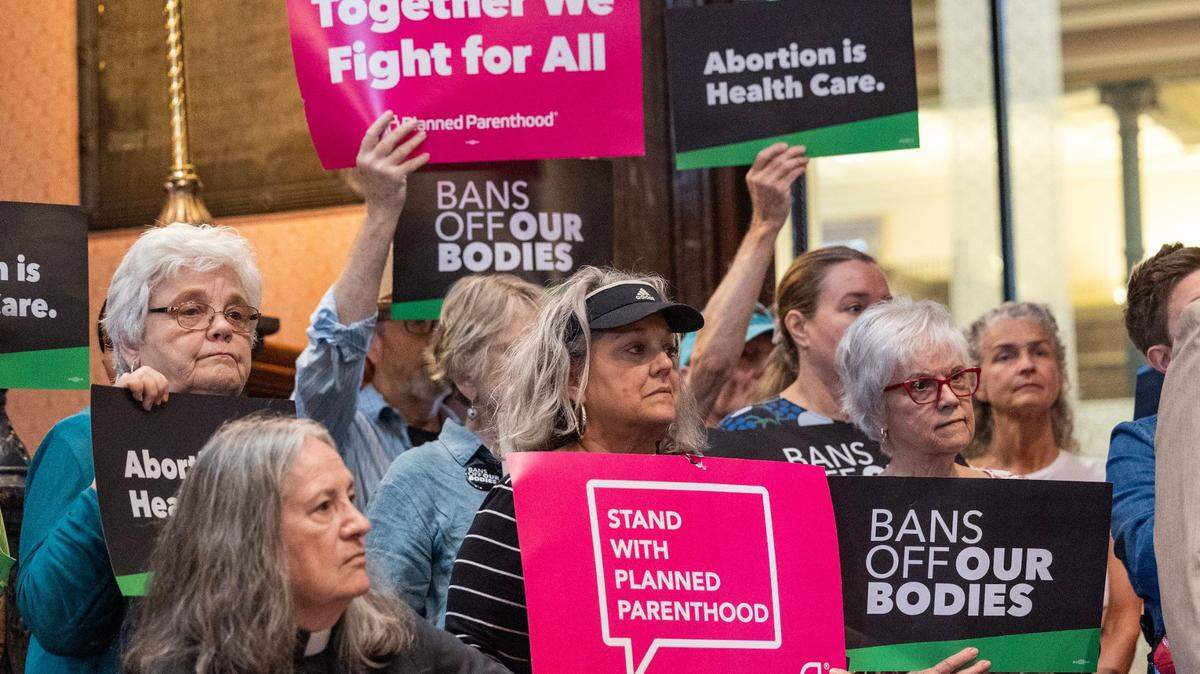
The future of reproductive health care provider Planned Parenthood in South Carolina, and possibly around the country, might hinge on just two words.
In arguments before the U.S. Supreme Court Wednesday, lawyers for South Carolina and the U.S. Justice Department squared off against Planned Parenthood South Atlantic over whether the words “may obtain” contained in the federal Medicaid Act guarantees Medicaid recipients the right to choose their provider.
At stake is whether a 2018 executive order signed by Gov. Henry McMaster, a Republican, disqualifying Planned Parenthood from receiving Medicaid funds is constitutional. McMaster’s executive order explicitly targeted organizations that also offer abortions. It stated that South Carolina has a “long tradition of protecting the life and liberty of unborn children” and calling those providers “unqualified to provide family planning services.”
The order appeared to directly target Planned Parenthood, which accepts Medicaid for a range of non-reproductive health care services. Planned Parenthood South Atlantic currently operates just two facilities in South Carolina, in Columbia and Charleston. The state’s only other abortion provider, Greenville Women’s Clinic, does not accept Medicaid for reproductive health services.
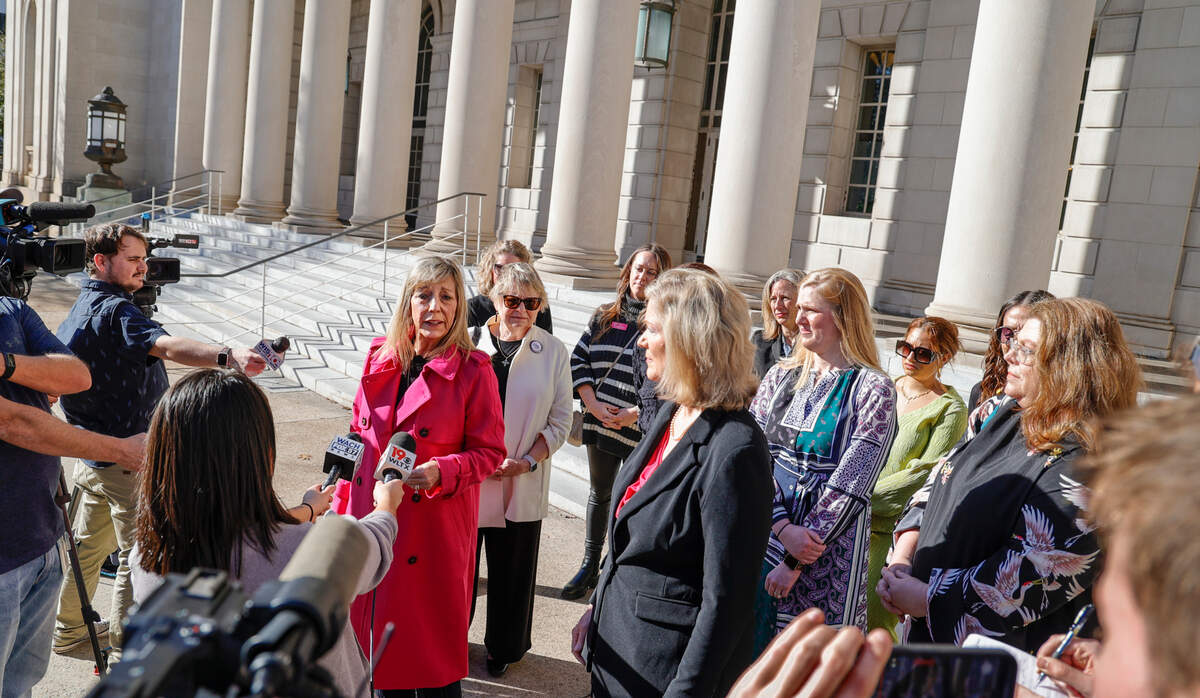
“If the people of South Carolina and the people of the rest of the country had thought for a moment that our tax money... would’ve been spent to support abortions in our state, I don’t think that law would’ve ever passed,” said McMaster at a press conference outside of the Supreme Court in Washington, D.C., following the arguments.
The case, known as Medina v. Planned Parenthood South Atlantic, was brought by the national reproductive health care provider against Eunice Medina, director of the S.C. Department of Health and Human Services. Her agency oversees Medicaid in South Carolina.
Medicaid is a reimbursement system — meaning that Planned Parenthood provides care and is reimbursed afterwards by Medicaid for that specific appointment or procedure.
In court filings, Planned Parenthood has argued that the state is denying them access to Medicaid payments for reproductive health care they are qualified to provide solely because the organization also performs abortions. No money from Medicaid or the state is used to pay for abortions, Planned Parenthood has said.
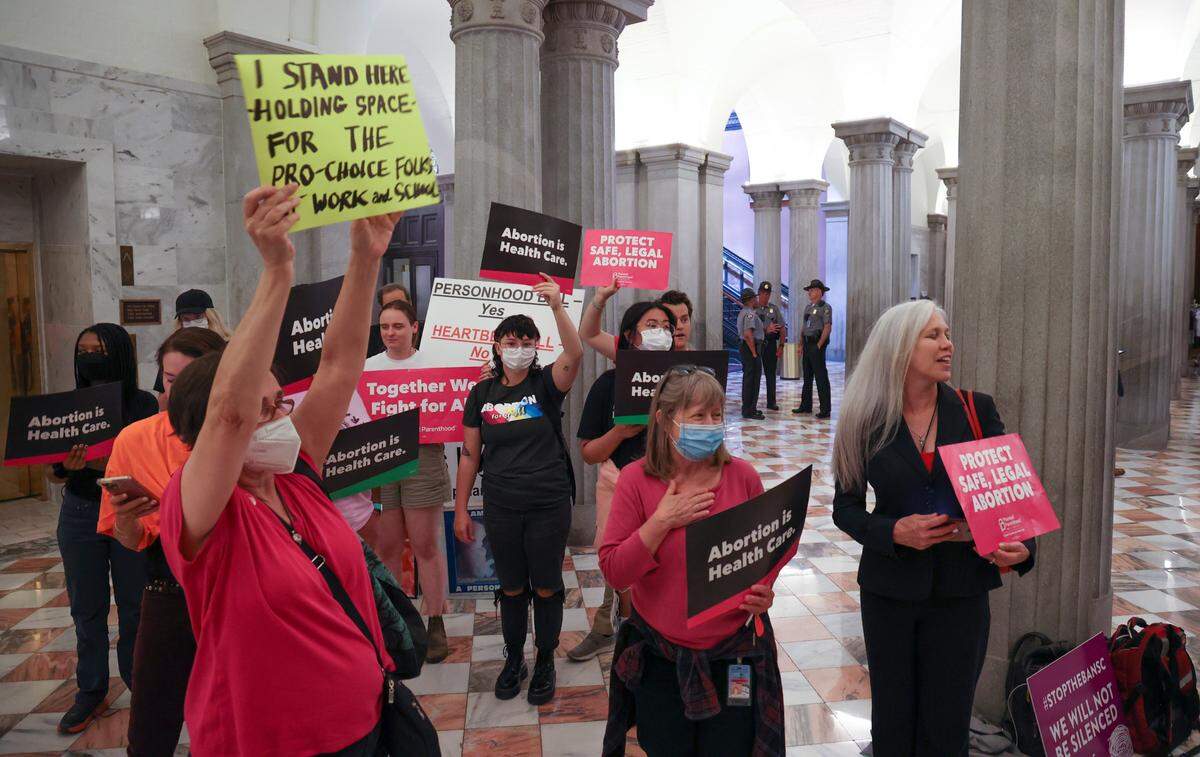
“There has never been an argument through the long history of this litigation that Planned Parenthood is unqualified,” said Nicole Saharsky, who represented Planned Parenthood South Atlantic.
The intention behind the state’s case is to starve Planned Parenthood of funding. In a post on X, South Carolina Attorney General Alan Wilson wrote that the Supreme Court “should back South Carolina’s move to defund Planned Parenthood from Medicaid. We’re fighting to protect the unborn, not fund abortion giants.”
Were the court to rule in favor of South Carolina, it would deny South Carolinians the right to chose a qualified health care provider, Saharsky argued. It could also open the door to states barring providers from receiving Medicaid funds for any reason, including if they believed “too many people who work there have blue eyes,” Saharsky said.
But John Bursch, a lawyer with the Alliance Defending Freedom, a conservative Christian legal advocacy group representing South Carolina, said that the law as written wasn’t specific enough to clearly establish a right to a provider that the state had infringed on.
“It’s missing the connective tissue to the rights-creating language,” Bursch said.
Abortion in South Carolina
The abortions provided in South Carolina by Planned Parenthood conform with the state’s laws, which prohibit abortions after six weeks except in limited cases where the life of the mother is in danger or the pregnancy is the result of rape or incest, according to the organization.
Data from South Carolina’s Department of Health and Human Services show that Planned Parenthood received just $88,464 of the $35 million spent on the state’s Medicaid-covered family planning services from 2022 to 2023. That’s just 0.2% of the total, according to the department’s data.
In 14 of South Carolina’s 46 counties, there is no practicing OB/GYN doctor and in five other rural counties there is just one, said Dr. Katherine Farris, Planned Parenthood South Atlantic’s chief medical officer.
“If the South Carolina government is successful in blocking people with Medicaid coverage from being able to go to Planned Parenthood for reproductive health care, people who are struggling to make ends meet will pay that price,” Farris said.
The move to strip health care from these communities would be “catastrophic,” wrote the Center for Reproductive Rights, a pro-choice legal advocacy group, in a post on X.
Were the nation’s highest court to rule in favor of the state, it would likely force Planned Parenthood to stop offering many of its services to Medicaid recipients or even close in the state entirely, according to the organization.
It could also see a cascade effect across the country, as other Republican-led states could seek to cut off Planned Parenthood’s Medicaid funding. Arkansas, Missouri and Texas have already taken steps to end Medicaid funding for clinics that also provide abortions.
While the case is central to the future of providers, it will have no impact on South Carolina’s current abortion law, which criminalizes abortions after six week or once a heartbeat has been detected. The law was initially struck down by the state Supreme Court in January 2023. A modified version maintaining the six-week ban was passed later that year. A challenge to the law by Planned Parenthood was argued before the state Supreme Court in February.
A right or a benefit?
While abortion is at the center of the political debate raging around this case, it was hardly mentioned inside the courtroom.
Instead, Bursch focused his arguments on narrow and often technical distinctions about what constituted an individual right that states could not infringe on, and whether an individual was entitled to sue the state.
Central to Wednesday’s arguments was a 2022 case out of Indiana, Health and Hospital Corporation of Marion County v. Talevski. In this case, seven of the nine justices found that individuals have rights under a law governing nursing homes. If those rights are violated, the justices found that those individuals are entitled to sue under U.S. Code 1983.
Bursch told the court’s nine justices that not only had Planned Parenthood failed to seek the appropriate administrative remedy for being denied Medicaid funds before suing, the federal law regarding Medicaid providers simply did not establish a right that could be violated. Instead, receiving Medicaid funds is a benefit, Bursch argued.
In part, that was because when Congress wrote the law, it did not use words like “right or its equivalents,” Bursch said. Words that he and the counsel for U.S. Solicitor General Karl Hawkins suggested would grant rights include “entitlements,” “privileges” and “immunity.”
“You’re not quite calling it a magic word, but you’re coming very close,” said Associate Justice Elena Kagan, one of the court’s three liberal justices who appeared universally skeptical of South Carolina’s arguments.
“The one thing that we don’t think the court should do is adopt some kind of ‘magic words’ test,” said Saharsky, the Planned Parenthood attorney. A court ruling that Congress had not conveyed a right just because it hadn’t used certain words would not be appropriate “from a separation of powers perspective,” she argued.
The language in the law unambiguously conferred citizens the right to receive health care from any “qualified” and “willing” medical provider, Saharsky said.
Brett Kavanaugh, one of the court’s six conservative justices, said that he was “not allergic” to the concept of a “magic words test” if it helped bring clarity to how rights were conveyed. Kavanaugh said that this had caused confusion among lower courts for the last 45 years.
“Magic words, if they represent the principle, will provide the clarity that will avoid the litigation that is a huge waste of resources for states, courts, providers, beneficiaries and congress,” said Kavanaugh.
When Congress passed the law, Saharsky argued, the intent was clear that states were not allowed to arbitrarily block Medicaid funds to providers that had been found qualified to receive them.
This interpretation was supported by a panel of three appellate judges who found that the statute “unambiguously” conferred the right to chose a provider, Saharsky said.
But Bursch, the attorney for South Carolina, argued that were the court to agree with Planned Parenthood that South Carolina had effectively deprived citizens of their right to choose their own doctor, the justices would be opening states up to a flood of federal lawsuits under section 1983 arguing that rights could be inferred from all manner of laws and policies.
“Anyone can recruit a beneficiary, take the state to court and line their pockets with attorneys’ fees,” Bursch argued to the court.
“I think it’s wrong to suggest that there’s a flood of individuals on Medicaid wanting to sue for lawyers’ fees,” Saharsky said, arguing that rights couldn’t just be found in state laws “willy nilly.”
“These aren’t people getting rich,” Saharsky said. “These are just people wanting health care.”
This story was originally published April 2, 2025 at 1:28 PM.