
As it searches for new markets, can SC’s forestry industry tap into energy?
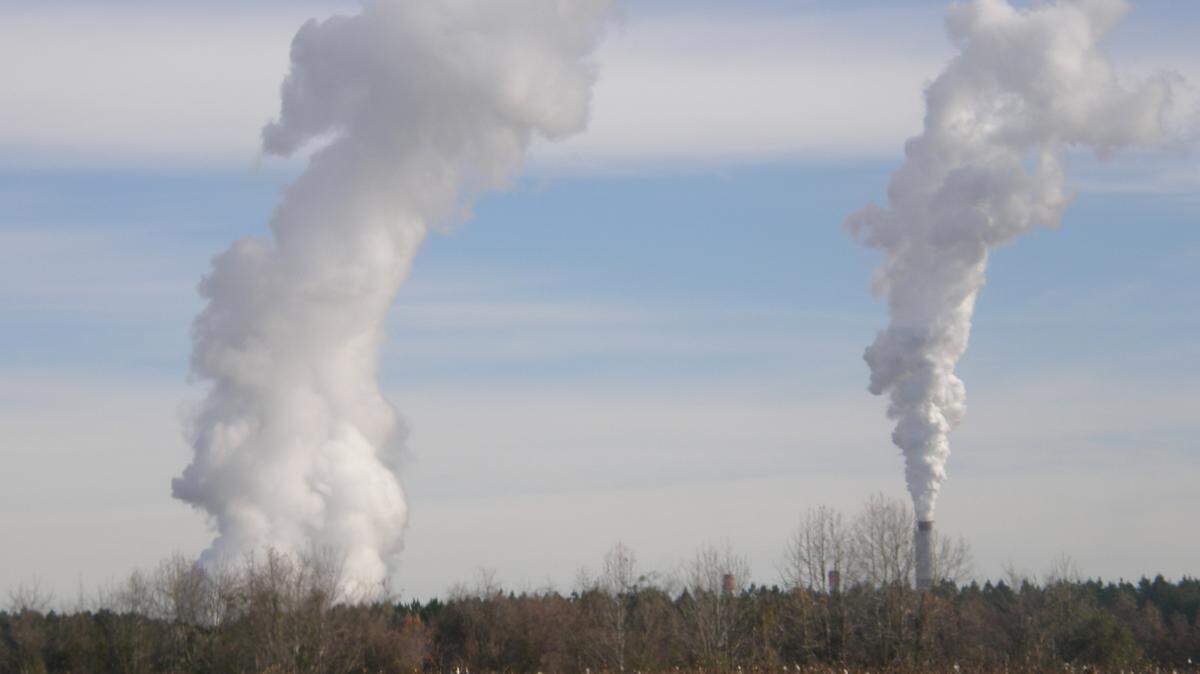
After Georgetown’s International Paper mill shut down at the end of last year, the pressure is on for South Carolina’s massive forestry industry to find new local markets.
The solution may be as simple as burning wood, a type of renewable energy.
“The market that we’ve lost in South Carolina is the pulpwood market, largely because of paper mills shutting down,” state Rep. Chip Campsen, R-Charleston, said. “There’s still some consumers, but it’s been a tremendous shock on the industry because of the loss of paper mills.”
South Carolina produces wood pellets that are burned for energy, but much of the product is shipped abroad. Generally, biomass is any organic material that can be used for electricity, heat or fuel. Other forms of biomass include row crops such as soybeans, municipal solid waste, manure or even the byproducts of paper production.
Some lawmakers hope wood biomass specifically could address two problems the state faces: the forestry industry’s need for new local markets and consumers’ demand for more energy.
State lawmakers attempted to address the latter in the South Carolina Energy Security Act. The new law is aimed at generating more energy in the state. As data centers, advanced manufacturing facilities and residential consumers demand more energy and coal plants go offline, state officials and utilities are thinking about how to create more power.
“As we look into the future, most projections show greater demand for electricity,” said Conor Harrison, an assistant professor in the University of South Carolina’s geography department. “So when we started thinking about the transition, a big part of it is, how do you both change the pieces of the pie and change the proportion of the pie while the pie is actually getting bigger.”
Campsen said he believes biomass could be a part of the energy solution. In the new utility law, Dominion Energy is required to consider the feasibility of transforming its Wateree Generating Station, a coal plant in the Columbia-area, into a wood biomass facility. Dominion, one of South Carolina’s two investor-owned utilities, said in a statement to The State that the evaluation was in its “early stages.”
The law also pushes the state to encourage “a diverse mix of long-lead, clean generation resources,” which includes biomass and nuclear.
The South Atlantic region produced almost a third of all biomass in the U.S. in 2024, more than any other area, according to the U.S. Energy Information Administration. However, biomass only accounted for 5% of primary consumption of energy in the U.S. in 2023.
“South Carolina really pulls its weight when it comes to biomass energy in the U.S.,” said Joey Von Nessen, a research economist at the University of South Carolina.
Growing demand for new markets
Over the last two years, several paper mills in the state have closed, including Georgetown’s International Paper mill and a WestRock mill in North Charleston.
“This is an existential crisis for the timber industry, and they’re looking for new markets,” Campsen said.
Forestry industry leaders delivered a report at the beginning of 2025 highlighting the economic impact of the closures. The short report, led by the SC Forest Recovery Task Force, identifies potential markets where the forestry industry could expand.
Biomass tops the list. The report advocates for a bulk shipping terminal so the forestry industry can ship wood pellets, which are burned to create electricity, abroad. The European Union uses biomass as a renewable energy source, and it imports wood pellets from the southeastern region of the U.S. to fulfill its Renewable Energy Directive.
The report also recommends that woody biomass be burned domestically in the place of coal.
Other segments of the forestry industry remain strong, meaning the push is to find replacements for pulp and paper. Pulp and paper make up over 60% of South Carolina’s forest industry, according to the SC Forest Recovery Task Force’s report.
“We require paper products, but it’s a different type of paper products,” Von Nessen said. “And the product mix has changed significantly over the last decade or so.”
Challenges with biomass
While the forestry industry hopes to expand into the electricity sector, its unclear if the energy sector wants more biomass. The three major utilities, Dominion, Duke Energy and state-owned Santee Cooper, have no plans to build wood biomass facilities, according to the companies’ most recent integrated resource plans. Santee Cooper has purchased biomass energy, according to the company’s most recent resource plan.
Utilities have a greater appetite for new infrastructure projects, particularly building natural gas plants, Harrison said. He said utilities may be more comfortable operating natural gas plants, and the companies typically earn more money from larger investments.
Also, environmental organizations, including the Dogwood Alliance and the Southern Environmental Law Center, have advocated against woody biomass. That electricity source, they argue, negatively impacts health and the environment in the region.
“We’re not helping the climate” using biomass energy, said Scot Quaranda, the communications director at the Dogwood Alliance. “We’re not helping communities. It’s not even a really great energy source. When all is said and done, it’s almost ridiculous to be pushing it, but it’s a market that exists right now.”
It’s often considered a renewable source of energy as long as new trees grow, but some environmental groups balk at calling it a “clean” source of electricity. The process creates carbon emissions and pollute communities, studies show.
“It is renewable,” Harrison said. “Although, I would put an asterisk by that and say it’s kind of renewable-ish.”