
Will federal deficit be cut? SC lawmakers call new budget ‘fiscally responsible.’
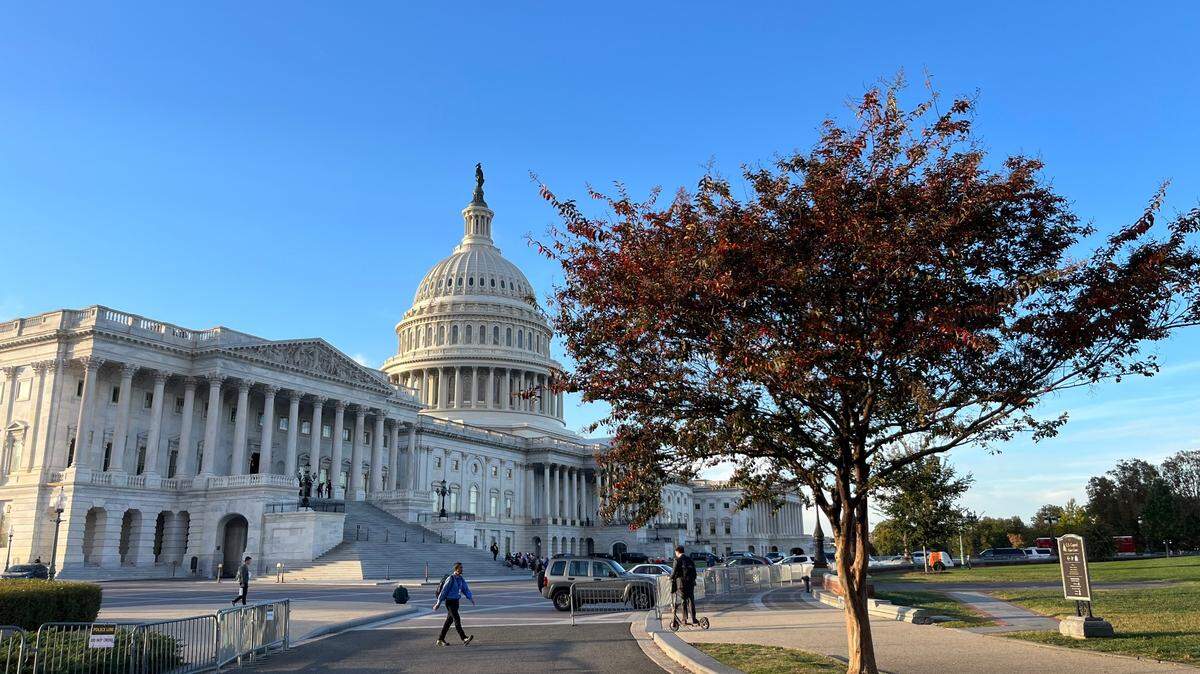
A massive federal spending bill, chock full of tax breaks and social welfare cuts, passed with the help of South Carolina’s congressional delegation last week.
After the “One Big Beautiful Bill” passed, U.S. lawmakers from South Carolina took to social media and email to applaud the vote. Many highlighted accomplishments including cutting spending, expanding tax breaks from 2017 and pouring billions into defense and immigration enforcement.
GOP lawmakers, including U.S. Reps. William Timmons and Russell Fry and U.S. Senator Tim Scott, also touted the bill as fiscally responsible. A bullet point in Timmons’ news release said that the bill, “Slashes the Deficit: Reduces the deficit by nearly $2 trillion, achieving historic levels of mandatory savings.” But nonpartisan research shows that the budget reconciliation bill will likely add trillions to the national debt.
“People who won’t benefit are those who are concerned about rising deficits, the classic Republican,” said Nathan Boucher, a public policy and nursing associate research professor at Duke University. “So, this is not a very Republican bill.”
Several state lawmakers, including U.S. Sens. Lindsey Graham and Scott and U.S. Rep. Sheri Biggs, also said the budget reconciliation bill’s tax breaks would be a win for South Carolinians’ pocket books.
“This is a win for Americans chasing opportunity, building prosperity and fighting for their shot at the American Dream,” Scott said in a news release.
Boucher said some provisions of the bill, specifically the social welfare cuts, will likely hurt many Americans. Research from the nonpartisan Congressional Budget Office predicts that resources for low income residents would decrease, while people in the middle- and high-end of income distribution would see a bump.
“It’s a major wealth transfer,” Boucher said. “...Many people will actually benefit from from this. And those who benefit, though, won’t be the working poor and older adults and people living with disabilities who desperately need Medicaid, funded care in their states.”
Eight out of nine federal lawmakers from South Carolina voted in favor of the bill, with some celebrating their ‘Yes’ vote more than others. Only Democrat Rep. Jim Clyburn voted against the bill. President Donald Trump signed the legislation into law on the Fourth of July.
Budget deficit
GOP lawmakers have historically worried about growing the federal government’s debt. Leading up to the House’s vote, several Republican House lawmakers resisted the expected budget deficit that would go along with passing the ”One Big Beautiful Bill”.
U.S. Rep. Ralph Norman, a member of the Freedom Caucus, threatened to vote against the bill over debt concerns, but in the end he fell in line with the Republicans.
In a social media statement, Norman said the legislation “fell short” of what he had hoped for. He said he voted in favor of cementing “immediate tax relief,” rather than spending more time working on the bill.
Other lawmakers publicly championed the bill before and after the vote. Timmons said in a news release that the budget reconciliation bill “confronts the $36 trillion national debt by taking bold, pro-growth steps toward lasting fiscal responsibility.” Fry said the bill “reins in reckless spending.” Scott also highlighted “fiscal responsibility” as a positive element of the bill in a news release.
However, the bill adds trillions to the national deficit, raising concerns for some about “fiscal responsibility.” The bill is expected to raise the federal government’s debt by $3.4 trillion over the next decade, according to the Congressional Budget Office.
Social programs
Several social welfare programs, including food benefits and health care for low income individuals, will lose federal funding under the new law. The changes are aimed at driving down federal spending.
Shifting eligibility requirements, adjusting how states shore up funding for the program and restricting state-directed payments to providers are all changes to Medicaid made in the budget reconciliation bill.
“Medicare and Social Security will be protected, while Medicaid will be guarded against waste, fraud, and abuse, ensuring it is available to the most vulnerable Americans,” Wilson said in a news release.
Timmons also said the bill “fully” protects Social Security, Medicare and Medicaid in a statement.
But estimates from KFF, a health policy research nonprofit, show that the bill will increase the number of uninsured people by 11.8 million. It may also decrease federal Medicaid spending by $1 trillion over the next decade.
Cutting access to Medicaid can also have other external impacts, said Boucher and Orgul Ozturk, the economics department chair at the University of South Carolina.
For example, someone without insurance may not seek preventative care and may experience dangerous health outcomes in the future. That person may go to the emergency room, where doctors will have to treat them if it is a life-or-death situation. If the uninsured person cannot pay for their care out-of-pocket, that could hurt the hospital’s bottom line.
“These cuts are very much misguided, and they’re ignoring the secondary, tertiary benefits these programs create,” Ozturk said.
Another program seeing federal cuts is the Supplemental Nutrition Assistance Program, formally known as food stamps. States, like South Carolina, will now have to pay into the program and spend more on administrative tasks or cut back on the food benefits.
“Those states who are not as progressive are going to say, well, if this money is not flowing in, we’re not going to do a whole lot extra to make sure that we shore things up, because that is just not a value of our state,” Boucher said.
Both Medicaid and SNAP will also see expanded federal work requirements, so more people will have to prove they work, volunteer or have an exemption in order to receive those benefits.
Tax cuts
The bill also cements and expands tax cuts from the 2017 Tax Cuts and Jobs Act, which was passed during Trump’s first term. New tax breaks include removing taxes on overtime and tips and child care credits.
Ozturk said the new legislation is a version of “trickle down economics,” which she believes does not end up helping working class families.
“Tax cuts do not create jobs,” Ozturk said. “Tax cuts don’t create new wealth that is trickling down, so it is going to affect the poor significantly.”
The idea is that businesses will hire more people in well-paying jobs if they save money on taxes. That is not always what ends up happening, Ozturk and Boucher said.
“There are going to be have-nots in that process,” Boucher said. “I think that it would be great if corporations decided to take those savings and invest more in their workforce...There’s nobody telling them they have to.”
But several South Carolina lawmakers highlighted the tax cuts as a win for residents and families, including Graham, Scott and U.S. Reps. Sheri Biggs, Russell Fry and Nancy Mace.
“President Trump’s One Big Beautiful Bill means lower taxes, secure borders and promises kept to the American people,” Mace said in a statement. “...If you’re against this bill, you’re against America. We’re getting it done for our country.”
This story was originally published July 8, 2025 at 2:37 PM.