
Long-range threats on USC security radar after Kirk slaying, police chief says
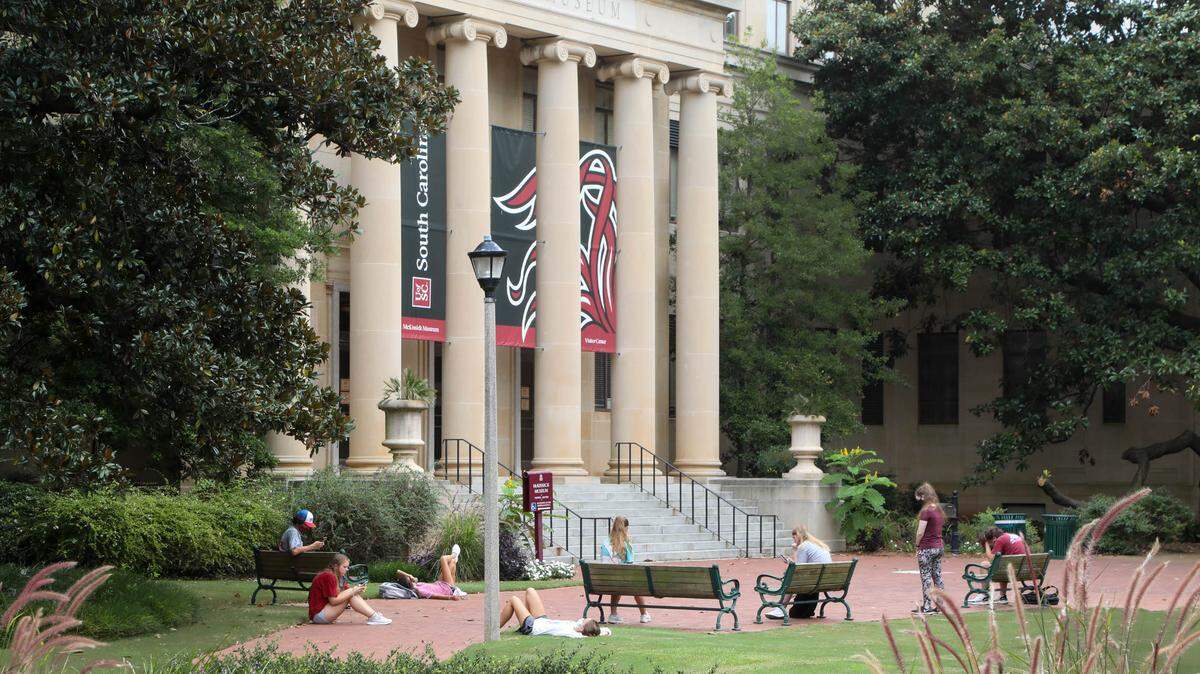
The University of South Carolina is on the lookout for long-range threats, like snipers, after the assassination of conservative commentator Charlie Kirk, the school’s police chief said Tuesday.
Police will consider possible threats from farther distances while planning events on the University of South Carolina’s campus, university Police Chief Christopher L. Wuchenich told state lawmakers Tuesday. While collaborating with other agencies, campus law enforcement constantly evolve their approaches to ensuring event safety, he said.
Kirk was fatally shot on the Utah Valley University’s campus while speaking outside last Wednesday afternoon. The bullet was reportedly shot from a rooftop of a campus building, about 175 yards away from Kirk, NBC News reported last week. The Turning Point USA co-founder visited the University of South Carolina in April 2025.
“In light of the recent assassination incident involving a long distance sniper, we’re now incorporating extended range threats into future assessments, even though they were not previously part of our considerations,” Wuchenich said.
Wuchenich and other college campus law enforcement officials testified to the South Carolina House’s Higher Education subcommittee Tuesday afternoon. State Rep. Shannon Erickson, R-Beaufort, who chairs the education and public works committee, said the hearing was prompted by the swatting incident at the University of South Carolina in August, and the timing was expedited by Kirk’s assassination.
While South Carolina lawmakers have pressured several state universities to crack down on employees making insensitive comments about Kirk’s murder, state Rep. Timothy McGinnis, R-Horry, emphasized that the hearing was strictly about campus safety. Discussions steered clear of responses to Kirk’s death.
“We can do this one of two ways,” McGinnis said. “We can have a meeting that’s productive, where we all learn something, where parents can be informed, or maybe even the colleges and the law enforcement agencies learn something. [They will] definitely will be teaching us some things. Or we can let this go off the rails, and it can become a circus, and exactly what I didn’t intend it to do.”
Other campus safety recommendations
Representatives from the South Carolina Law Enforcement Division, University of South Carolina, Clemson University, South Carolina State University, Coastal Carolina University, College of Charleston and the Department of Public Safety spoke about how they planned for campus events, like protests, football games or political speakers.
Representatives wanted advice and information from college law enforcement leaders on how to improve safety.
Richard Johnson, South Carolina State University chief of public safety, said he needed more resources for campus police. He said the university’s police department is short-staffed, partially due to hiring and retention challenges.
Bolstered anti-swatting legislation could also help with campus safety, said Captain Brandon Landrum of the South Carolina Law Enforcement Division. A fake active shooter report incited fear on the University of South Carolina’s campus in August. The swatting incident was linked to online group Purgatory by the state attorney general’s office.
Because perpetrators are often out-of-state, Landrum recommended making it easier for law enforcement to extradite and charge swatters. Erickson told reporters there are discussions to bring legislation that would strengthen penalties for swatting.
“You shouldn’t cause children to lose a day of learning and be able to do something like that and then walk away scot-free,” Erickson said. “We ought to be able to have some kind of consequence.”
This story was originally published September 17, 2025 at 5:30 AM.