
SC Election Commission averts $1 million monthly fine on 2024 ballot scanner loan
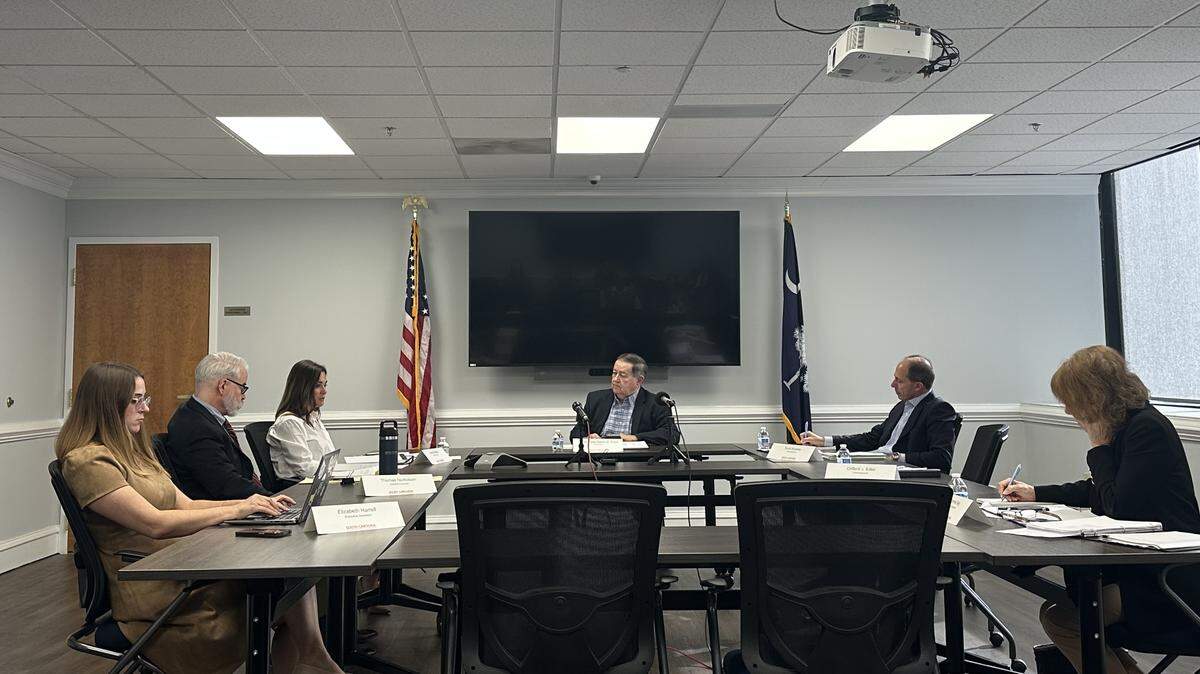
Less than a week after rejecting a plan to avoid a $1 million monthly fine, the South Carolina Election Commission agreed Monday to a deal to pay a multimillion dollar loan late.
The agency responsible for handling elections took out roughly $33 million in loans to pay for machines to count ballots, just over a month before the November 2024 elections. Now, the agency is several weeks past due on a roughly $11 million payment to TD Bank, according to a contract obtained by The State from the S.C. Treasurer’s office.
The Election Commission will not have the money for the payment until February. If it did not strike a deal with the bank, the Election Commission would have paid over $1 million penalty every month it was late.
The bank has agreed to let the commission pay the installment February 28, without incurring late fines, according to an amendment to the contract. The Election Commission will have to pay additional interest on the loan, adding just under $140,000 to the bill.
Last week, the board resisted signing a similar agreement. The members were concerned about the legality of the contract signed by former Election Commission Executive Director Howard Knapp. Those concerns stopped them from amending the contract, which was recommended by state Treasurer Curtis Loftis at the meeting.
Election board Chairman Dennis Shedd said he felt like Knapp “pulled wool over our eyes” on a deal to upgrade the state’s ballot scanners last year.
“We were shocked to find out that the contract was more than $28 million,” Shedd told reporters after the Monday meeting.
The board approved a $28 million purchase of over 3,000 machines, Shedd said. But he believes Knapp, who was ousted by the board in September, misled the commission about the total cost, which ended up over $33 million.
“We had no reason to doubt it, but now we have plenty of reason to know that he wasn’t being truthful with us,” Shedd told reporters Monday morning. The Election Commission initially asked for $32 million to pay off the loan in the current fiscal year, according to a budget request signed by Knapp and Shedd a year ago. Budget requests from state agencies are due each fall to the South Carolina Department of Administration. Shedd told reporters after Monday’s meeting that he was unaware of the $32 million request, despite signing the form asking for it. Shedd said he relied on Knapp for details on the budget, instead of reading the details of the request himself.
“Don’t you have to take it that the person who’s working for the agency is truthful and is disclosing everything to you?” Shedd said to reporters after the Monday meeting.
South Carolina lawmakers appropriated the money to pay the first installment, but the commission will not receive the almost $11 million until February. While funds are typically given to agencies in September, lawmakers decided to disperse one-time funds, including the loan payment, in February instead this year. That would give lawmakers the chance to take back funding if the economy soured.
Loftis was confident that the bank would repossess South Carolina’s over 3,000 ballot scanners if a payment or new deal was not made, he said during the Oct. 15 meeting and in a subsequent interview with The State. Without the machines used to scan ballots, South Carolina had no back up plan to run elections, spokesperson TJ Lundeen said Oct. 15.
‘He went rogue’
The Election Commission had no confirmed revenue stream to repay the loan when they voted to approve the financing agreement in August 2024. However, Knapp told the commission the purchase had the support of the General Assembly, and discussions between Shedd and Gov. Henry McMaster office said it left the decision up to the board, according to July 2024 meeting minutes.
House Ways and Means chairman, Bruce Bannister, R-Greenville, had supported the purchase in a letter, according to Shedd and confirmed by the Ways and Means office. However, Senate leadership never agreed to the purchase.
The new scanners were purchased from Election Systems & Software using a loan obtained by the commission from TD Bank.
In September 2024, Knapp signed a loan to buy new voting equipment, primarily ballot scanners. The equipment was delivered by the first week of October 2024, according to previous meeting minutes.
The purchase included 3,180 DS300 ballot scanners, 837 ExpressVote machines and cases, 5 DS950 scanners and other additional poll hardware. The new machines were used in the November 2024 election.
The Election Commission can “purchase, lease, or contract for the use of such equipment as may be necessary to properly execute the duties of his office, subject to the approval of the State Election Commission,” under state law. On August 21, 2024, the election commission authorized Knapp to execute a financing agreement, called a master lease, with the state Treasurer’s Office, according to meeting minutes.
Its unclear why the Election Commission wanted to make upgrades to the equipment. Shedd said he wanted to prevent long wait times at polls. He also said Knapp believed it was urgent.
In July 2024, when Shedd asked Knapp why the commission should purchase the equipment, Knapp “stated that if we were going to procure this equipment, then we can tell the public that we have the best and newest equipment possible,” according to the commission’s monthly meeting minutes.
Because July 2024 and August 2024 meetings’ minutes are not a transcript, it is unclear what Knapp told the commissioners about the machines cost. In July 2024, Knapp said the cost of the equipment was $25 million, according to the minutes.
Shedd, and the other commissioners, insisted during the Oct. 15, 2025, and Monday morning meeting that Knapp said the voting machines would cost $28 million when they eventually approved the purchase in August 2024. If they were going to cost more than that, including sales tax or interest, Shedd believed Knapp should have consulted with the board. Knapp also told the commission the state Treasurer’s office would pay the loan, which is not true, Shedd said.
Minutes from the July 2024 Election Commission meeting say that Knapp informed the board that the agency would be responsible for paying the loan, even if the General Assembly did not appropriate the funding.
“Director Knapp explained the master lease program and that the agency would have to pay the vendor for the full amount regardless of whether or not state appropriate are allocated to cover the cost,” the July 11, 2024, minutes read.
Shedd said he did not know that the cost had ballooned to about $33 million, or grew from the initial $28 million, until about ten days ago, despite his signing the budget request last fall.
But Knapp was not negotiating the loan alone, according to emails between lawyers organizing the contract, Election Commission staff and the Treasurer’s office. Election commission staff, including current interim director Jenny Wooten and general counsel Thomas Nicholson, were included on emails where the contracts with full costs were attached, documents show.
Wooten, the former director of government affairs & policy, also asked the Treasurer’s office to help finance the $28,846,199 purchase, according to a letter from Loftis to the Election Commission. Wooten later followed up in December 2024 with the Treasurer’s office to obtain another loan to pay for the sales taxes, according to the letter and emails.
Nicholson also issued a legal opinion on the loans, according to letters he sent to TD Bank.
Wooten and Nicholson said they would not comment on what they knew about the contracts and their involvement in negotiations. However, Wooten said their assistance with negotiating the loan aligned with what they believed the commission wanted.
“The problem is, we don’t know what he [Knapp] told the commission or what he didn’t tell them,” Nicholson said.
“Howie was solely responsible for relaying and communicating anything to the commission, and he went rogue,” Wooten said.
Neither Wooten nor Nicholson spoke up during either October meeting about their knowledge of the costs of the loan.
Although Shedd signed off on a budget request asking for $32 million to pay off the loan, Knapp misled him on what was in the budget request, Shedd said. Shedd didn’t read through the budget request line-by-line, he said, and instead relied on Knapp’s description. The $32 million request was listed as the agency’s No. 1 priority.
Shedd also said he added language indicating that the budget request was written by Election Commission staff, under his signature and a statement saying he “reviewed and approved the enclosed FY 2025-2026 Agency Budget Plan.”
Three state agencies – the Attorney General’s office, the Office of Inspector General and the State Law Enforcement Division – have Knapp’s conduct during his time in office “under review,” Shedd said last week. While Inspector General Brian Lamkin would not confirm the nature of any investigations, Shedd said he would not deny the voting machine deal was being looked into by Lamkin’s office Oct. 15.
Last week, Knapp’s lawyer Joe McCulloch said the Election Commission’s accusations were “character assassination at its lowest.”
“This misplaced criticism of Mr. Knapp is indicative of the low quality of the criticisms against him in general,” McCulloch said in statement to The State Wednesday.
How much did the ballot scanners actually cost?
A proposal from Election Systems & Software shows the cost of the new equipment, including set up and shipping, was $28,831,199. With sales tax and interest on the loan, the purchase will likely cost more than $33 million.
On Sept. 30, 2024, Knapp signed off on a loan for $28,846,199. The extra $15,000 in the loan was to pay legal fees to Maynard Nexsen, who assisted with organizing the loan. With interest, the Election Commission owed the bank $30,764,755.84, according to a schedule of payments signed by Knapp and TD Bank from September 2024.
However, in December, Election Systems & Software requested an additional $2,017,930.92 to cover sales tax, according to lease agreement records. The Election Commission took out a new loan to pay for the new costs.
If he knew about the sales tax request, Shedd said he would tell Knapp to negotiate further with Election Systems & Software.
“If I’d known anything about this, that would have been my suggestion, that they should eat it,” Shedd said. “And then you negotiate with them, and maybe you save some money on it.”
By January, the Election Commission had agreed to pay $2,147,506.68 in additional loans, with an expectation that it would have to pay TD Bank nearly $33 million by the end of 2027. The cost now exceeds $33 million with additional interest from Monday’s amendment.