
As food stamps run out, can SC put money into benefits? Here’s what we know
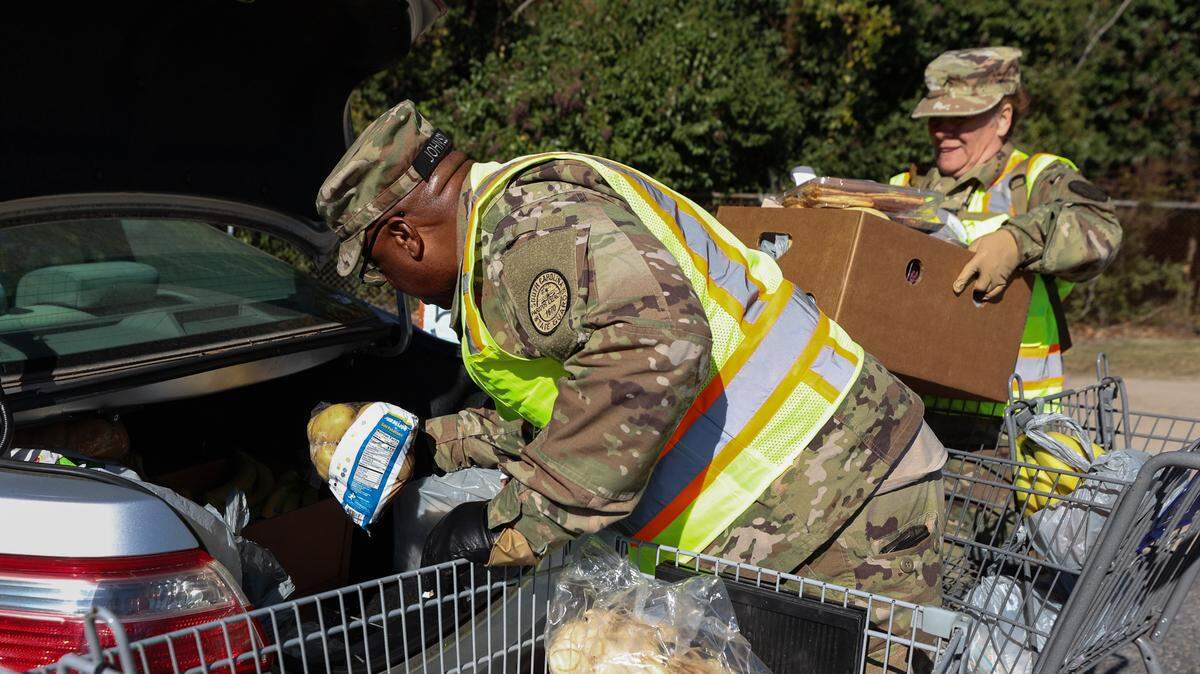
South Carolina is relying on philanthropy to fill in for unpaid federal food benefits, but some Democratic lawmakers say the state isn’t going far enough to help.
While some states have injected money into food benefits, South Carolina has fewer options than others. Republican Virginia Gov. Glenn Youngkin declared a state of emergency and created a state food benefits program using budget surpluses, according to a news release. Louisiana households with elderly or disabled people or children will also receive benefits from the state on a weekly basis, according to a news release from its state Department of Health. Also, about two dozen Democratic- and Republican-led states put millions into food banks from general revenue.
South Carolina doesn’t have any available money to fill in for the shortfall without the General Assembly reconvening, Gov. Henry McMaster said during a news conference Oct. 25.
“There’s no money, no pots of money, that that state of emergency declaration would open up. We don’t have any,” McMaster said.
But state Rep. Hamilton Grant, D-Richland, said money that has already been appropriated to the state Department of Agriculture and Department of Social Services could be used to supplement donations, if McMaster declared a state of emergency.
“It’s not new money,” Grant said. “It’s already been dispersed through the budget and so you would just be redirecting it from the governor’s discretion and purview.”
Under state law, the governor can declare a state of emergency if a “disaster or public health emergency” occurs. The law says the governor can use “all available resources of state government as reasonably necessary to cope with the emergency” and transfer personnel and functions of state agencies to address the emergency.
But McMaster says that only the General Assembly can fund food benefits or resources related to the food benefit cuts. In South Carolina, the governor cannot call the General Assembly back into session. The House speaker and Senate president can call their chambers back for specific reasons, under an agreement made by lawmakers. Voting on a supplemental appropriations bill is a valid reason to bring back the General Assembly under this year’s agreement.
State Sen. Deon Tedder, D-Charleston, asked the chamber leaders to bring back the General Assembly to fund food benefits last week. A spokesperson for House Speaker Murrell Smith, R-Sumter, said no special session had been called. McMaster said Oct. 25 it would take too long for lawmakers to debate and pass legislation to address the issues.
McMaster and many state Democratic lawmakers agree any state action won’t be able to replace the federal government reopening and fully funding food benefits.
“There’s no excuse for the dysfunction that’s going up and got everybody upset, got families worried,” McMaster said Tuesday. He urged Congress to pass a continuing resolution, which would unlock food benefits and other federal funds until a full budget is passed.
“Obviously absent of Congress acting, we’re really limited to what we can do,” Grant said. “And so for South Carolinians to understand, there are people who are pushing for this, who are calling on those to get creative, to make sure that we take care of our vulnerable.”
The Supplemental Nutrition Assistance Program, formerly food stamps, is entirely federally funded. States, including South Carolina, have never had to pay for the program. South Carolina receives over $104 million every month from the federal government to pay for benefits. About 1 in 10 South Carolinians receive the federal money for their groceries.
The U.S. Department of Agriculture previously told states not to pay benefits in November, claiming the “well has run dry” without Congress passing a funding agreement on its website. But a federal court in Rhode Island said the USDA had to use its already allocated contingency funds to pay for food benefits.
On Monday, the USDA said it would use the about $4.6 billion available to partially pay for the Supplemental Nutrition Assistance Program in November. Families will receive 50% of their regular SNAP benefits this month, according to a court filing. The USDA warned the adjustments could mean recipients won’t receive benefits for weeks, or even months, according to the court filing. The state Department of Social Services, which administers SNAP in South Carolina, is waiting for guidance from the USDA on how to proceed with administering November’s food benefits, according to a Monday emailed statement. The agency did not answer general questions about how benefits are typically paid or adjusted.
Apart from announcing the One SC Fund’s activation, McMaster also deployed the state guard to help out at food banks. On Tuesday, McMaster said there was no way for the state to fund SNAP benefits without the federal government and slammed the government shutdown.
“This is absurd,” McMaster said. “For the greatest country in the world to be stumbling along, for just a lack of a few votes. It is absurd. This will be a chapter in the greatest stupidities in the world, this kind of behavior.”
This story was originally published November 5, 2025 at 4:44 PM.