
Will SC raise gas tax for $1 billion to upgrade roads and bridges?
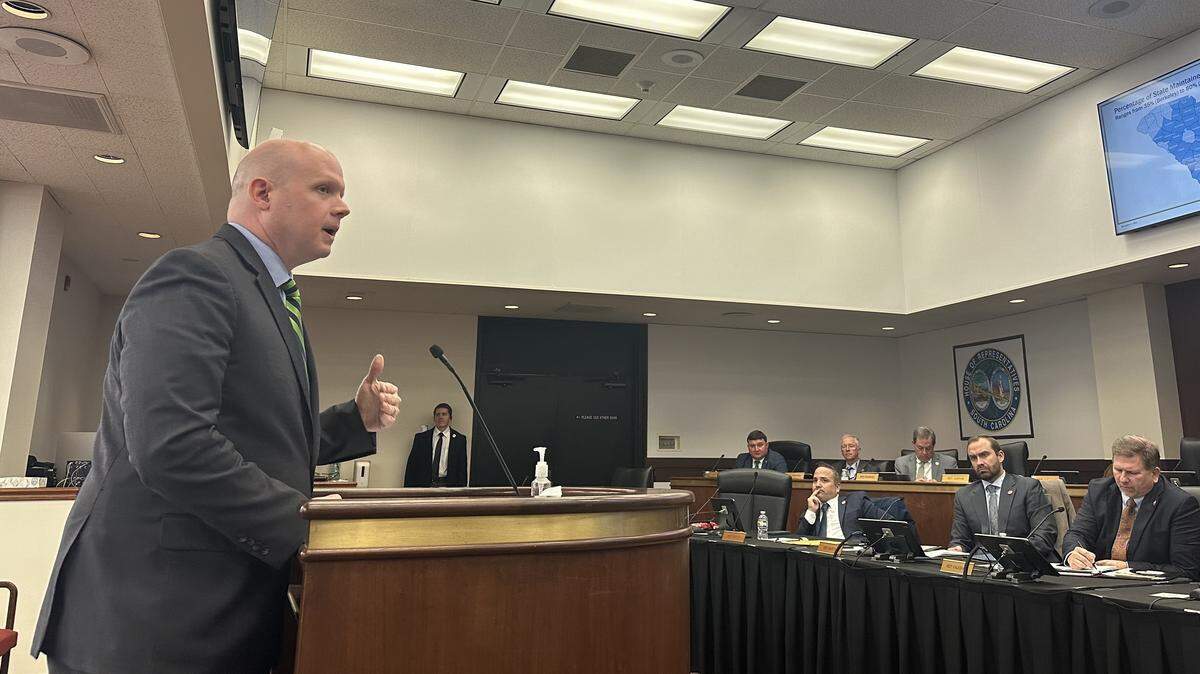
Raising the tax on gasoline and diesel is likely not an option for state lawmakers wanting to add millions to improve South Carolina’s transportation infrastructure, said the leader of a committee looking for solutions.
With population growth adding to demand for new development and inflation making infrastructure projects more expensive, a South Carolina House ad hoc committee will come up with ways to pay for road and bridge improvements.
But South Carolina lawmakers likely won’t want to raise the gas tax, now 28.75 cents per gallon levy on fuel, state Rep. Shannon Erickson, R-Beaufort told reporters Tuesday. Erickson co-chairs the transportation ad hoc committee.
“Everything’s on the table,” Erickson said. “I don’t believe there’s appetite for the gas tax to be raised.”
The gas tax contributes 62% to the Department of Transportation’s state budget for road infrastructure, according to a Dec. 2 presentation from Frank Rainwater, the executive director of South Carolina Revenue and Fiscal Affairs Office. The transportation agency doesn’t receive all the revenue generated by the gas tax.
Department of Transportation Secretary Justin Powell predicts his agency will need an additional $1 billion annually to fully implement planned infrastructure improvements over the next 25 years. A majority of new money would go towards South Carolina’s interstate and bridges, according to a presentation he gave to lawmakers Dec. 3. While construction has ramped up, it will plateau without more money from the General Assembly, Powell said during a Thursday commission meeting.
Because of inflation, revenue from the gas tax isn’t going as far anymore, Rainwater told lawmakers. If the gas tax were raised to keep up with inflation, the department could make about $1 billion more a year by 2050, according to Rainwater. In that scenario, the gas tax would be about 51 cents per gallon in 2050.
Why does DOT need more money?
Population growth and tourists mean more revenue for the state Department of Transportation. But they also mean more congestion and wear-and-tear on the roads, Rainwater told lawmakers Tuesday. The state’s population could grow by 1.5 million residents in the next two decades, he said.
Infrastructure, like roads, bridges and rail, have to keep up with population growth. The South Carolina Department of Transportation maintains 53% (41,000 miles) of the state’s roads.
The growth of electric vehicles and improving fuel efficiency have also potentially reduced revenue for road improvements, Rainwater and Powell said. Residents driving electric vehicles don’t pay a tax on their fuel, and people driving more efficient cars may pay for fewer gallons of gas.
Additionally, Powell told lawmakers Wednesday he anticipates the federal government will not increase, and may decrease, the amount of funding going towards state transportation agencies.
Fixed fees, which make up over 80% of state revenue for road improvements, also hasn’t kept up with inflation or surrounding states in the region, Rainwater said. Inflation has also made infrastructure projects more expensive, so allocated money doesn’t go as far, he said.
What is next for road improvement?
After months of meeting, including hearings around the state, the ad hoc committee will propose legislation aimed at improving transportation infrastructure, Erickson said.
Lawmakers could instate new fees on drivers or change regulations. The first option would create new revenue for the agency, while the second option could make infrastructure projects slightly cheaper.
“People are financially looking at costs going up on everything,” Erickson said. “I know that we don’t want to add to that problem.”
“Now, whether there are changes in those dollars or just simply flexibility on where that comes, I probably lean more on the flexibility piece of it and some of the policy changes,” she continued.
Raising the fee on electric vehicles could be “low-hanging fruit” for the committee, Erickson said. Electric vehicles don’t pay a gas tax, despite contributing to wear-and-tear on the roads. South Carolina has one of the lowest EV fees, $60 annually, in the southeast region, Powell said.
Some lawmakers also brought up toll roads or “choice-lanes,” which would allow drivers to pay for non-congested routes.
Rainwater said the goal of new fees and policy changes should be for people using the road to pay for the roads, including new residents and tourists.
“We think road construction cost, road infrastructure cost should be funded by the users,” Rainwater said. “I mean, ideally, we wish we could put a counter in everybody’s car, and you could just tax everybody on the number of miles used, but that’s not very practical.”