Money to fix charter schools, rural district buildings part of SC Education request
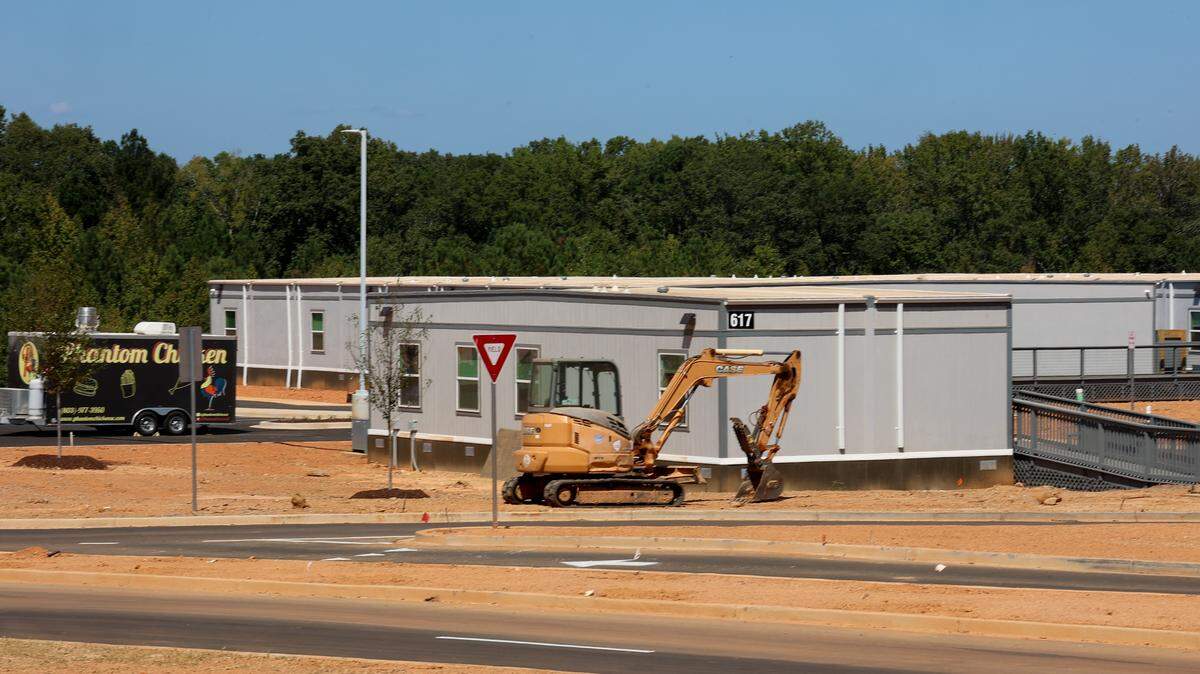
When charter schools open, they’re usually in vacant school buildings. But those buildings still might need upgrades. Rural districts also may not have the tax base to improve old school buildings.
So, the S.C. Department of Education wants $120 million a year to dedicate toward school construction for school districts that may not have access to resources to meet infrastructure needs.
This is the third year in a row Superintendent Ellen Weaver has used her budget request to propose an education infrastructure bank to be a source of money for school construction for rural and charter schools.
The pitch to budget writers is for the state to create a “permanent, sustainable source of funding for public school facility construction and renovation.”
“An Education Infrastructure Bank (EIB) would establish a permanent, comprehensive solution to provide sustainable funding for rural public and public charter school facility construction, renovation and modernization through a combination of loan and financial assistance programs,” Weaver wrote in the Department of Education’s budget request.
Lawmakers are scheduled to return to Columbia to start the 2026 session Jan. 13.
Budget writers have $734 million of new annual dollars to allocate in the upcoming budget year. However, a chunk of that amount is expected be used for an additional income tax cut, shrinking the money available to spend on recurring costs such as salaries, services and programs.
Weaver said in the budget request that money provided in the bank would not go toward routine maintenance, athletics or non-instructional facilities.
The idea for an education infrastructure bank appears similar to the state infrastructure bank, which receives money through truck and other motor vehicle registration fees among other sources to provide financial assistance for road projects.
As part of the department’s proposal, the education infrastructure bank would provide direct need-based funding for critical infrastructure projects, repay existing capital project debt, provide low-cost or no-interest loans for school districts and charter schools to build or renovate, and assist school districts in accessing private market financing.
“Funds can be used for construction, renovation, modernization, loan refinancing or repayment of school facilities to include schools and other instructional spaces that directly serve students,” Weaver wrote.
Since 2020, state lawmakers have allocated $391 million for capital needs for consolidating disadvantaged or growth school districts, but it hasn’t been a recurring amount. Lawmakers also used $195 million from the Savannah River site settlement and American Rescue Plan toward school construction and renovation.
Lawmakers have included money for school safety improvements in recent years, but not enough dollars to fulfil requests from districts.
About 25 school districts have been able to use the capital dollars.
However, “this support has been piecemeal insofar as it has addressed only a fraction of qualified districts’ construction and renovation needs for buildings aged 30 years or greater,” Weaver wrote. She added, other eligible districts with old buildings or student growth have not received infrastructure support.
Weaver also said charter school enrollment continues to grow in the state, but those schools don’t have a dedicated source of money to address building needs. Traditional school districts have local dollars they could tap into and have an ability to place a bond on the ballot to raise money for school facility needs.
“As a result, a significant portion of the per-pupil dollars intended for instruction, teacher pay, curriculum and technology must instead be diverted to facility costs,” said Chris G. Neeley, the superintendent of the South Carolina Public Charter School District. “This is not a criticism of any other part of our public education system — it is simply the reality under which charter schools operate.” When charter schools start up to provide an option for families to send their students for whom a traditional public school may not work, the charter schools often locate in vacant store space or vacant school buildings.
Neely said having money dedicated to school infrastructure would allow charter schools to put more money into classrooms and allow charter schools to expand.
“More than 130,000 students in rural South Carolina live in areas with no public school choice,” Neely said. “Facilities funding is the key to changing that.”
Palmetto State Teachers Association Director of Governmental Affairs Patrick Kelly applauded Weaver for pushing this conversation calling the need for updated facilities an important need.
“We simply cannot expect that our rural, lower income areas of the state are going to be able to continue to maintain appropriate facilities for students, given the current lay of the land of revenues especially put the impact of Act 388 on local property tax generation for lower income rural areas,” Kelly said.