
Stricter abortion ban sought for South Carolina. Which measures could become law?
Rescheduling mifepristone, pulling Medicaid funds for some family planning providers and penalizing abortion like homicide are all proposals in front of South Carolina lawmakers this year to further restrict abortion access.
However, not all bills proposed have equal chances of becoming law, or even being voted on. While “stopping dangerous mail-order abortion pills” is a priority for House Republicans this session, treating abortion like murder legally hasn’t had the attention of legislative leadership.
South Carolina bans abortion after a heartbeat is detected, which typically falls on the sixth week of pregnancy. The ban has some limited exceptions, including fatal fetal anomalies and when the pregnancy resulted from rape.
Some Republican lawmakers want to further restrict access to abortion, though they haven’t been successful since the “heartbeat bill” passed in 2023.
“It’s a very divisive issue in here because it’s a very divisive issue out there,” said state Sen. Shane Massey, R-Edgefield, in a Jan. 12 press conference.
Here are some of the abortion debates the General Assembly may take up and how much support it may have among lawmakers this year:
Restricting medications used for abortion
The bill would reschedule mifepristone and misoprostol, two forms of medication abortion that are often taken together for the purposes of ending a pregnancy. Medication abortion is the predominant way people have abortions in South Carolina, according to state data and research from abortion advocacy groups.
If passed, medication abortion would be a Schedule IV drug in South Carolina, joining a list of drugs with a low risk of abuse, like depressants and stimulants. Mifepristone and misoprostol are not controlled substances now.
The proposal, which has support from House leaders, also places penalties on people who possess or dispense mifepristone or misoprostol illegally. It does not criminalize a pregnant person for obtaining or possessing the medication.
South Carolina law already bans dispensing abortion drugs through telehealth, before and after the sixth week of pregnancy. However, the Society of Family Planning, an abortion advocacy research group, predicts physicians in other states prescribe mifepristone and misoprostol to people in states with bans.
The ability for other states’ medical providers to ship abortion pills into South Carolina has drawn concern from House and Senate leadership, indicating the bill may have more political support than other proposed bans. People who have an abortion are also not criminalized, a sticking point in abortion debates in the fall.
House Speaker Murrell Smith, R-Sumter, told South Carolina Public Radio the bill would move “quickly” through the House this year during a podcast live taping Thursday. The legislation will be considered by a panel of House lawmakers Wednesday, the second day of session.
On the Senate side, Massey said there may be “strong support” for a House bill that addresses medication abortions in his chamber. The GOP caucus leader also introduced a bill in the Senate to reclassify mifepristone and misoprostol Tuesday.
“I think there’s a strong consensus of folks who are very concerned about this fairly recent trend of mail-order abortions,” Massey said during a Dec. 12 press conference.
Medication abortion typically consists of two pills: mifepristone and misoprostol. Broadly, medical professionals consider medication abortion to be safe. A coalition of 13 medical professional organizations, including the American College of Obstetricians and Gynecologists, wrote in a statement that the medication is safe and effective for patients in May.
The medication has been approved by the Food and Drug Administration since 2000. Mifepristone blocks progesterone, a hormone that helps a fertilized egg develop during a pregnancy. Misoprostol produces contractions to remove contents from the uterus.
“Both are safe,” said Vicki Ringer, the director of public affairs at Planned Parenthood South Atlantic, to reporters Tuesday. “Both have been used widely in the U.S. for 25 years. They have a higher safety record than many over-the-counter medicines and certainly some medicines that men are prone to take.”
‘Equal Protection’ for humans and fetuses
Some far-right lawmakers want to change the legal definition of “person” to include “unborn child.” If it became law, people that have an abortion could be charged with homicide, which abortion advocates warned could lead to the death penalty.
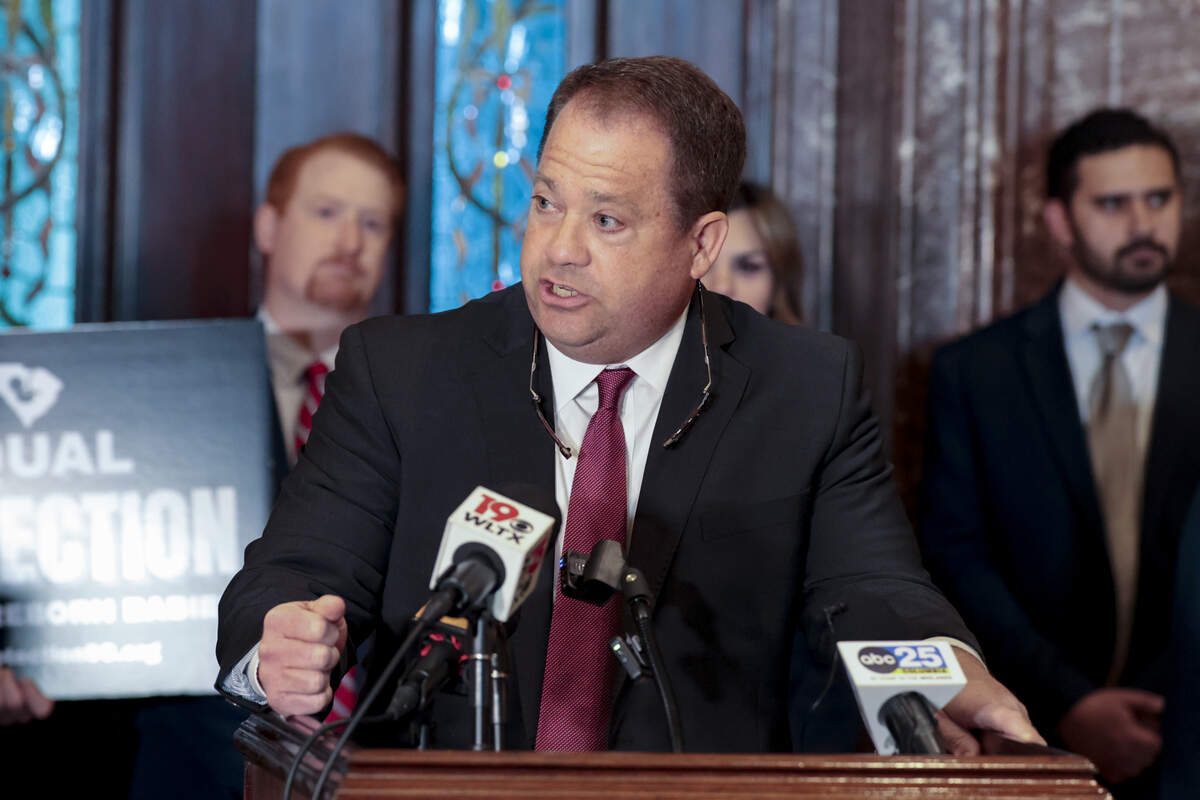
A press conference promoting the bill, sponsored by state Rep. Rob Harris, R-Spartanburg, drew a crowd outside the House and Senate chambers Tuesday, including a handful of protestors.
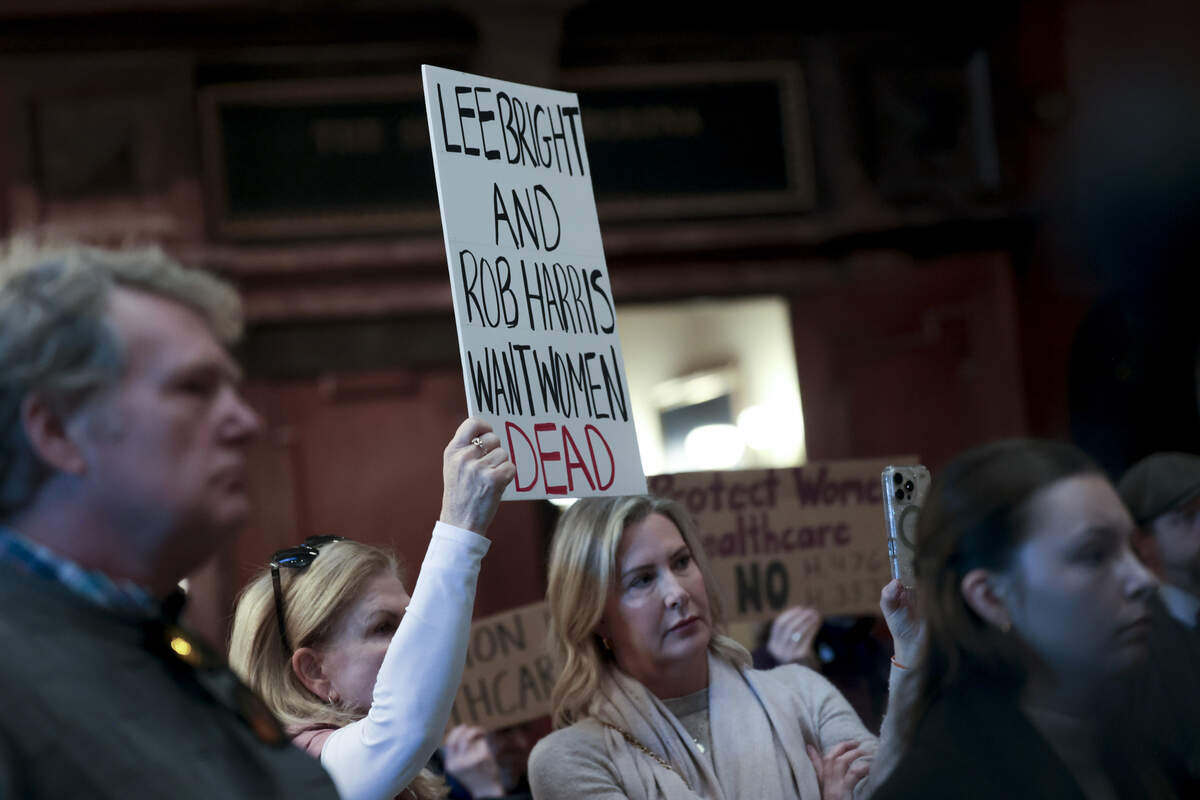
“It is equal protections premise that murdering anyone should be illegal for everyone,” Harris said. “It’s the only bill that’s consistent with God’s word, the Constitution and even the Republican Party platform.”
State Sen. Lee Bright, who was sworn into the Senate on Tuesday, said he would file another “equal protection” bill.
“I know we’ve got hearts and minds to change,” Bright said during the press conference. “God’s in the hearts- and minds-changing business. We’re going to do our part.”
Planned Parenthood’s Ringer told reporters the proposal was out of step with what the public wanted, and she hopes the bill will “die a very fast death.”
Withholding Medicaid funds for family planning providers
Legislation has been introduced in both the House and Senate to withhold Medicaid funds for family planning medical workers and practices that provide abortions in South Carolina.
State Rep. John McCravy, R-Greenwood, filed a bill in December that would prevent abortion clinics from providing family planning services under the South Carolina Medicaid program. The bill had a few co-sponsors and does not have a hearing scheduled.
Massey also introduced a similar bill in the Senate on Tuesday.
Implementing near-total ban, removing exceptions
Before the General Assembly reconvened in 2026, a near-total abortion ban failed to pass out of a small panel of state Senators this fall.
It’s unclear whether the bill’s primary sponsor, state Sen. Richard Cash, R-Anderson, will push for another hearing.
“I might make some changes, modifications to mine and file it again,” Cash said during a press conference Tuesday. “Regardless of that, I believe there’s likely to be activity in the House on some kind of a pro-life bill or another.”
The abortion ban failed 3-2 in November when four Republican Senators abstained from a vote. Several Republicans on the panel said the elimination of exceptions and criminalization of women went too far. The bill was also criticized by anti-abortion groups before its first hearing in October.
This story was originally published January 14, 2026 at 5:00 AM.