In final state of the state address, SC’s Gov. McMaster looks to the future
With less than a year left in his term, Gov. Henry McMaster sought to look at what the state would be like after he leaves office.
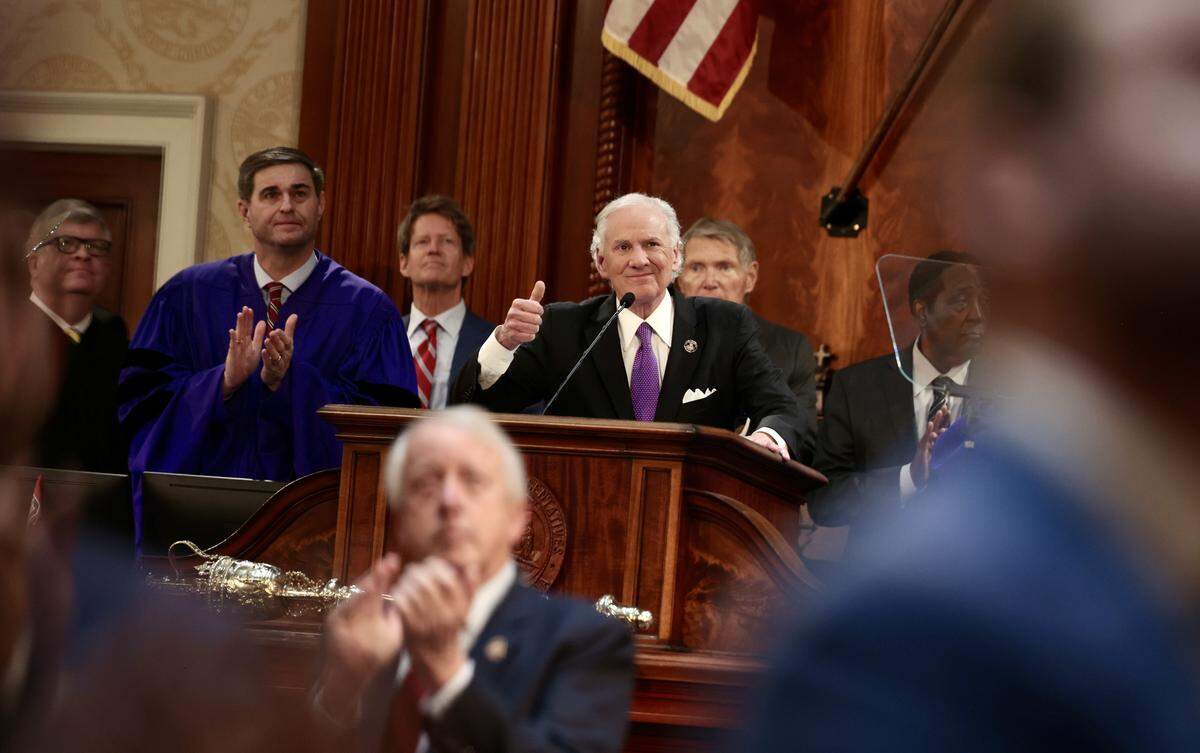
McMaster, South Carolina’s longest serving governor, delivered his ninth and final State of the State address Wednesday. Because of term limits, he cannot run for reelection this year.
In his speech, McMaster called for universal full day 4-K, raising starting teacher pay to $50,500, spending more than $1 billion on infrastructure needs, and lauded restarting the V.C. Summer nuclear plant project and providing the Education Scholarship Trust Fund to allow parents to choose where they send their students to school.
In his remarks, McMaster proposed changing the way magistrates are appointed. He said magistrates should be attorneys, and paid the same as circuit and appellate court judges, and the state should go away from each county being responsible for paying for magistrate operations.
“They should be screened in a transparent manner, and county residency requirements should be eliminated. And the chief justice of the Supreme Court should determine how magistrate courts operate to ensure consistency in all 46 counties,” McMaster said.
He also lauded the conservation efforts in the state.
“Protecting our land is a gift for all our people,” McMaster said. “With insight and continued hard work, we can achieve the goal helping private and public property owners with preserving half their lands for future generations, and making our South Carolina recognizable as the closest thing we have to heaven on earth.”
In a speech where he gave a history lesson, he spoke about the future, saying the word “future” 15 times, while also taking a victory lap of the economic development investments coming to the state.
“When the pandemic came, we took a road less traveled and relied on common sense and the Constitution,” McMaster said. “Other states faltered; we soared. Some of our businesses had their best years ever.”
He touted that since 2017, when he ascended to the governor’s office, the state has announced over $53.7 billion in new capital investment and almost 100,000 new jobs.
With the population growth occurring in the state, McMaster reiterated his call for lawmakers to spend an additional $1.1 billion on infrastructure in the upcoming state budget.
“Left unaddressed, we will face future problems with water and sewer access, traffic congestion, road and bridge repair, demand for electric power generation, public safety, school overcrowding and healthcare availability,” McMaster said.
But he also backed efforts to continue to reduce and eventually eliminate the state income tax.
“I have again proposed cutting the personal income tax rate as much as we can, and as fast as we can,” McMaster said. “And if the General Assembly can find a way to eliminate it altogether, I will sign it the second it arrives on my desk.”
McMaster lauded the restart of the V.C. Summer nuclear reactor project and said it is part of the “nuclear renaissance.”
“Our electric generation, distribution and transmission capacity and capabilities must be able to handle enhanced future economic development, anticipated technological advances and population growth,” McMaster said.
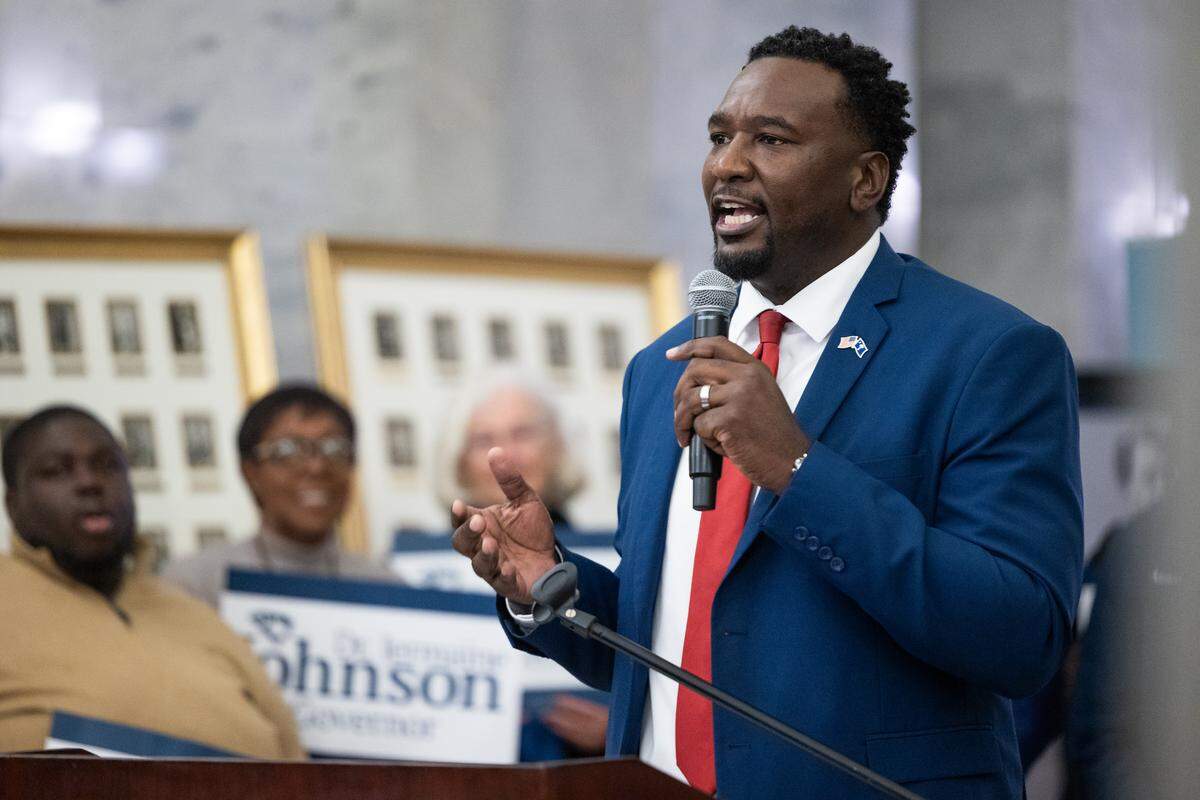
State Rep. Jermaine Johnson, a Richland County Democrat running for governor this year, delivered the Democratic response, and he made his pitch against complete GOP control in the state. Republicans have supermajorities in both chambers and have held the governor’s office since 2003.
The selection of Johnson to deliver his party’s response with elements of a stump speech gave him an opportunity to speak to a statewide audience as he seeks the Democratic nomination for governor against Charleston attorney Mullins McLeod.
“The real state of our state is what you can find at kitchen tables across South Carolina. Kitchen tables where families are deciding whether they can afford rent or groceries as prices skyrocket out of control. Where families are forced to decide on spending money on school supplies or life-saving medications,” Johnson said.
Johnson pointed to how South Carolina ranks low in the country in education, the state poor road conditions, and the state has one of the highest homicide rates.
“We hear a lot about growth and success, often framed through national politics or federal debates,” Johnson said. “But the true measure of how a state is doing can be found much closer to home. We deserve a home where our children are learning, our roads are safe to drive on, our neighborhoods feel secure, and our families can access the care they need.”
While McMaster and Republican leadership have touted the investments made in building up the electric vehicle industry in South Carolina, Johnson argued Democrats deserve credit.
“New electric vehicle and battery plant projects across the state did not happen by accident,” Johnson said. “It was made possible by Democratic-led federal investments in clean manufacturing that every congressional Republican opposed, then later took credit for once the jobs arrived. Bless their hearts.”
Johnson argued for allowing medical marijuana in the state and allowing gambling beyond the state lottery.
“With some of the most fertile soil and hardest working farmers in the country, our state is well positioned to responsibly grow cannabis for safe, legal medicinal use. We have a state lottery that funds educational programs. Why aren’t we inviting safe, regulated gaming in other forms to provide our state with millions in tax revenue?”
This story was originally published January 28, 2026 at 7:23 PM.