Political skepticism over vaccines magnified in Spartanburg measles outbreak
One of the lasting impact of the COVID pandemic is the rise of vaccine hesitancy on some parts of the political right. In Spartanburg County, which is seeing the largest measles outbreak in the country, Republicans dominate politically.
It’s a county where President Donald Trump carried two thirds of the vote in 2024.
All but one of the members of the Spartanburg County delegation at the South Carolina State House are Republicans. Some of the most conservative members of the GOP have become skeptical of vaccines since the days of the COVID pandemic.
Since the COVID pandemic, the percentage of religious exemptions to vaccinations has grown in Spartanburg County.
In 2021-22, 4.5% of students used religious exemptions to get out of having required vaccinations. By 2025-26 that percentage grew to 9.6%. It’s the county with the highest-rate of religious exemptions in the state.
The number of students with the required immunizations in Spartanburg County has dropped from 93.9% in 2021-22 to 88.9% in 2025-26. It is the lowest immunization rate in the state.
The county also is home to a sizable Ukrainian population, who themselves are skeptical of the government after being a former member of the Soviet bloc. Ukraine is a common country of origin for non-natives living in Spartanburg County.
According to the 2021 American Community Survey, about 4,300 Ukrainians lived in Spartanburg County, which has a total population of 328,000 people.
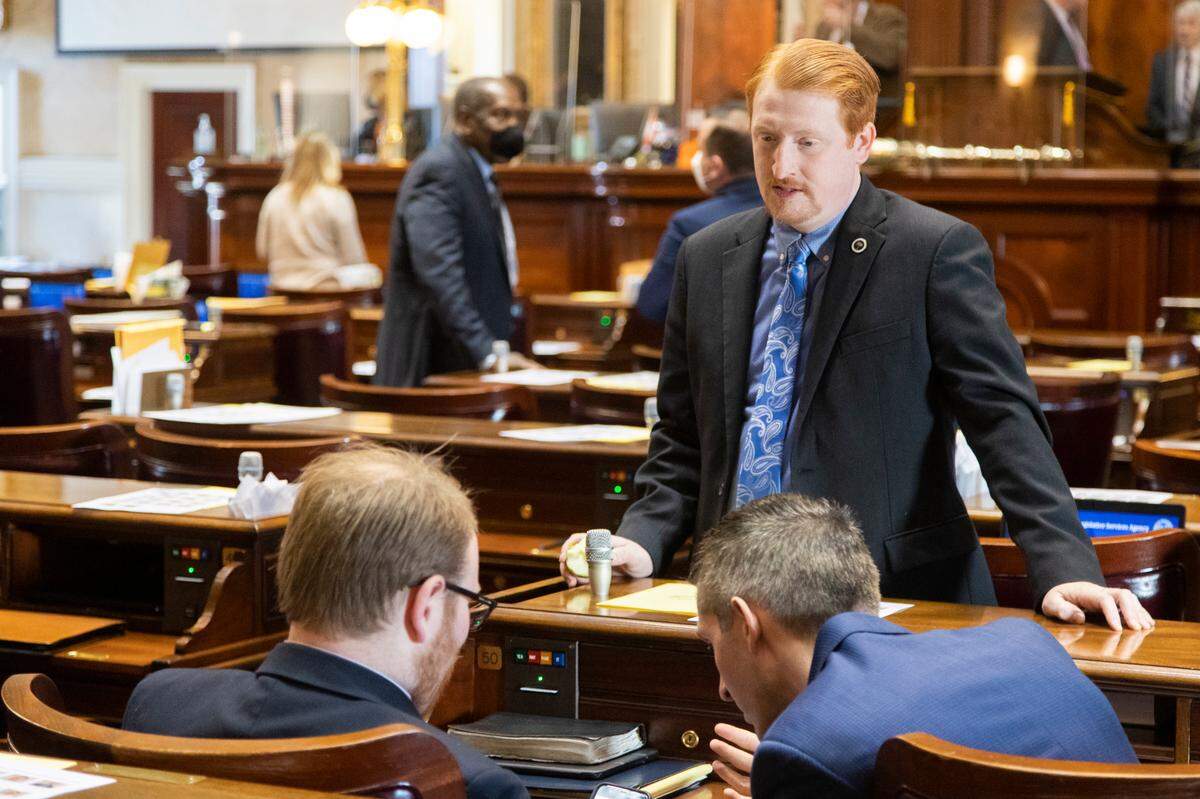
Members of the community also will concentrate within their own churches, said state Rep. Josiah Magnuson, R-Spartanburg.
“They tend to segregate themselves, religiously and politically, and they associate with one another,” said state Rep. Josiah Magnuson, R-Spartanburg. “And I think you’re going to have that anytime, when you have immigrants coming into our country, how they interact with the diseases and things is going to be different and unique, and those are things that we just have to keep working through.”
The Department of Public Health does not track country of origin when investigating disease spread, but acknowledged an anecdotal connection to eastern European community.
“We know that some schools with a high percentage of children from Ukranian- or Russian-speaking families have been impacted and a number of public exposures have been reported in churches attended by these community members,” Dr. Linda Bell, state epidemiologist, said in a statement.
According to the Census Bureau, more than 1,400 people of the Ukranian population in Spartanburg County was born outside the U.S.
“I think some of this is a lot of people who are newer to the country and certainly newer to the state, who came from a much more oppressive regime under, in many cases, former Soviet satellites, who have distrust of government generally,” said state Sen. Josh Kimbrell, R-Spartanburg, who is running for governor.
State Rep. Stephen Long, R-Spartanburg, echoed the sentiment.
“I think that as a community, they have a greater distrust of government, and that they are more inclined to kind of sticking within their group. So I think that potentially could be a piece of it,” Long said.
Long, who said he doesn’t have immediate plans to have his young children receive the MMR vaccine, conceded that those who don’t vaccinate their children do have a responsibility to take extra precautions, such as staying away from sick children.
“It’s a problem when people who don’t take this seriously, and who don’t take the steps on a personal (level),” Long said. “Personal liberty requires personal responsibility, and I think that when people fail to exercise personal responsibility, that’s where people start asking questions, and they want the state to step in, in a way that might not be appropriate.”
Following COVID, the medical freedom debate is still at the forefront.
“There are people who say medical freedom is of utmost important,” said state Rep. Sarita Edgerton, R-Spartanburg. “We live in a country where they have that right to do so. I don’t think forcing people to take vaccines is the way that we should go as a free and democratic society. I think that everybody has to make the choice that is the best for them and their family.”
Kimbrell pointed to how the government initially responded to COVID, saying there were overreaches that made people uncomfortable.
“So you take that dynamic sets the template for all this. This didn’t happen like overnight. So you have a group of folks that, in my view, have now overreacted the other way to that,” Kimbrell said.
The mRNA vaccine used to combat COVID, also is a relatively new type of vaccine, and it may have led to confusion because it sounds phonetically similar to the MMR vaccine which has been around for decades.
“So I think a number some folks are probably just a little confused about what it is. I think that’s a fair point, because a lot of the people who are choosing to opt out of this are fairly new to the county,” Kimbrell said.
Who’s pushing for vaccines?
To a certain degree, how much encouragement there is to have people get the measles, mumps and rubella vaccine falls on partisan lines.
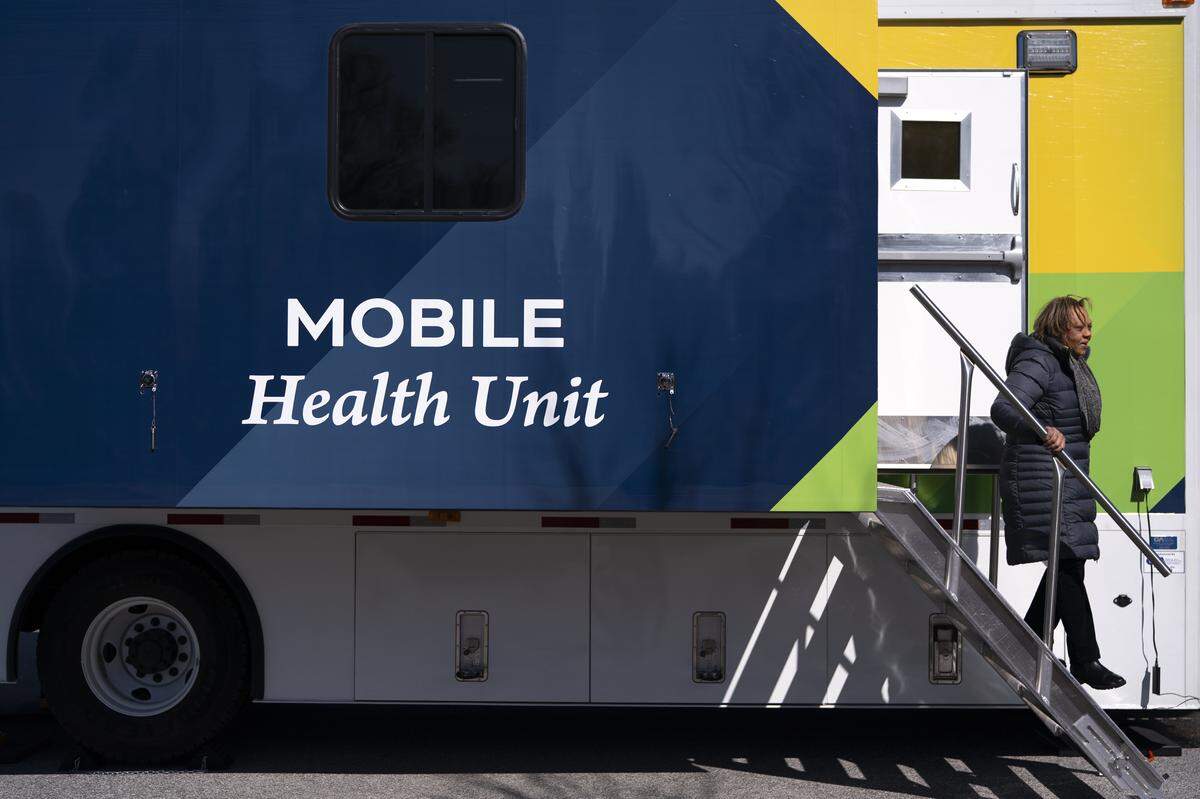
State Rep. Rosalyn Henderson-Myers, D-Spartanburg, has been holding drives to encourage people to be vaccinated for measles.
“I think we have a role of responsibility to our citizens, responsible in that we need to be doing as much as we can to get this eradicated, and we need to be putting the message out there that this is not acceptable, and I just don’t think that a lot of my colleagues understand the gravity of this,” Henderson-Myers said.
Magnuson, who said he will probably not have his two kids vaccinated for measles mumps and rubella, complimented Henderson-Myers’ efforts, but said no one should be forced to be vaccinated.
“I certainly don’t have a problem with encouraging people to get the vaccine if they choose to do so, and making it more available,” Magnuson said. “We commend her on her work on that, but I certainly don’t believe that we as the state should be imposing it on anyone.”
Magnuson repeated a debunked theory that vaccines use cells of aborted fetal tissue.
“Primarily the reason why many people don’t want to is because of how it contains the abortive fetal cells. And if you put that DNA in your body, a lot of people feel like they’re participating in support for abortion and perpetuation of this kind of approach to medicine,” Magnuson said.
The American Academy of Pediatrics disputes this claim.
“Vaccines do not contain fetal cells. Some vaccines involve growing viruses in human cell cultures originally developed from two aborted fetuses in the 1960s. These cell lines are still going, so no new aborted fetuses are ever needed,” the American Academy of Pediatrics says on its website.
Kimbrell, who also has been pushing people to make sure they have the MMR shot, called the assertion that vaccines uses aborted tissue as misinformation.
“Frankly, Rep. Magnuson has been a very loud voice in favor of not vaccinating,” Kimbrell said. “He and I, we just disagree on this. I understand concerns about mRNA. I get that. That’s a more novel thing. I get it. But this has been, this is vaccines been around for 60 years that everybody pretty much took for 60 years we didn’t have a measles outbreak.”
This story was originally published February 16, 2026 at 5:00 AM.