
Proposal allows local pauses on development. Will it help SC manage growth?
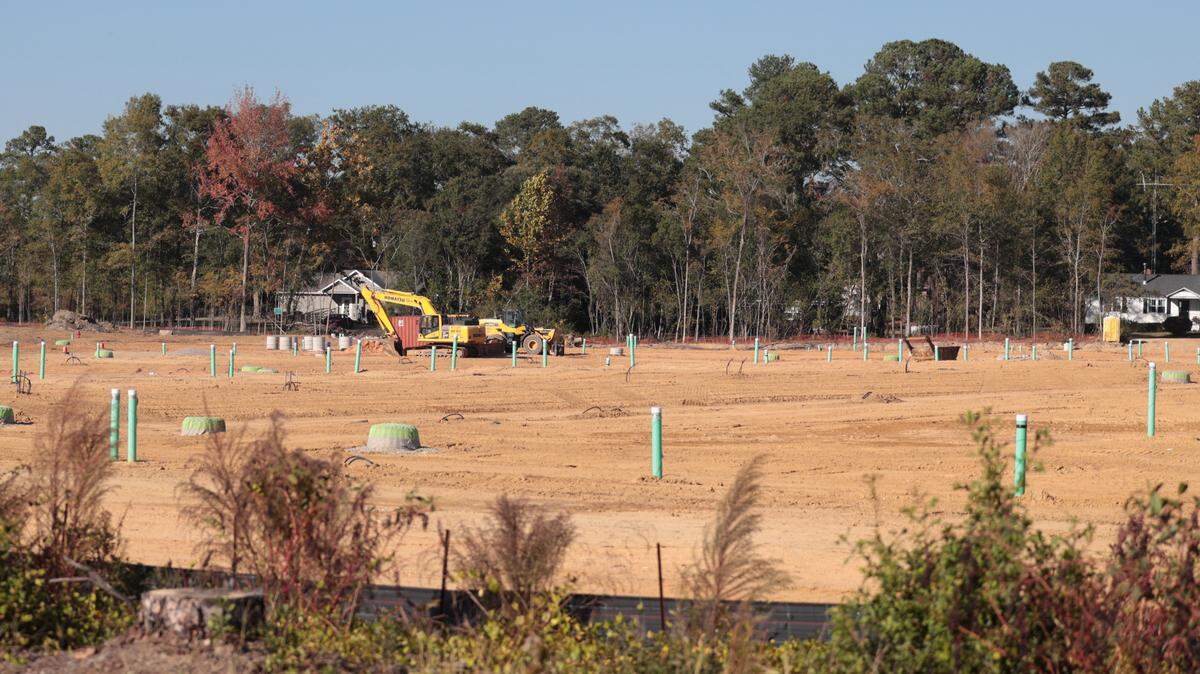
More students crowding schools. More cars congesting roads. Construction workers building sewer lines for new housing developments. Longer wait times for ambulance, fire and sheriff’s deputies responding to more emergencies over a larger, more crowed area. As South Carolina boasts the strongest population growth rate in the nation, residents are counting on their local governments to deal with the influx of new people.
For Symantha Melemed, an Aiken resident and horse farm owner, “leapfrogging” growth in her county without the capacity to meet the demands of new residents has raised concerns.
“When we come into planning meetings, there are petition after petition for very large housing developments,” Melemed told lawmakers last month. “They’re impacting equestrian communities like mine. I have a 100 acre historic farm. When people talk about why they moved to Aiken County, it’s often because of the beauty of places like where I live.”
Some South Carolina lawmakers want to make it easier for counties to pause growth when the existing infrastructure is inadequate. The proposals, which authorize so-called concurrency programs, allow jurisdictions to deny permits to new developments like subdivisions unless the essential utilities and resources are already in place, like roads and sewer systems.
South Carolina grew more than any other state in the country by percentage between July 2024 and July 2025, according to U.S. Census Bureau data released in January. The state added nearly 80,000 new people.
“Legislators from throughout the state, from the Upstate to the Midlands to the Grand Strand, they all are concerned about over development,” said state Sen. Tom Davis, R-Beaufort. “Everybody is concerned, whether they’re Republican or Democrat, Upstate, Lowcountry, doesn’t matter. Everybody is concerned about the number of people coming to South Carolina and the inability of our infrastructure to keep up with it.”
Davis sponsors the Senate concurrency bill and has led the preliminary panel of lawmakers working on the topic.
While the concept isn’t novel and has been done in South Carolina before, the bills give towns and counties more reassurance that they can legally deny or hold-up a permit if the necessary infrastructure isn’t in place. The legislation could also place guardrails on how concurrency programs are implemented locally.
Necessary infrastructure typically includes water, sewer, roads, fire and law enforcement, but some jurisdictions, like Lexington County, also take schools into consideration.
Concurrency programs can enable smarter growth by pushing local governments to better plan ahead for future infrastructure demands, said state Rep. Spencer Wetmore, D-Charleston, the sponsor of the House bill. The programs can also bring developers, local governments and other infrastructure agencies to the same side of the table in planning, she said.
“I don’t think it’s any secret Charleston is the poster child for overdevelopment and way too many houses and businesses without the corresponding infrastructure that should have been put in place first,” Wetmore said.
“It’s also my very sincere hope that other places that are just now starting to experience growth can learn that lesson and can put in place the infrastructure now,” she continued.
But Wetmore, Davis and stakeholders agree the programs should have parameters. Otherwise, property owners’ rights could be impacted, opening up a jurisdiction to lawsuits, Davis said.
“I do think that we’re in an environment where local governments, by virtue of sheer necessity, are acting in ways that I think may subject itself to some legal challenges, and I don’t want that,” Davis said during a hearing on the bill.
Neither Davis nor Wetmore’s bills require any county or town to implement concurrency. Rather, the legislation signals local governments can legally pause development, if they follow the necessary procedures.
Some local governments in South Carolina already have concurrency policies in place. In September, Lexington County denied 83 townhome units over its concurrency system.
Jurisdictions can say ‘not yet’ to growth
Balancing property rights and the need for infrastructure as growth skyrockets is at issue when deciding whether to approve new development. Lawmakers see a state concurrency policy as a way to address both concerns.
“It’s kind of the Wild Wild West right now with any local government can try and effectuate concurrency without the guardrails we’re trying to establish in this bill,” said Zach Bjur, the land and water policy director at Conservation Voters of South Carolina.
Developers warned the policies could stifle growth and drive up the price of housing during hearings for the bills. Delaying permitting could drive up costs of construction, which could be passed along to the consumer, Mark Nix, executive director of the Home Builders Association of South Carolina, told lawmakers last month.
“What it does create is an opportunity to stop growth,” said Mike Satterfield, the CEO of Haven Homes in Lexington County, during hearings for the bills.
Good concurrency policies don’t let government say “no” forever to a developer, Davis said. The response should be a “not yet” if the adequate infrastructure isn’t in place.
The key is that local governments have a plan to develop the necessary infrastructure. It would be up to the jurisdictions how they would go about building out the needed roads, bridges and sewer, including potentially charging the developer for the proportional amount.
“In order for the concurrency to work, you have to have a plan in place to address the deficiencies,” Davis said.
For example, Wetmore said her bill would require local governments opting in to map out their jurisdictions’ deficiencies. When a development is denied, it would have to be based on already documented shortfalls in infrastructure. The policy would keep local governments from “moving the goal posts” on developers on what is adequate infrastructure, she said.
Then, there would have to be a plan in place for the municipality or county to actually build out the new structures.
“There has to be a plan to get that infrastructure up to speed,” Wetmore said. “It can’t just be no forever, like we don’t want any more ever.”
Developers could also have the options to help pay for growth or scale down their projects, said Tyson Smith, a Charleston-based planning consultant. Smith said he drafted the House bill.
The bills are neutral on how the infrastructure is ultimately built or funded, Smith said. A jurisdiction may use tax dollars for new projects, or they could require the developer to pay for their share of the growth, he said
Both Wetmore’s and Davis’s bills are still in early stages of the legislative process, but the Senate bill passed out of its initial panel last week. Last month, Davis said he was hopeful a concurrency bill could pass this year because of the bipartisan support from every region of the state to control growth.
“Moving forward, we need to establish a new way, a better way, of doing things, or else the quality life’s going to keep plummeting,” Bjur said.