
SC Ethics agency says school trustees can’t hike their own pay. It hasn’t stopped them
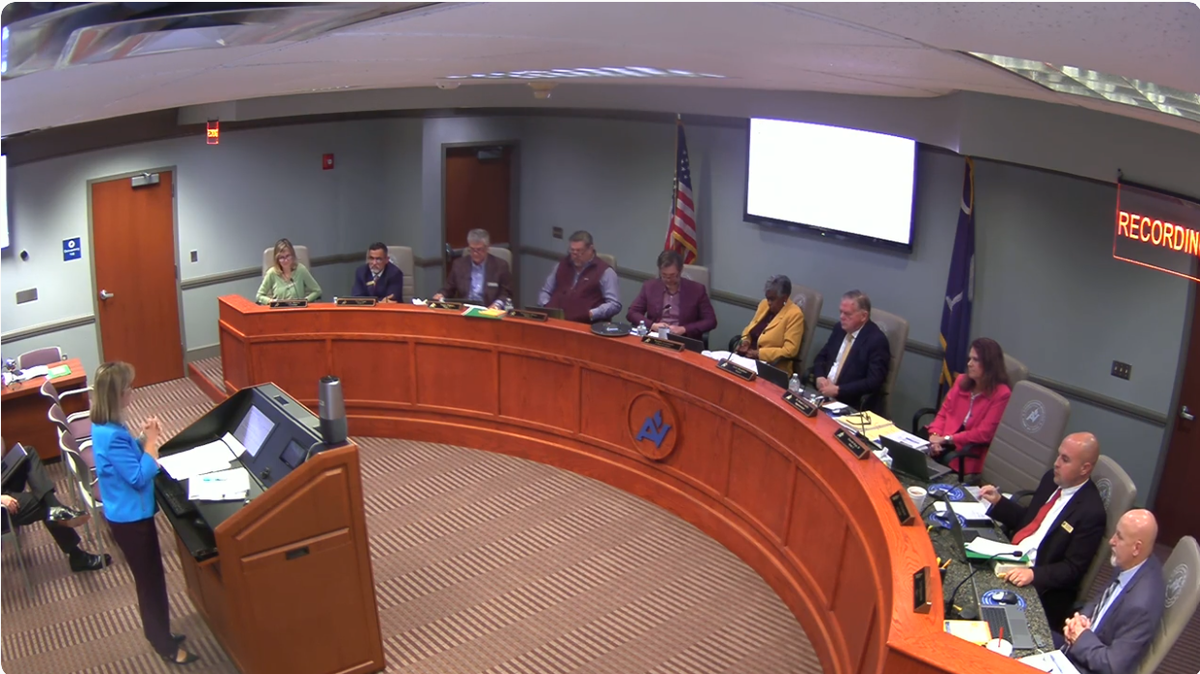
The Anderson School District 5 board of trustees is on the verge of becoming the first paid school board in Anderson County.
But current board members won’t see a dime for months, or possibly years, if they see one at all.
That’s because Anderson 5 trustees won’t start drawing a paycheck until each board seat has come up for reelection. The board structured its policy that way to ensure members wouldn’t be voting on their own pay, only the pay of future members.
While the South Carolina Ethics Commission advised trustees that doing so was necessary to comply with the state’s ethics law, an investigation by The State Media Co. found that school boards don’t always follow that guidance.
Since 2023, dozens of school board members in at least six districts have voted on their own earnings, an exhaustive review of board minutes and meeting recordings revealed.
The State reviewed the timing of school board compensation increases in light of a recent South Carolina Supreme Court ruling that reversed a pay raise state lawmakers granted themselves.
The state’s highest court unanimously struck down the $1,500-per-month pay hike last November, writing that “the South Carolina Constitution prohibits members of the General Assembly from raising the compensation of current legislators but not future legislators.”
City and county council members face similar statutory restrictions.
But the state law governing school board member compensation simply states that trustees may serve with pay or without it. It is silent on salary adjustments, leaving the legality and ethics of in-term raises open to interpretation.
Scott Price, executive director of the South Carolina School Boards Association, said he wasn’t aware of any boards that had approved in-term raises.
“Most school boards are going to be very aware of public perception and what their law allows them to do,” he said.
In seven examples reviewed by The State, however, only Anderson 5 and one other board’s trustees questioned whether they could legally hike their own salaries. While the other five boards squabbled over the size, necessity or optics of in-term raises, their members said nothing publicly to indicate they had contemplated the legality of their actions.
Had they done so, they might have inquired with either the Ethics Commission or the South Carolina Attorney General’s Office, which both issued advisory opinions last year on school board member compensation.
In an opinion issued last May, the Ethics Commission asserted that “a school board member may only approve a change in pay for his office if the change is effective following an election for that particular board member’s seat.”
An exception exists if the General Assembly has passed a “specific statute” that says otherwise, the agency wrote. A so-called “local” law that pertains to school board member compensation in a given district would be an example of a specific statute.
The Attorney General’s office offered a different assessment. Assistant attorney general Matthew Houck opined last July that in-term raises weren’t prohibited by statute.
“Other public bodies are limited by statute concerning when salary increases may go into effect,” Houck wrote in response to an inquiry about the Lancaster County School Board. “There is no similar statutory restriction concerning the timing of compensation increases for members of a school district board of trustees.”
While the opinions seem to reach different conclusions, Ethics Commission executive director Meghan Dayson said she didn’t think they were in conflict.
The Ethics Commission, not the attorney general’s office, is responsible for interpreting the Ethics Act, she explained, pointing to a separate opinion in which Houck acknowledged as much.
“This Office,” the assistant attorney general wrote in 2018, “has consistently deferred to the State Ethics Commission’s interpretation of the Ethics Act.”
SC school boards are subject to disparate laws
The State Ethics Commission would not say whether it had opened investigations into any South Carolina school board members who have voted on in-term pay increases.
If it were to do so, the process would likely be time-consuming.
In the last three years alone, more than 50 school board members across the state have voted on proposals to raise their own compensation, including at least 26 whose actions would seem to be prohibited by the Ethics Commission’s opinion, The State’s review found.
The others who voted to hike their own pay either tailored the raises to comply with local laws that permit, or at least don’t prohibit, in-term raises in their districts or voted on in-term raises that did not go into effect.
The situation highlights the lack of uniformity in school board compensation practices across South Carolina, legal experts said.
While some districts are bound solely by the state law governing school board compensation, others must follow specific local laws that apply only to them.
School boards under the jurisdiction of the state law, such as Anderson 5, have the authority to set their own compensation policies, but cannot legally give themselves in-term raises, according to the Ethics Commission.
Boards subject to local laws , on the other hand, may raise their own pay with what amounts to the consent of their legislative delegation.
The Pickens County School District Board of Trustees is a prime example. Bound by a decades-old local law that set board member pay at $250 per month, Pickens County trustees asked their legislative delegation — the state senators and representatives elected to serve the county — to greenlight a raise.
“To me, it was an outdated number and I thought the school board should be able to increase their pay,” state Rep. Neal Collins, R-Pickens, explained. “At the end of the day, the voters have the ultimate say whether it’s too much or too little.”
In late 2022, Collins and state Rep. Jerry Carter, R-Pickens, introduced a local bill that gave Pickens school board members the freedom to set the “amount and distribution” of their pay.
The General Assembly passed the bill unanimously in April 2024, and four months later, the school board voted to quadruple its pay to $1,000 per month, effective immediately.
Whether the trustees’ actions were permissible is a question that only the Ethics Commission can answer. But the existence of a local law complicates the analysis, said John Crangle, a Columbia lawyer and good government advocate.
Crangle said the fact that some school boards must wait until after an election to raise trustee pay, while others can hike their salaries immediately and still others aren’t paid at all is illustrative of South Carolina’s “obsolete local government system.”
“This cries out for legislative action to create a uniform system throughout the state of South Carolina where all school district board members are treated the same,” he said.
Senate Education Committee Chairman Greg Hembree agrees, and said he’d be open to exploring legislation that ensured the same compensation rules applied to all school boards.
The Horry County Republican said he took no issue with school board members who want to raise their pay, given how relatively little they often make, but was skeptical of local laws that give legislative delegations the power to set how much other elected officials in their communities are paid.
“It has the potential for unreasonable abuse, if you were so inclined,” he said. “What way to mess with somebody quicker than mess with their salary?”
Anderson 5 approves board pay
In Anderson 5 last month, nearly a year to the day after trustees sought the Ethics Commission’s guidance on a proposed pay increase, the board voted 5-4 to approve a new compensation policy on first reading.
The policy, which has been vetted by state ethics officials, sets member pay at $500 per month, or $550 for the chair, with annual increases tied to federal cost-of-living adjustments.
“The board wanted to make sure if they were to go that route they did everything the proper way and went through all the proper channels,” Anderson 5 spokesman Kyle Newton explained.
Under the policy, the winners of four board seats on the ballot this November will begin drawing paychecks after they’re seated. The other five seats will remain unpaid until 2028, when the trustees elected that year are sworn in.
If any Anderson 5 board member declines the compensation, as several trustees have said they would, the money would remain in the district’s general fund.