
Unprofitable majors could be on chopping block at SC’s public colleges. Here’s why
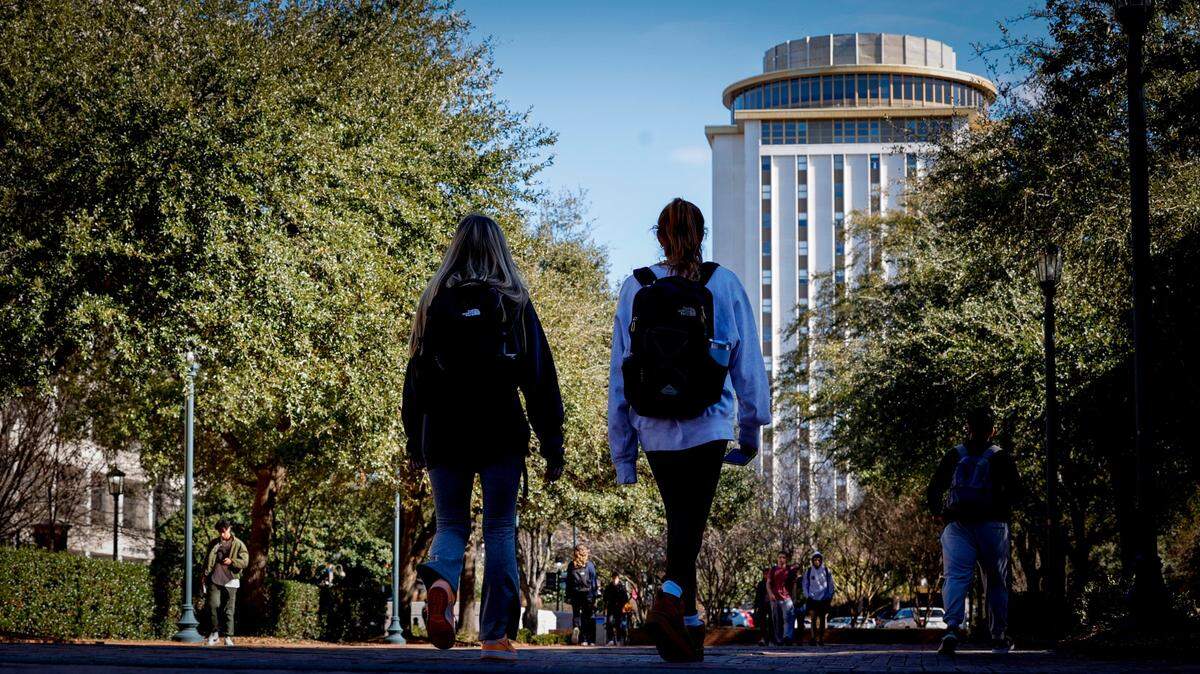
For the past six years, the South Carolina General Assembly has appropriated tens of millions of dollars to public colleges and universities in exchange for an assurance they would hold tuition flat for in-state students.
This year, the S.C. House of Representatives is making an additional ask.
Lawmakers want schools to use that tuition mitigation money in support of “critical workforce disciplines,” and to suspend new admissions for academic programs that consistently lose money.
“We used to just say, ‘Hey, here’s the money, don’t raise tuition,’ ” Rep. Nathan Ballentine, R-Richland, said. “Now, we’re saying, ‘Hey, here’s the money, don’t raise tuition. And, by the way, let’s start looking at this a little bit deeper.’ ”
Ballentine, who chairs the House budget committee’s Higher Education panel, said he’s concerned that too many students are graduating with a mountain of debt and degrees that don’t translate into viable careers.
The average college student now graduates with nearly $40,000 in debt and has a harder time finding work than in past generations, data shows. Not only is the unemployment rate for recent college graduates higher than the general population, but those who do find work are increasingly likely to settle for low-paying jobs that don’t make use of their degrees.
“What we want (colleges) to understand going forward,” Ballentine said, “is let’s focus on some degrees that put people to work. Hopefully, here in our state.”
The House’s budget plan, passed earlier this month, allocates an additional $26.3 million in tuition mitigation dollars to 16 public colleges and universities.
That’s only half as much as schools received last year and less than a third of what they asked for.
Universities that accept the money must use it exclusively for undergraduate programs that instruct students in the STEM fields. They also must suspend new admissions for at least half of their academic programs that lose money for four consecutive years.
College officials were loath to comment on the House proposal and any impact it might have on academic programming, but said the process of reviewing and eliminating underenrolled degrees is nothing new.
“We pay attention to what is needed,” University of South Carolina president Michael Amiridis told a House budget panel in January. “And we look at what programs actually have low enrollment and there’s low demand.”
Amiridis, who requested $41 million for tuition mitigation across all of USC’s campuses, said the state’s flagship university had terminated 44 programs over the last five years, resulting in a net reduction of 10 programs.
Clemson University interim president Bob Jones told lawmakers his institution also routinely reviews and discontinues programs flagged as “noncompliant” in the Commission on Higher Education’s academic program productivity report.
“When they’re flagged, we start the process internally of reviewing,” said Jones, who requested $24.5 million in tuition mitigation for Clemson this year. “We average about 10 programs shut down per year.”
The commission’s productivity report measures compliance by calculating an academic program’s average enrollment and completion figures over multiple years.
The most recent report, published in December, evaluated the productivity of 915 academic programs across South Carolina’s 13 four-year public colleges and universities during the five-year period from 2016 through 2020.
Roughly 20% of all programs were found to be noncompliant due to their failure to meet either enrollment or completion standards, or both, and 54 programs were recommended for termination, according to the report.
The compliance rates at individual universities ranged from 37.5% at South Carolina State University to 88.2% at the Medical University of South Carolina.
The state’s four largest public universities — USC-Columbia, Clemson, Coastal Carolina and College of Charleston — all had compliance rates exceeding 80%.
While the state’s public colleges and universities use the Commission on Higher Education report to inform their decision-making, they aren’t required to abide by its recommendations.
In many cases, however, universities already take stock of their programs’ performance and proactively eliminate degrees with dwindling student interest, CHE officials said.
“They are very vigilant about policing their own programs,” CHE spokesman Mark Swart said. “You’ll see a number of terminations where universities looked at their own data and said, ‘We don’t need to do this anymore,’ which is great.”
But a program’s “compliance,” as judged by the Commission on Higher Education, and the amount of money it brings into a university are not always indicative of its value, some administrators warned.
Certain critical STEM programs may have lower enrollment rates or be more expensive to stand up, but are nonetheless important for universities to maintain. Physics is one such program at the Citadel, said Sally Selden, the school’s outgoing provost and dean.
“All of our engineering students rely on our physics department,” Selden, who recently accepted a job as president of the University of Lynchburg in Virginia, told a House budget panel in January. “And some of our students will opt to major in physics later in their four-year period.”
Eliminating other low-enrollment programs, such as art history, might not actually save a university money, College of Charleston president Andrew Hsu explained.
“Any art major and even non-art majors will take art history,” Hsu told lawmakers during his January budget presentation. “So if you eliminate the art history major, even though there are only five, ten students, you still have the faculty who have to teach art history.”
Ballentine, the House’s Higher Education budget committee chairman, said he recognized the importance of evaluating programs individually and wasn’t wedded to the House’s current language requiring colleges to cut programs solely because they lose money.
The next step, he said, would be for lawmakers to more precisely define what makes a program expendable.
At this point, however, it’s not clear the Senate will even get on board with making tuition mitigation money contingent on universities’ elimination of certain majors.
State Sen. Ronnie Cromer, who chairs the Senate Finance panel over Higher Education, has questioned the viability of such an approach.
“You can’t eliminate every program that is not making money or breaking even for the university,” Cromer, R-Newberry, told The State Media Co. last week.
A pharmacist by trade, Cromer expressed optimism that the Senate would be able to provide more tuition mitigation assistance than the House had, but said money was tight.
“You want to do more, but then you look at the numbers and the numbers just aren’t there,” he said. “We’re going to do everything we can on tuition mitigation.”
The upper chamber is expected to release its tuition mitigation proposal some time within the next couple weeks, Cromer said.