
License plate readers let local police track SC drivers. Are state roads next?
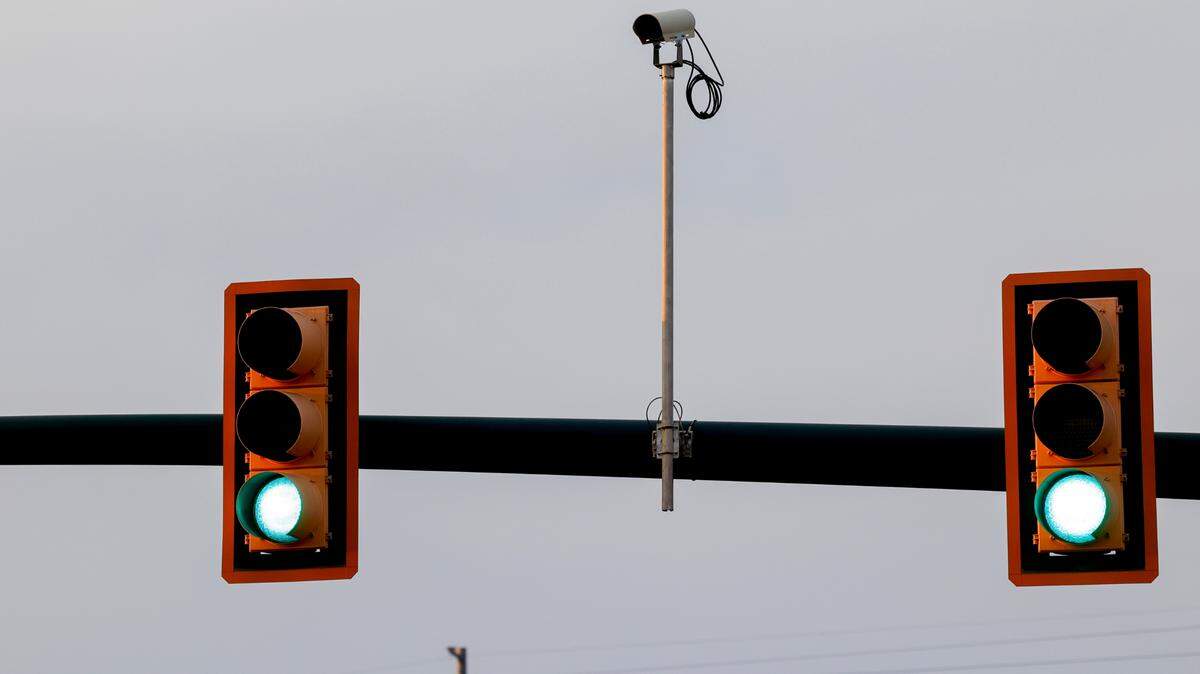
Police cameras that capture and store photos of license plates would be allowed on state roads under bills making their way through the South Carolina General Assembly.
While many local law enforcement agencies in South Carolina already use the cameras, the state Department of Transportation paused permitting due to legal uncertainty over whether the cameras were allowed on state-maintained right of ways, Kelly Moore, a spokesperson for the agency wrote in an email to The State.
“We paused permit approvals several years ago because it was unclear whether these devices are permitted in the public right of way,” Moore wrote. “This is a policy issue that the legislature is working to resolve.”
Automated license plate readers are cameras that capture the license plate, and sometimes the make and model, of a traveling vehicle. The collected data is usually stored for future investigations and checked against a hot list — a database of vehicles law enforcement agents want to identify. For example, police can add a reported stolen car to the hot list and be notified when it passes one of the cameras.
The cameras help local police departments track down criminals, said state Sen. Brian Adams, R-Berkeley. Adams, a retired police officer, told lawmakers the cameras helped him solve a murder.
“This has actually helped myself and my team solve a murder,” Adams said Wednesday. “Back in the day, when somebody said they weren’t in the area, we were able to put them in that location during the murder, and this helped convict them of that crime.”
Adams said the cameras could help police look for wanted or missing individuals, but they could not be used for traffic enforcement in South Carolina.
But some worry the automated license plate reader systems, which indiscriminately store data about everyone who drives past the camera, could infringe on privacy.
“Obviously, we want to be able to use the technology to be able to prevent crime, find folks that have been missing or kidnapped, but it is imperative that we make sure that we protect people’s private information,” said state Sen. Russell Ott, D-Calhoun.
The proposal allows local police to use automatic license plate readers for law enforcement purposes. The state Department of Transportation could also use them to enforce tolls in the future. It also requires agencies using the technology to adopt policies, like requiring audits, establishing privacy requirements and deciding who can access the data.
The bill prohibits individuals from using the collected data for reasons not outlined in the bill and only allows law enforcement to store data for up to 90 days.
License plate readers have been used by police departments for more than decade, but they’ve grown in popularity and scope in the last few years, said Andrew Guthrie Ferguson, a law professor at George Washington University. Flock Safety, a Georgia-based company founded in 2017, is the most popular brand for the new automated license plate readers.
“Even though the technology itself actually had been around and was being used by law enforcement well before that, the concern of this second generation of LPRs is that it basically gives you the ability to track patterns of where people go in their travels, which is slightly different than looking for, essentially, a particular hot car,” Ferguson said.
In the Midlands, several police departments already use license plate readers. The Richland County Sheriff’s Department operates Flock cameras, a spokesperson said. The department did not immediately respond to an email with follow-up questions about the technology. Lexington County does not use Flock cameras, but they do have cars with license plate readers, said Sarah Alexander, a spokesperson for the county’s sheriff’s department.
The Lexington Police Department uses several Flock cameras for law enforcement purposes, according to its transparency portal.
Law enforcement agencies throughout Beaufort County have also purchased about 70 license plate cameras from different vendors, the Island Packet reported in February.
“They’re being used now,” Adams said after the meeting “So they’re not illegal.”
A Senate bill passed the full Judiciary Committee on Wednesday and will head to the floor. It will also need backing from the House, which has a similar bill in committee now.