
Who tells SC’s history? Heritage Act update etches monuments, memorials in stone
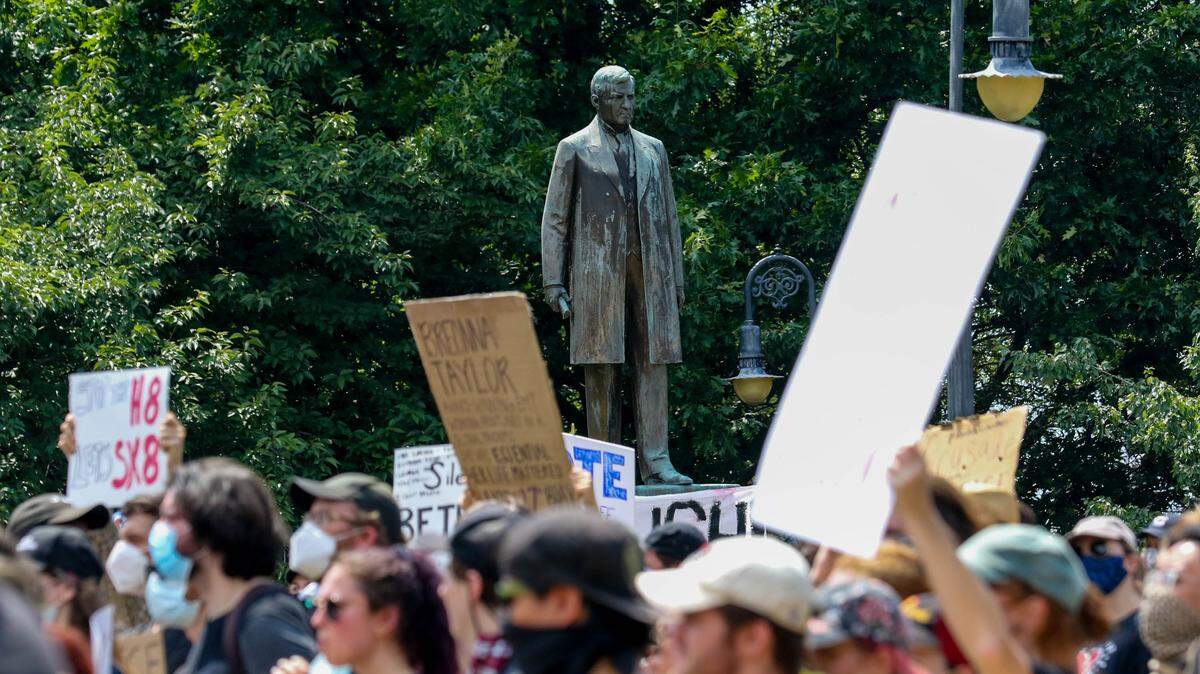
At Halsey Creek in Charleston, a new historical marker recognizes the site of a colonial plantation and a supply point for a brutal loss for the Patriots during the Revolutionary War.
The Gibbes Landing marker was put up in 2024 by the Preservation Society of Charleston to recognize the historical impact of the area. Later, the organization added a QR code to the corner of the plaque, which sends visitors to a page with historical maps, timelines and photos.
But president and CEO Brian Turner worries the small QR code could be restricted under a proposal waiting to be signed into law, which expands the state’s 2000 Heritage Act to protect the state’s monuments and memorials.
Some preservationists say the legislation limits how South Carolina’s complicated history is told to the public. But supporters say additional signs or QR codes can cloud the history of the people memorials seek to honor.
“Our nation’s history has always been contested,” said Bobby Donaldson, an associate professor of history at the University of South Carolina. “There’s always been different sides. There’s always different interpretations. But what we’re seeing now is an effort to restrict debate and to put barriers around different interpretations.”
Donaldson studies Southern history and the Civil Rights Movement. He also is the lead scholar on Columbia SC 63: Our Story Matters, which in part documents the Civil Rights Movement in South Carolina’s capital city through public signs and exhibits.
Brett Barry with the American Heritage Association told lawmakers adding plaques or alterations could disrespect the memorials the Heritage Act seeks to protect. The organization filed or funded lawsuits against local municipalities for moving or taking down memorials for Robert E. Lee and John C. Calhoun in Charleston in 2020.
“If the state has an interest in preserving a monument, it certainly has an interest in preserving the monument’s presentation,” Barry said in April. “We have seen throughout the country, including right here in the Palmetto State, when a local government cannot remove a monument, the backup plan is to add an editorial plaque masquerading as history.”
The Heritage Act revamp, sponsored by state Sen. Danny Verdin, R-Laurens, prevents more South Carolina monuments from being moved or taken down. Without lawmaker approval, changes made to monuments and memorials on state or local land, including new plaques, signs or QR codes further explaining its history, would also be banned.
The Gibbes Landing QR code was added after the unveiling ceremony of the memorial, Turner said. The historic marker sits on public land and honors a historical event, sweeping up the sign in a proposed monument-protection plan, he said.
South Carolina has long wrestled with how to preserve and present its long history, which includes splitting from England to create the United States, then from America in the Civil War, slavery and segregation. While some question whether those who propped up racism should be honored without context on South Carolina’s public land and statehouse grounds, others say those memorialized should be recognized on the terms of the past.
“It [the revamped Heritage Act] asks us to honor, and we need to be honest about who and what we are being asked to honor,” said state Sen. Margie Bright Matthews before a vote on the bill. “Because what may be heritage to some is really a relic of racism and hatred to many others.”
But Barry, of the American Heritage Association, disagrees.
“I think it’s always academically inappropriate to view history through a modern lens,” Barry told lawmakers. “That is not to excuse the wrongs of the past, but to consider the context of the times in which they occurred.”
The new law comes as South Carolina ramps up efforts to tell the state’s story in the Revolutionary War for the 250th anniversary, including through tours, speakers, lesson plans and other education and preservation efforts.
Who can change memorials?
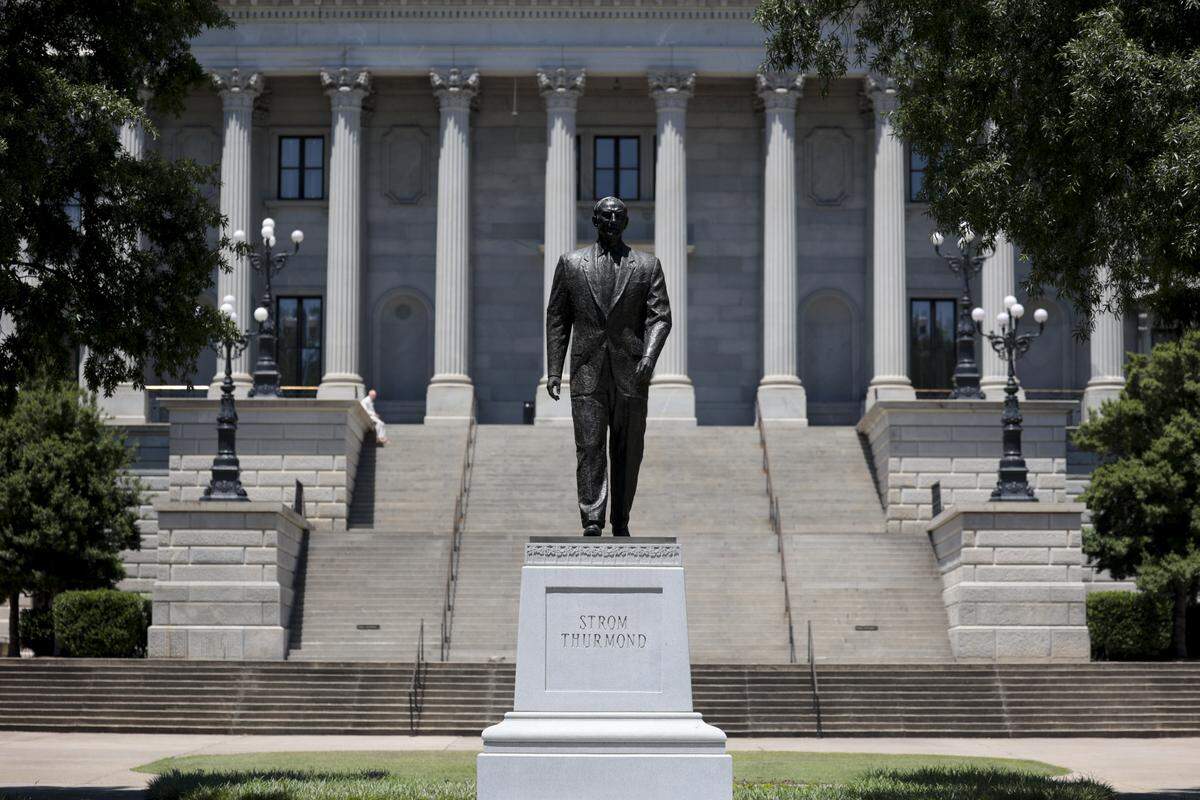
The facts of history change after a monument is built, some who opposed the bill said. Take the state’s longest serving U.S. Sen. Strom Thurmond. South Carolina built a 9-foot statue of the former governor on the south side of the State House grounds while he was still alive. The memorial originally said he had four children and listed their names.
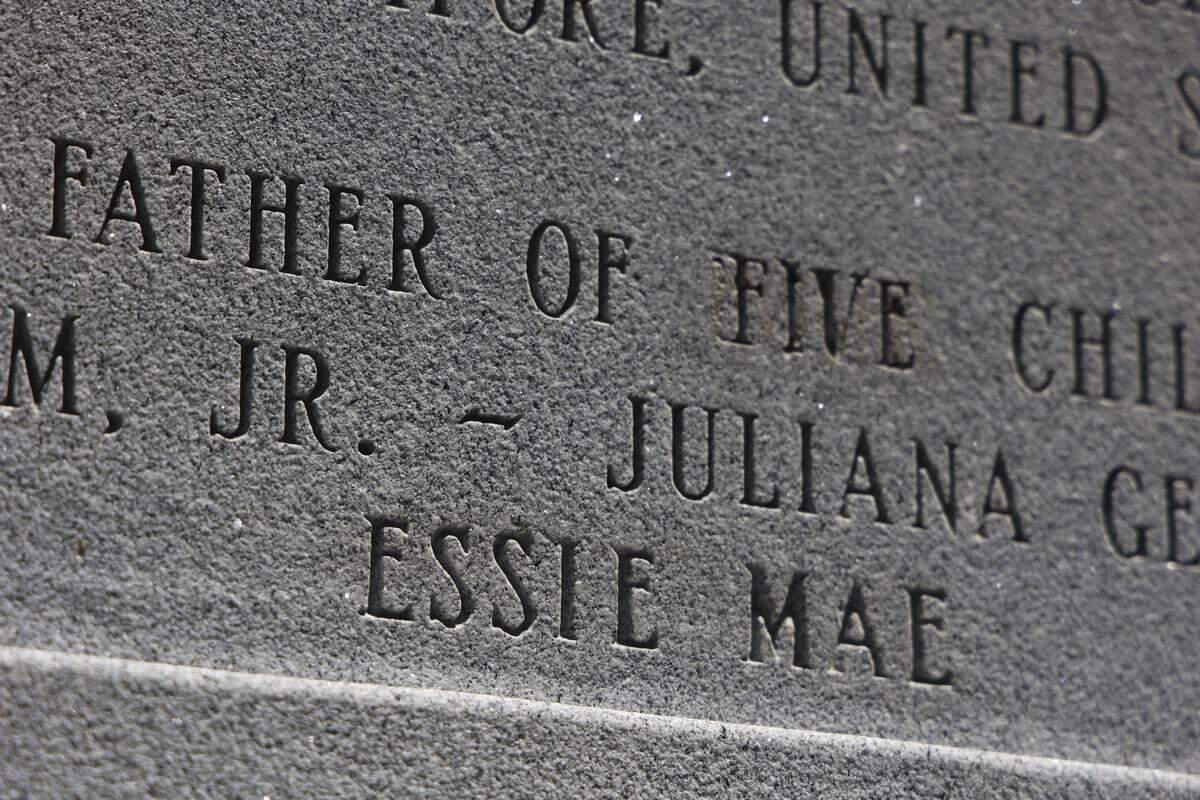
But after his death, it was confirmed he had a fifth child, Essie May Washington-Williams, whose mother was a Black maid in his household. The memorial was amended in 2005 to include Washington-Williams after the statue was already built.
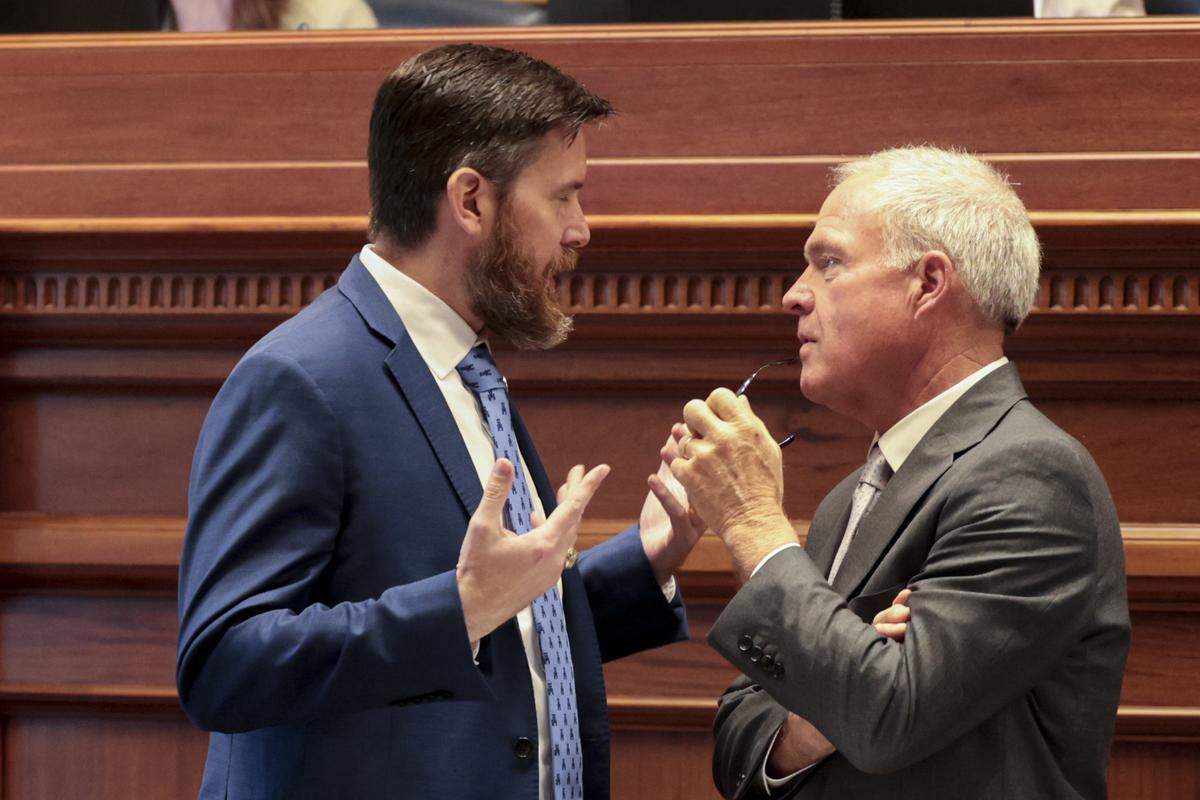
Changing the statue to include Washington-Williams quickly would be more challenging under the proposal, said state Sen. Tameika Isaac Devine, D-Richland, while debating the bill on the floor.
“Who is to say that they can’t change that and add that she exists? That she is part of the Strom Thurmond story,” Devine said.
To alter a monument or memorials, local governments would have to seek permission from the General Assembly. Both chambers would have to approve the change through a joint resolution. Changes could only occur while lawmakers are in session, typically less than half of the year.
It could be easier for a smaller town to just add a QR code to correct history, rather than spending money amending the plaque and going through the General Assembly, Devine told senators. Plus, a QR code could provide more information about Washington-Williams and Thurmond to the public, she said.
State Sen. Tom Fernandez, R-Berkeley, said videos or additional information through QR codes would be good, but he questioned who would determine objectivity.
Donaldson, and other testifying preservationists, said it shouldn’t be the General Assembly but scholars and the public who determine how monuments and memorials are presented.
“Everybody should be empowered to delve into history and think critically and objectively about it,” Donaldson said. “But also, not everyone knows the sources. Not everyone knows how to interpret the sources. I can’t decide who should be the arbiter of history, but it should not be the General Assembly. It should not be elected officials. It should be citizens who are well-informed and well-able to provide that interpretation, and it should also be people who focus on education.”
Turner, the preservationist in Charleston, said many historians are committed to objective, factual history and that their reputations depend on getting information right. He added Charleston has pride in its history and legislation curbing how it’s told to the public is disheartening.
“In Charleston, we have a lot of pride in our public interpretation of our story,” Turner said. “And this does feel, to me, like a reach from Columbia to say, ‘Charleston, you’re not doing this right.’ ”
Allowing historical interpretation
The revamped Heritage Act’s new preamble states the closer someone is to history, the more accurate its interpretation.
“The nearer a person stands in time to the event, the more likely their description reflects the conditions, perceptions, and meanings as they were actually understood when they occurred,” an introduction to the amended bill reads.
Historical figures shouldn’t be viewed and presented through a modern lens, Barry told lawmakers last month.
Scholars’ interpretation and knowledge of history isn’t frozen, some preservationists say, including Suzanne Brooks, the executive director of Historic Columbia.
“[The bill] rests on the premise that historical interpretation should be fixed in a single moment,” Brooks told lawmakers last month. “In reality, interpretation is an evidence-based evolving process. Continued research allows us to correct the accuracies, elevate never-before-heard perspectives and present a fuller and more truthful account of our shared past.”
As more facts and interpretations of histories emerge, South Carolina should provide more information to the public, instead of less, Donaldson said.
For example, the large statue on South Carolina’s northeast lawn of Ben Tillman, former governor and U.S. senator, could stay in place, despite calls for the controversial monument to be taken down, Donaldson said. But the display could also include more information about “Pitchfork Ben’s” beliefs and legacy, including white supremacy and suppressing Black voters.
“When it was dedicated, it was very clear that it was to be a monument, not only to Ben Tillman, but a monument championing white supremacy,” Donaldson said. “And, if indeed, those quotes were stated at the unveiling of the Tillman monument, why not remind the public what was stated?”
“If indeed, Strom Thurmond ran as a third-party candidate on a states-rights campaign. Why is that missing in the monument that is on the grounds of the State House?,” Donaldson asks.
While adding context or information to memorials may have been controversial this year, South Carolina lawmakers for years have shown bipartisan support to build a monument for Robert Smalls, a man born into slavery who commandeered a Confederate ship to freedom. Smalls later served in the Union Navy during the Civil War, the state legislature and the U.S. House of Representatives.
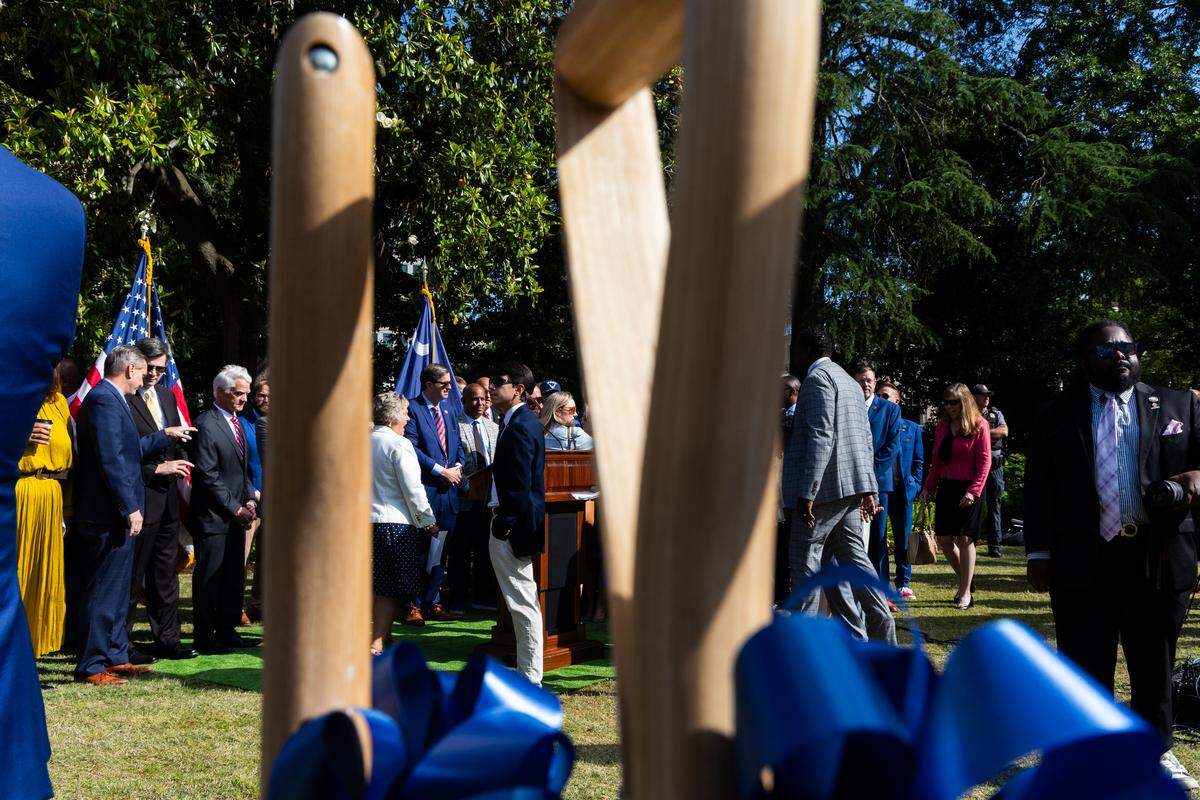
Including Smalls, who will be the first individual Black South Carolinian honored at the State House, better completes the state’s telling of its history, said former state Sen. Gerald Malloy at the groundbreaking for the monument.
“It’s fitting, deeply fitting, that the monument will stand on these grounds, alongside people like Wade Hampton and along with people like Ben Tillman, who are his contemporaries,” Malloy said. “Not because their stories are the same. Because their stories are not. But they all belong a part of South Carolina history.”
“Our history is complex. It’s honest, it’s painful, it’s triumphant, and it’s incomplete unless all the voices are represented.”
Are monuments the proper place to tell history?
One of the state’s chief public history tellers said he doesn’t want to be involved with monuments and memorials at all.
Executive director Allen Roberson has worked for the Confederate Relic Room & Military History Museum in Columbia since 1998. Roberson develops exhibits built around military artifacts, including photos of Revolutionary War veterans, a coffee grinder from the Civil War and an African American Union flag.
But monuments and memorials are different, Roberson said. While artifacts are mundane items that can tell a story about history, monuments are created for a specific, sometimes political purpose.
“They [artifacts] don’t have as much meaning in them,” Roberson said. “They were of a time and era. They were used for specific purpose. They tell a specific story, and if you got enough of those artifacts, and they shed light, then you can tell the story that they represent.”
One of the more famous artifacts in the museum may be the final Confederate flag to fly over the South Carolina State House. Unlike many of the other artifacts, it’s located in a case with just a small tag explaining its history.
“I dealt with the flag in 2015, I don’t want to deal with monuments,” Roberson said.
Roberson said the Confederate flag could have had a “great, somewhat down the middle” presentation, but state funding never came for the project.
“That’s my personal belief, that history needs to include everything, but it never does,” Roberson said. “You can’t go one way or the other. ... Tell the whole story, and let the chips fall where they want. If you can’t do that, then just put it up and let everybody think what they want. Bring their own interpretation in.”
Other sections of the museum include detailed descriptions about the artifacts and time periods they come from. Museum staff, historians and others interested in history contribute to the displays, Roberson said.
A timeline in the museum’s Vietnam War exhibit includes information about the Civil Rights Movement in South Carolina. Information and artifacts related to slavery in the state is included in a gallery about the Civil War.
“I felt like we had to discuss slavery,” Roberson said. “I mean, you can’t talk about the Civil War without slavery. Some people think you can, but you can’t do it because it’s such a major part of what happened before and after.”
State Rep. Travis Moore, R-Spartanburg, told lawmakers on the floor earlier in May there were other avenues to teach people about history, including universities, textbooks and museums.
“There are a lot of places where we’re allowed to teach history and where those types of discussions can be had,” Moore said.
“When you look at these monuments, it’s not necessarily, to me, just about the person in the monument,” he continued. “You see the date it was put up, when it was erected. I think it says a lot about the people who made the determination at that time to recognize whatever they’re recognizing.”
New technology can help tell stories
With signs or plaques, preservationists have to decide what information to include and leave off memorials. Do they choose the more flattering facts about a person or event, or go with the more problematic history?
QR codes and other innovations allow more information to be presented to the public, so historians can provide a more comprehensive view of a person, Charleston preservationist Turner said.
Plus, it can make information more accessible to the public, Brooks told lawmakers. Historic Columbia documents hundreds of relevant buildings, memorials and streets across the capital city on its website
“These are an ideal solution, not a threat,” Brooks said.
State Sen. Ed Sutton, D-Charleston, opposed the legislation and presented several changes, including allowing plaques and QR codes. A preservationist himself, Sutton told lawmakers historians should be able to use new tools to tell history.
“Technology is always evolving. Our interpretation of history is always evolving. My drive here is to make sure we account for that and as new tools become available, that we utilize that for history,” Sutton said.
Sutton said he recently visited the John Calhoun home on Clemson University’s campus. The campus was littered with QR codes with information about Calhoun’s life, Sutton said. He believes those would be outlawed under the proposal.
Telling new stories in new formats can help more people in South Carolina connect to their history and feel more patriotic, Turner said. Especially as the country turns 250 and South Carolina looks to celebrate its legacy in forming the U.S., it’s important to embrace technology to tell its story, he said.
“We have an opportunity to tell stories in a different way for the sesquicentennial where we can have a more inclusive way of approaching it,” Turner said. “To have people see themselves in their history, in South Carolina’s history, but also in the nation’s story.”
This story was originally published May 19, 2026 at 5:00 AM.