More than 1,000 SC ballots already cast as House GOP cuts short redistricting debate
To slow the debate, South Carolina Democrats objected to the state redrawing its congressional map for hours on the House floor. But Republicans used their supermajority to significantly curb discussion Monday night, ending a Democratic filibuster and potentially setting up a vote Tuesday.
The House on Monday spent their second day of special session debating for nearly 10 hours a handful of amendments on a redraw of the state’s congressional maps to create seven reliably Republican districts and oust U.S. Rep. Jim Clyburn.
The morning began with about 240 amendments, but by the end of the night, there were 618 filed, said House Majority Leader Davey Hiott. The hundreds of proposed changes slowed the redistricting debate, but GOP leaders passed new rules just after 8 p.m. Monday evening to slash discussion on new congressional maps.
“It was partly in frustration to the hours and hours of debate without much, seemingly much, interest in actually accomplishing much with those amendments,” said state Rep. Jay Jordan, R-Florence. Jordan has helped steer the redistricting bill through the House.
In a move to try to get a vote on the bill Tuesday, GOP leaders used their supermajority to force new rules, including limiting the time members could speak on amendments and only allowing each member to present one amendment. Democrats huddled in the chamber after adjournment, parsing through which amendments to put up the next morning.
House Rules Chairman Micah Caskey, R-Lexington, said Monday evening after the Rules Committee met that “there is a deliberate effort to try and delay and obstruct the process through the introduction of over 600 amendments” on the part of Democrats.
After amendments, members will only have 10 minutes to speak on the bill.
“Never before have we limited the number of amendments a member can introduce to a very consequential piece of legislation,” said state Rep. Spencer Wetmore, D-Charleston, after the Rules Committee meeting.
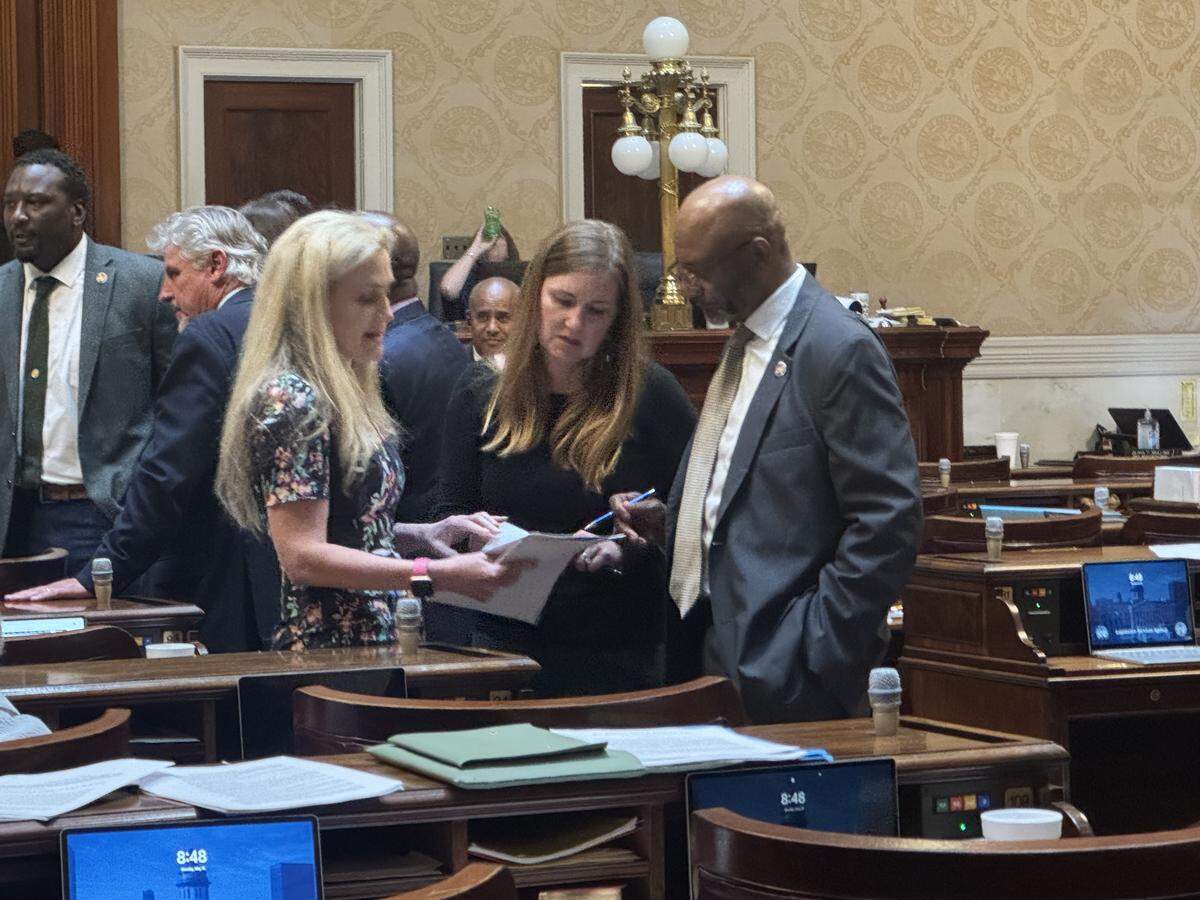
The changes meant hundreds of the 618 proposed amendments, primarily by Democratic lawmakers, would be thrown out. Democrats argued changing the debate rules limited the voices of the constituents they represent.
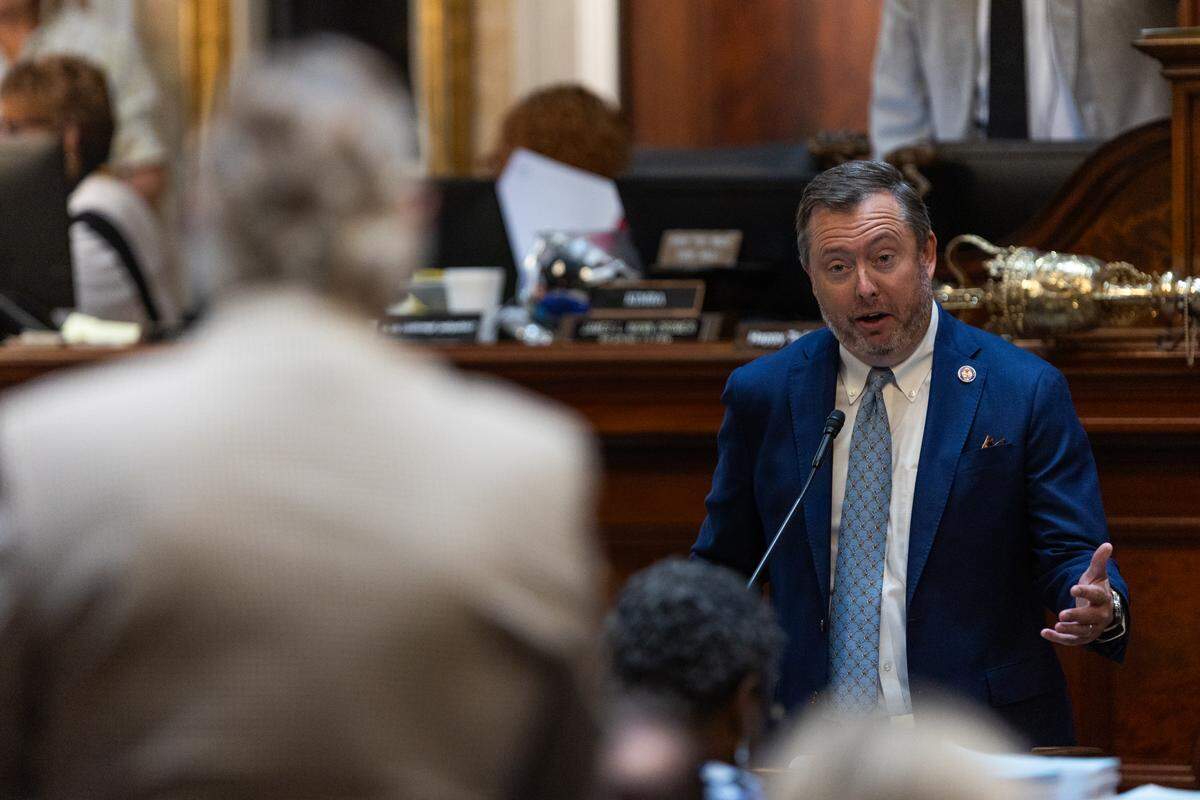
“I find it demeaning to this body that we would erase amendments that the people’s representatives took time to draft and put on the desk en masse, erase them all en masse,” said State Rep. Leon Stavrinakis, D-Charleston, on the floor.
Republican members leading the redistricting debate said most of the amendments proposed were only meant to delay progress on the bill and were duplicative. They rejected the notion from Wetmore that Republicans were changing the rules halfway through debate.
“We’ve heard about volleyball, we’ve heard about kickball, or soccer, or karate, or whatever those other topics that we have, much of the debate that we’ve heard today is not germane,” said House Judiciary Chairman Weston Newton, R-Beaufort.
Jordan said the majority had the option to make the changes during the special session as it was part of a rules package adopted at the beginning of session.
“We didn’t recreate the rules to then do this today,” Jordan said. “We used the rules that have been in existence that the majority of the body adopted back when we initially started the session.”
But the resolution that came out of the Rules Committee Monday evening introduced rules including a one amendment limit and time constraints on debate, which had not been observed for the first two days of the special session and drew scrutiny from Democrats.
The Rules Committee met at 7:15 p.m. Monday evening with little notice to the public.
Less than two weeks ago, House Republican leaders announced the lower chamber would attempt to redraw the state’s congressional maps, just over a month before the June primary elections. President Donald Trump and White House staff asked South Carolina to look at redrawing maps with the intention to create seven districts favoring Republican candidates in the 2026 midterm elections.
Republicans hold six of the seven U.S. House seats in South Carolina. Clyburn, who is running for reelection this year, is the only Democratic member of Congress from the state.
Gov. Henry McMaster called the General Assembly back to finish the state’s budget and take up redistricting less than an hour after both chambers adjourned for the year Thursday. McMaster previously said he would not call a special session.
Opposition to redistricting
While Republican House leadership pushed the redistricting process forward, Democratic lawmakers dominated debate Monday. State Rep. Hamilton Grant, D-Richland, held the floor for more than four hours speaking on just two amendments.
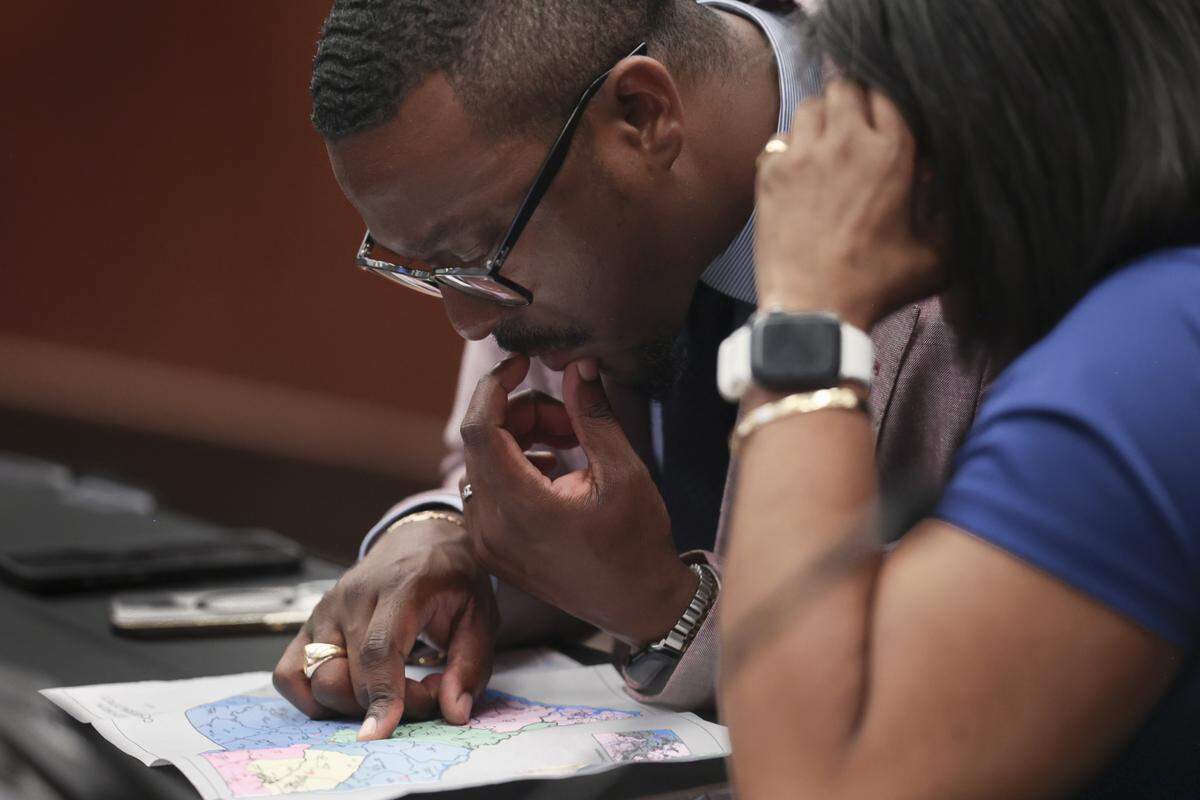
On Monday, no changes were made to the proposed map, drafted by executive director of National Republican Redistricting Trust Adam Kincaid. Democratic lawmakers questioned whether Kincaid was paid to draw the maps and the data he used to create districts, which went unanswered on the floor Monday.
Democratic lawmakers also opposed the cost of running additional elections, the expedited redistricting process and potential voter disenfranchisement.
“We’re just here going through the motions until they’re ready to press the button and say, this is what it’ll be, this is how it’s going to go,” Grant said.
Wetmore said she didn’t know the data used to compile the proposed districts after mapmaker Kincaid didn’t answer her questions last week. State Rep. Justin Bamberg, D-Bamberg, spoke against the shortened timeline to redraw the congressional districts, which typically takes months. And several lawmakers, including state Rep. Jermaine Johnson, D-Richland, were concerned about overseas and military residents who already cast their ballots for the 2026 primaries. According to the South Carolina Election Commission, 1,384 absentee ballots have already been returned.
“It is because of the men and women in uniform, our military, that we have the freedoms and liberties that we have today, that we enjoy, and to erode the trust in that by corrupting this process is something that is going to go down history as one of the biggest shameful things that we’ve done for our military men and women,” Grant said.
State Rep. Nathan Ballentine, R-Richland, also spoke against the process Monday afternoon. He told his fellow lawmakers the current congressional map is legal, despite the U.S. Supreme Court decision prompting the redistricting frenzy across the country.
“The majority of my hard Republicans have told me not to vote for this map,” Ballentine said, sharing many of his constituents did not support the proposed map. The map splits Richland County three ways.
He also said in a typical map making process, lawmakers draw congressional districts instead of a consultant handing the General Assembly a proposal.
“I’m not a fan of what’s happening this week, but if this train is leaving the station, it is my duty to make sure my constituents have good seats,” Ballentine said. “And I’m hoping that this is your opportunity to support a map that was drawn here by an elected official.”
Even though Ballentine signaled he is against the proposed map, Hiott expected most House Republicans to approve the map.
“We’ve got a few people that, from the start, have told us they can’t support it,” Hiott said. “We understand that, but I think we, when we finally get to that vote, you’ll see a pretty strong vote from the Republican caucus.”
Democratic lawmakers spoke for hours about a variety of concerns, including how quickly the redraw process occurred.
While debating an amendment aimed a boosting transparency in the redraw process, Bamberg read the dates and locations of public hearings from the 2021-22 redraw process. Amendment sponsor Grant appeared to take note of the times and locations.
In all, the House held 11 hearings all over the state in 2021 and 2022, Bamberg and Grant determined. The state Senate held 10 public hearings in the 2021 redistricting process.
“Sham process,” Bamberg shouted about the 2026 redraw.
Lawmakers also brought up concerns about the cost of running an extra primary election in August. Under the House plan, South Carolina’s statewide, local and state House elections would still be held June 9. Congressional primary elections would be bumped back to Aug. 18.
The state Election Commission estimates it will cost $3.5 million to run an extra congressional election, including a runoff, in August, according to a fiscal impact report on the redistricting bill. Charleston County estimates it will cost $830,000 for the August primary, according to the report.
Democratic lawmakers also said it cost the state for the General Assembly to meet for a special session. Three days of the House meeting in special session costs $202,795.
An amendment to keep state boards and commissions with representatives from each congressional district the same, even with new maps, passed early Monday.
This story was originally published May 19, 2026 at 5:00 AM.