What’s the deadline? SC’s ‘deliberative body’ fast tracks redistricting debate
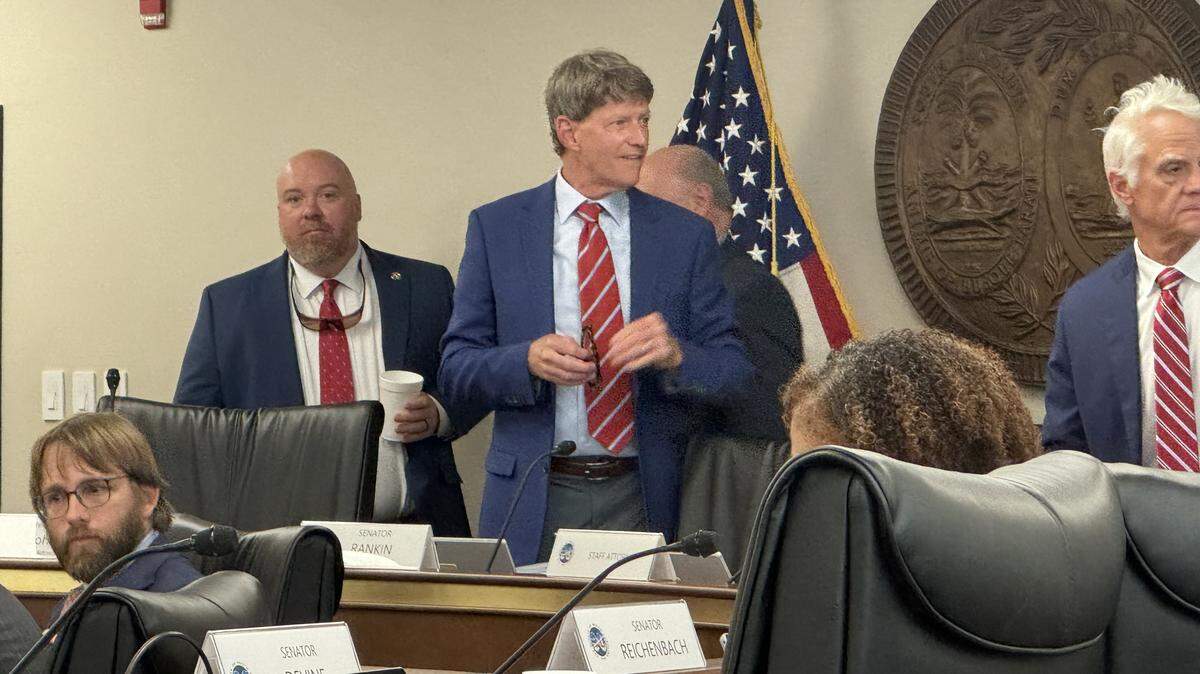
The Senate Judiciary Committee Wednesday on a compressed timeline amid a push to quickly redraw the state’s congressional districts ahead of this year’s midterm elections heard testimony and then rushed to the full Senate floor a proposed map approved by the House.
The upper chamber is known to be the deliberative body, and Senate Judiciary Chairman Luke Rankin said he didn’t want to have amendments considered at the committee level, and allow votes on changes to the redistricting bill to happen on the floor.
Rankin’s committee voted 15-7 to move the bill to the floor in fewer meetings than the House amid pressure to redraw a map that would lead to Republicans holding all seven districts.
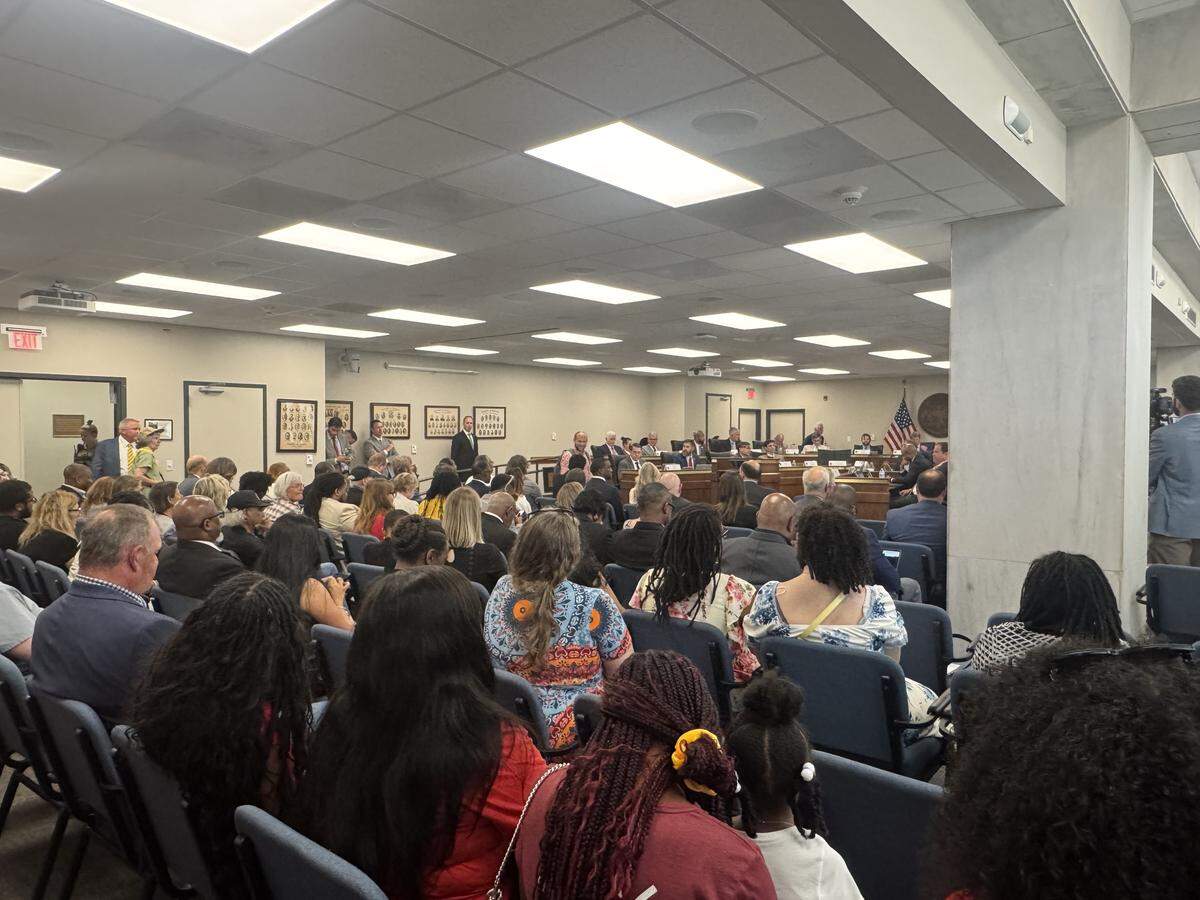
After more than six hours of public testimony, the committee approved the map, in front of 10 people, roughly half of them press, of the public remaining in the room that was packed when the hearing began.
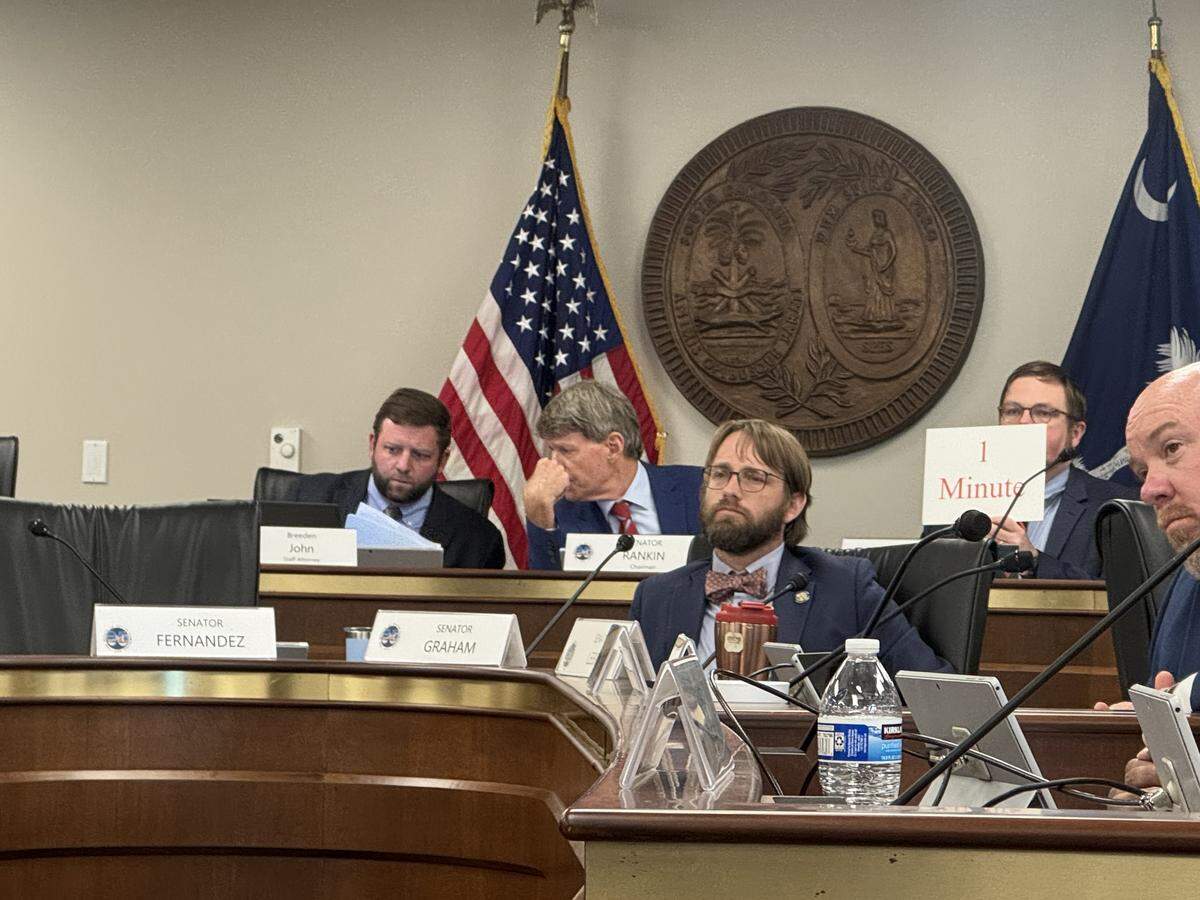
“We are (the) deliberative body, and this is not deliberative at all, and we all know it,” state Sen. Jeffrey Graham, D-Kershaw.
If senators want to follow through with middecade congressional redistricting, the window they have to pass a bill gets smaller and smaller as the current scheduled June 9 primary draws nearer and nearer.
“We have to finish this in a very short time frame,” Rankin said at the start of the meeting.
State Sen. Russell Ott, D-Calhoun, questioned why the redistricting process was moving more quickly than the traditional monthslong process. The redistricting that took place after the 2020 census took more than four years, including public hearings around the state, and was subject to litigation.
“Why are we rushing,” Ott said. “What deadline are we under?”
Ott added that with no amendments during the committee process would lead to a free-for-all on the Senate floor.
“I think it’s our responsibility as a committee to bring something to the floor of the Senate that is a reflection of our work here,” Ott said.
Wednesday’s hearing was set just for public comment, after the state election commission director testified to senators for more than one hour. Members of the state Senate have been told to prepare to be in session on Thursday, Friday, Saturday and Monday during the holiday weekend.
The Senate plans to gavel in at noon Thursday.
“We have to recognize our time limitations of time in the circumstances that include our normal scope of review in this process, and so no secret that the governor called us back into a special session,” Rankin said.
The redistricting proposal, passed by the House, would push back congressional primary elections to Aug 18 with filing taking place June 1 to June 5.
Senate Majority Leader Shane Massey, R-Edgefield, added during Wednesday’s hearing that if and when the redistricting bill passes and is signed by the governor, it would most likely would be subject to litigation.
When the full Senate is in session, the cost of having senators in Columbia will be about $27,000 a day.
Even though House Majority Leader Davey Hiott said the work on redistricting by both chambers had to be done by May 26, House members appeared to walk that back Monday.
“I don’t know if there’s any necessarily any drop-dead date, but I mean that’s certainly the day that early voting starts,” House Judiciary chairman Weston Newton said.
SC Election Commission Director Conway Belangia told senators June 5 would be the absolute last day to adjust the primary.
As lawmakers started the traditionally lengthy process so late in the session, House members aimed to move the new proposed map quickly, coming in for debate on days they traditionally would have been off.
“We’ve been here (for) quite a lengthy period of time for purposes of debates,” state Rep. Jay Jordan said. “I think it’s a good balance of moving at a reasonable rate of speed to get the goal accomplished, and as leader said, send it over to the Senate, but at the same time give everyone an opportunity to speak and put up amendments and go through that process.”
On Wednesday, a Richland County judge tossed a lawsuit from the ACLU and the League of Women Voters against House Speaker Murrell Smith and House Rules Committee Chairman Micah Caskey over how the House chamber’s debate rules were adjusted in order to move the redistricting bill forward.
If the congressional redistricting bill is signed into law, congressional candidate filing opens June 1, less than two weeks away.
Senators hear overwhelming opposition to redistricting
Wednesday was an opportunity for members of the public to tell senators their views on the proposed redistricting. Those who spoke were overwhelmingly against redrawing the state’s congressional map.
Among those to testify at Wednesday’s hearing was Mount Pleasant Mayor Will Haynie, who does not want the redistricting process to go forward.
Haynie said data centers and power company tree chopping were the No. 1 issue constituents spoke to him about. But redistricting has become the next “No. 1 public enemy” for Lowcountry residents, Haynie said. “Democrats, Republicans, Independents, people that have lived there forever, people that have recently moved there: They don’t think this is the way to redistrict. Not all of them are against redistricting. They don’t think this is the process to do it.”
“I’m here from Main Street today to ask you not to do this, this way, not use this map, not tod it at this moment and not to do it until you have taken this to all the people of the state of South Carolina,” Haynie added.
Sharon Carter, of Bamberg County, who unsuccessfully ran for the state Senate in 2024, spoke in favor of the congressional redraw, which is aimed at ousting U.S. Rep. Jim Clyburn, D-Santee, who has been in Congress since 1993.
“Our officials have kept people down,” Carter said. “Why is it every congressional district in the state has had progress and prosperity, while the rural communities in the 6th population declines, and small towns look like third-world countries?”
Election Commission discusses proposed August election
About nine hours after the House voted on new congressional maps after midnight, South Carolina’s Election Commission met and discussed how to handle an extra primary this summer.
Belangia walked the commission through the “very, very, very, very, very tight” timeline to pull off a primary election just over two months after a scheduled statewide contest. Filing for the congressional districts would reopen and run June 1-5. Parties will certify candidates by June 9.
After the first primary results are certified by June 26, the Election Commission can begin preparing ballots for the August election, Belangia said. Ballots must be mailed to military and overseas voters by July 4, under federal election rules. Belangia described the deadlines as “overwhelming but not insurmountable” during the Senate hearing.
“We hope that all counties will strive hard so we can make it happen on July 3, so at least they’ll be able to enjoy their July 4, but it won’t be much of an enjoyment with this election schedule,” Belangia said.
Counties will also have to find poll workers and voting locations for the August primary and early voting, Belangia said.
“It’s going to be monumental for us to make it work,” Belangia said during the Election Commission meeting. “But right now, if they stick with these tight timelines, we were sure we can meet those deadlines. It will be lots of overtime, lots of weekend time and that sort of thing between now and November to make sure everything’s done.”
Belangia told the commission voter turnout for the June primaries likely won’t be impacted, but residents may be confused whether they need to turn out in August. Congressional elections will appear on the June ballots, even if they end up being invalid, and more than 2,500 residents have already voted.
Election Commission chair Robert Bolchoz asked Belangia if the General Assembly is redrawing every district.
“There are some counties that will be in the same congressional district, but every congressional district has been reshaped,” Belangia said.
This story was originally published May 20, 2026 at 10:27 PM.